Key Takeaways
- PE sintered filters are mechanically tough in the real world—shock, vibration, and handling abuse are where they often shine.
- “Harsh environment” usually means pressure pulses + abrasion + heat + chemistry happening at the same time. That combo is what kills filters.
- Durability isn’t just material choice—it’s pore structure, wall thickness, support strategy, and housing design.
- The most common failures are boring but brutal: creep, stress cracking, surface blinding, and abrasive wear.
- If you want PE to survive, spec it like a grown-up: flow + ΔP + temperature + contaminant type + cleaning method. Not just “10 micron, please.”
Introduction
If you want the honest answer: polyethylene (PE) sintered filters are durable in harsh environments when the “harsh” part is mechanical abuse—vibration, bumps, pressure fluctuations, and gritty solids—and when the temperature and chemical exposure stay within sane limits. Their rigid porous structure and impact tolerance often outperform delicate media designs. But PE isn’t invincible: sustained heat + high differential pressure can trigger creep, aggressive solvents can cause swelling or stress cracking, and abrasive slurries can slowly sandblast pore openings. Durability comes from the whole design—material, geometry, and operating conditions—not the polymer name on a datasheet.
Alright. Now let’s talk about the ways filters actually die.
What Counts as a “Harsh Environment” (Spoiler: It’s Not Just Chemistry)
People hear “harsh” and immediately picture a beaker of acid bubbling like a villain’s lair.
Sometimes, sure. But in industry, harsh usually looks like this:
- Pressure pulses from pumps cycling on/off
- Vibration from motors, compressors, and pipe resonance
- Abrasive particles (sand, scale, catalyst fines, carbon, rust)
- Temperature cycling (cold start → hot run → cold washdown)
- Cleaning chemicals and occasional “let’s try this stronger detergent” experiments
- Operator reality (overtightened housings, misalignment, hurried changeouts)
And the most dangerous harsh environment? The one where two or three of those pile up together.
Why Sintered PE Is Often Tougher Than It Looks
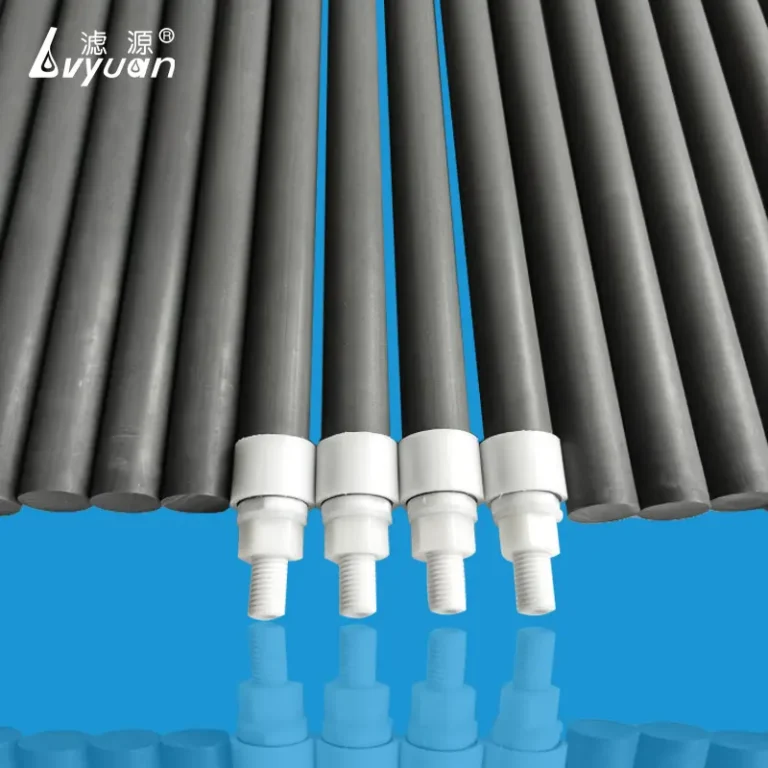
A sintered PE filter is basically fused polyethylene powder: particles bond at contact points, creating a rigid network of interconnected pores.
That structure gives you a few durability perks that don’t get enough credit:
- No pleats to collapse
- No fibrous layers to delaminate
- No thin membrane skin that tears when someone sneezes
- Good impact tolerance compared to more brittle plastics and some composite constructions
I honestly believe this is why PE keeps showing up in “I need something that won’t baby-sit itself” applications.
The Four Durability Stressors That Matter Most
1) Mechanical Stress: Vibration, Shock, and Handling Abuse
If your filtration system lives on a skid with a pump that sounds like it’s chewing gravel, PE can be a very rational choice.
Why PE holds up:
- It’s generally tough and impact-resistant
- It can tolerate frequent installation/removal better than fragile media
What to watch:
- Poor support can still cause deformation under load
- Thin-wall designs can fatigue faster under repeated pulses
2) Differential Pressure (ΔP): The Silent Filter Crusher
ΔP is the tax your system pays for filtration. Too high, too long, too often—and things start deforming.
In harsh conditions, ΔP isn’t steady. It spikes. It drops. It spikes again. That cycling is where long-term durability gets decided.
PE durability risk at high ΔP:
- Creep (slow deformation over time), especially with elevated temperature
- Pore structure can “tighten” if the body is stressed repeatedly
If you only remember one phrase, make it this: heat + ΔP + time = creep country.
Abrasive solids don’t clog politely. They erode.
Common abrasive offenders:
- silica sand
- pipe scale
- rust flakes
- catalyst fines
- carbon/char particles
How PE behaves:
- Often good mechanically, but abrasion can enlarge or roughen pore openings over time
- Erosion changes performance gradually—until the day it doesn’t meet spec anymore
If you’re filtering abrasive slurry, durability isn’t just “will it break?” It’s “will it still filter correctly after 6 months of getting sandblasted?”
4) Chemical & Cleaning Exposure: Compatibility Is a Moving Target
PE can be excellent in many aqueous, mild chemical environments. But harsh solvents, strong oxidizers, and certain surfactant cocktails can make life interesting.
Typical chemical durability pitfalls:
- Swelling (dimensional change → sealing issues → bypass)
- Stress cracking (especially under mechanical load + chemical exposure)
- Surface energy changes that alter wetting and flow behavior
And yes—CIP chemicals count as “chemical exposure.” Food-grade doesn’t mean polymer-friendly.
The Failure Modes I See Over and Over (And How to Spot Them Early)
H2: Creep and Dimensional Drift
Symptoms:
- cartridge fits fine… then starts leaking at the seal
- ΔP behavior changes without obvious clogging
- cartridge looks slightly “out-of-round”
Why it happens:
- sustained load, often with elevated temperature
- insufficient mechanical support in the housing
How to reduce risk:
- increase wall thickness or add structural support
- keep operating temperature and ΔP within validated limits
- ensure even compression at seals (no misalignment)
H2: Stress Cracking (The “Everything Was Fine Until It Wasn’t” Failure)
Symptoms:
- hairline cracks near stress points
- sudden bypass or fragments
- cracks often appear after chemical cleaning cycles
Why it happens:
- mechanical stress + chemical exposure + time
How to reduce risk:
- verify chemical compatibility under real concentration + temperature
- avoid sharp mechanical stress concentrators (tight clamps, uneven loading)
- don’t “upgrade” cleaning chemistry without re-validating the polymer
Symptoms:
- filtration performance slowly degrades
- downstream particles appear even when ΔP looks normal
- surface feels rougher, edges look worn
How to reduce risk:
- use staged filtration (cheap sacrificial pre-filter upstream)
- reduce velocity through the element (bigger OD, more area, multiple cartridges)
- consider alternative materials if abrasion is extreme
H2: Surface Blinding (Not a Durability Failure… Until It Is)
Blinding is when the surface loads up and stops letting flow through. It’s not “damage,” but it drives ΔP up, which creates damage.
Typical causes:
- sticky solids (oils, proteins, polymerized residues)
- gels and colloids that smear across pore mouths
Fix:
- change filtration strategy (staging, different pore structure, pre-treatment)
- don’t brute-force it with higher pressure unless you enjoy creep
Design Levers That Make PE Last Longer
A uniform pore structure is simple and predictable. A gradient structure can capture larger particles first and reduce early surface blinding.
If your harsh environment includes spiky solids loads, gradient designs can be a lifesaver.
H2: Geometry Matters More Than Marketing
Durability is often a math problem dressed up as a product.
- Thicker walls generally increase mechanical robustness (with flow trade-offs)
- More filtration area lowers face velocity and reduces abrasive wear rate
- Proper support prevents deformation under ΔP pulses
H2: The Housing Is Either Your Best Friend or Your Worst Enemy
I’ve watched perfectly good filters “fail” because the housing was basically a booby trap:
- uneven compression
- misalignment
- dead zones causing localized fouling
- poor drainage leading to chemical concentration pockets
If you want durability, treat the housing like part of the filter. Because it is.
How I’d Test Durability (If I Were Spending My Own Money)
H2: A practical durability test plan
You don’t need a million-dollar lab to learn a lot. You need discipline.
1) Baseline performance
- flow rate at a defined ΔP
- particle retention / turbidity
- visual inspection
2) Abuse it like the real system
- pressure cycling (simulate pump starts/stops)
- temperature cycling (cold → hot → cold)
- exposure to cleaning chemistry at real concentration
3) Measure drift
- dimensional checks (OD/ID, length, roundness)
- ΔP curve over time
- retention change
4) Post-mortem
- inspect for cracks, deformation, erosion
- check sealing surfaces
If the filter “passes” only when treated gently, it didn’t pass. It auditioned.
FAQ (People Also Ask)
Are polyethylene sintered filters durable in harsh environments?
Yes—especially for mechanical harshness like vibration, pressure pulses, and handling abuse, as long as temperature and chemical exposure stay within appropriate limits. Durability depends heavily on design and operating conditions.
What causes PE sintered filters to fail?
Common causes include creep under sustained ΔP at elevated temperature, stress cracking from chemical exposure plus mechanical load, and abrasive wear in gritty slurries. Surface blinding can also drive ΔP high enough to trigger structural issues.
Can PE sintered filters handle abrasive particles?
They can, but abrasion may gradually change pore geometry and performance. For highly abrasive slurries, staged filtration and lower face velocity can extend life significantly.
Do cleaning chemicals reduce PE filter life?
They can. Repeated exposure to incompatible chemicals—especially at elevated temperatures—can increase the risk of swelling, stress cracking, or surface property changes. Cleaning should be validated, not assumed.
When should I choose PP or PTFE instead of PE?
Choose PP or PTFE when chemical resistance and temperature demands exceed PE’s comfort zone. PTFE is often preferred for aggressive solvents and harsh chemistry; PP covers many industrial chemicals at a strong cost/performance balance.
Final Thoughts
If you’re asking about durability, you’re already ahead of most buyers—because the cheapest filter is the one that doesn’t create a maintenance soap opera.
PE sintered filters can be impressively durable in harsh environments, but only if you respect the real stressors: ΔP cycling, heat, abrasion, and cleaning chemistry. Get those right—and PE can run like a reliable old truck. Ignore them—and even the toughest polymer will eventually wave a white flag.
If you share your Internal Links JSON, I’ll add the required 5–8 exact anchor links cleanly. And if you tell me what “harsh” means in your customer’s world (abrasive slurry? pump pulses? solvent washdowns?), I can tailor the examples so the post reads like it came from the plant floor, not from a keyboard.