Key Takeaways
- PE sintered filters are tough—they handle vibration, bumps, and daily “operator reality” better than most people expect.
- Their stable pore structure delivers predictable filtration performance when you spec micron rating + thickness + porosity correctly.
- In many water-like and mildly chemical streams, PE offers a sweet spot of flow rate vs pressure drop (ΔP).
- They’re often more cost-efficient over the whole lifecycle (not just unit price) because they can run longer and get cleaned in the right applications.
- The real win is design flexibility: custom shapes, rigid bodies, and easy OEM integration without fragile media layers.
Introduction
If you’re using PE sintered filters in an industrial filtration system, you’re probably not doing it to impress anyone at a trade show. You’re doing it because you want the filter to work, keep working, and not turn your maintenance team into unpaid therapists.
And honestly? I respect that.
PE (polyethylene) sintered filters are the quiet “steel-toe boot” of porous plastics: not glamorous, not exotic, but stubbornly reliable in the kinds of real-world conditions that don’t show up in glossy spec sheets—pulsing flow, inconsistent solids loading, operators who tighten things “until it feels right,” and systems that run longer than anyone wants to admit.
Let’s talk about why PE sintered filtration earns its place, where it’s a bad idea, and how to spec it so it doesn’t betray you at 2 a.m.
What Exactly Is a PE Sintered Filter (And Why It Behaves Differently)?
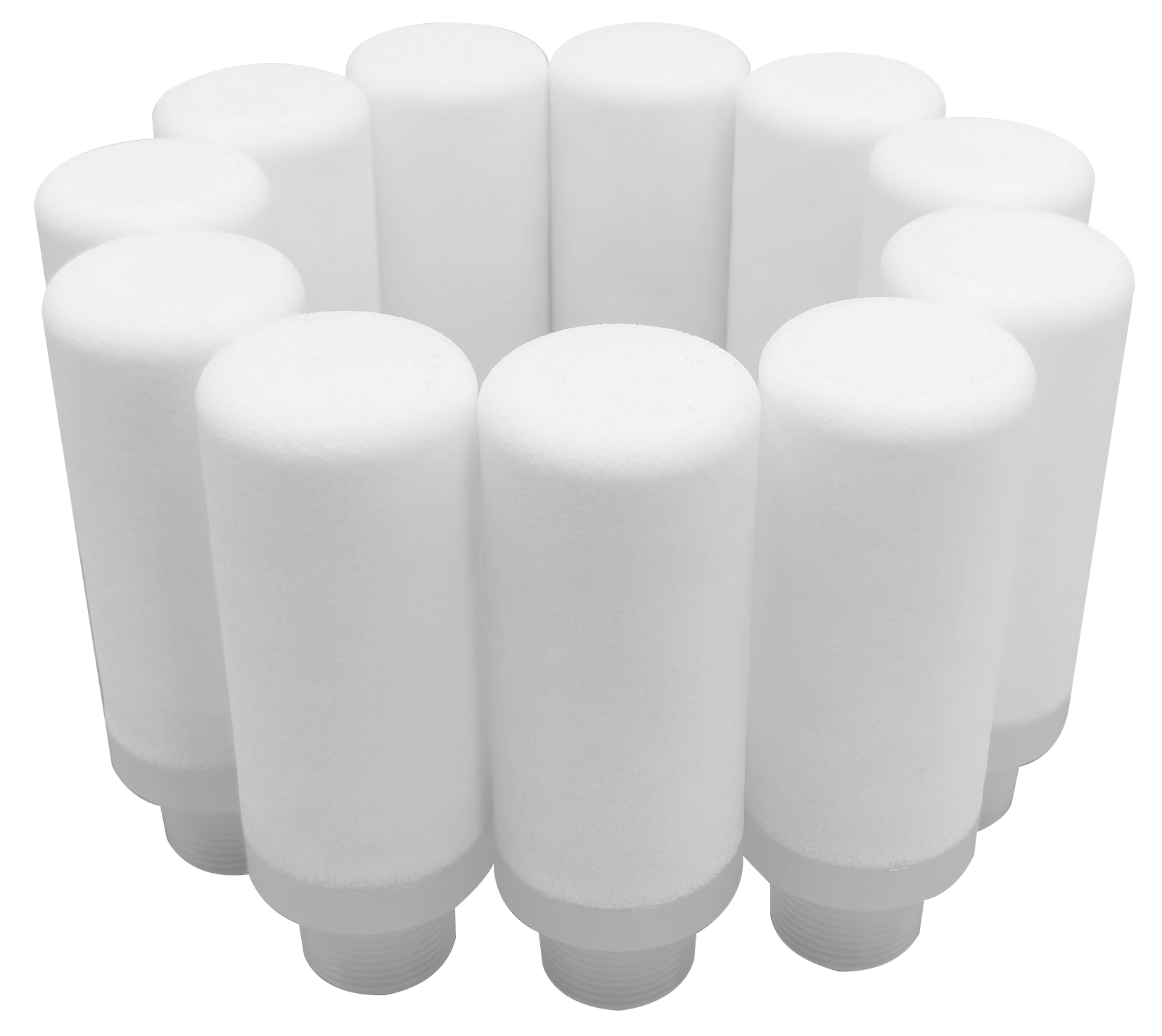
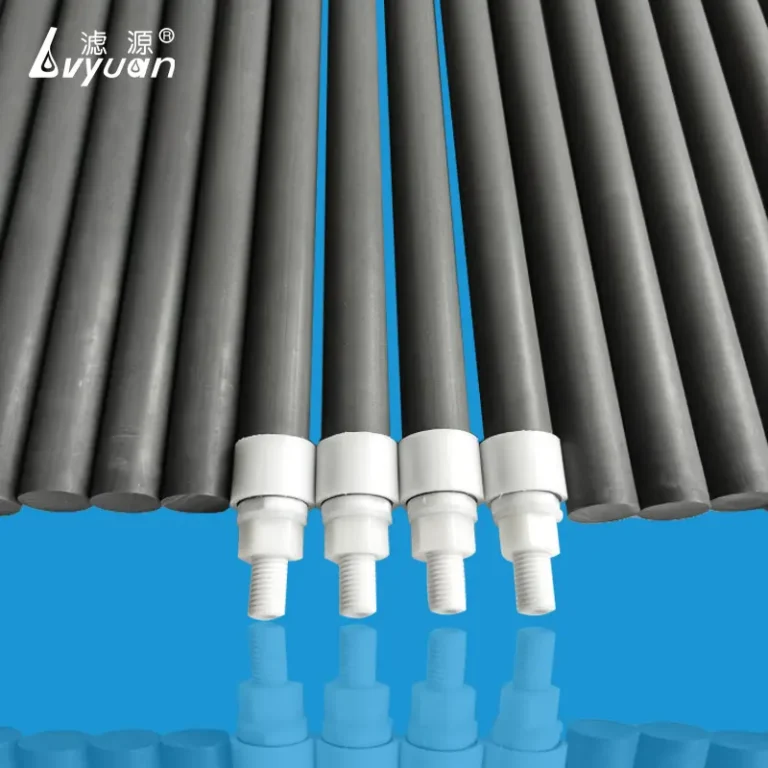
A PE sintered filter is made by sintering polyethylene powder—heating it until particles fuse at their contact points without fully melting into a solid brick. What you get is a rigid, porous structure with interconnected pathways.
That’s fundamentally different from:
- Melt-blown depth media (softer, fibrous, can collapse or channel in some setups)
- Woven/mesh screens (surface filtration, can blind quickly)
- Pleated cartridges (high area, great flow—until they don’t like your solids)
Sintered PE is like a city of tunnels. Particles don’t just hit a wall; they navigate a maze and get captured in the structure. That’s why, in the right job, it runs longer before ΔP spikes.
The Real Benefits of PE Sintered Filters (Not the Brochure Version)
1) Durability: PE Doesn’t Shatter When Reality Shows Up
I’ve seen filtration decisions made in conference rooms by people who never touch the equipment. Then the filter arrives in production and gets handled like a wrench.
PE sintered filters are mechanically forgiving. They tolerate:
- Vibration from pumps and compressors
- Mild impacts during installation
- Handling abuse during changeouts
- Less-than-perfect alignment in housings
If your plant is spotless and everyone uses torque wrenches, congratulations—you live in a corporate slide deck. For the rest of us, toughness matters.
PE sintered filters can deliver repeatable filtration performance because the pore network is built into the body, not layered on top like a fragile cake.
But I’m going to say something unpopular: “Micron rating” alone is not a spec. It’s a hint. A clue. A starting point.
If you want predictable performance, you need to think like the filter:
- Pore size distribution (not just the nominal micron number)
- Porosity percentage
- Wall thickness
- Flow rate at a defined ΔP
Two “10 micron” filters can behave like strangers at a party.
3) Great Flow / ΔP Balance in Water-Like Streams
In many industrial filtration systems—cooling water, process water, rinses, mild aqueous solutions—PE sintered filters often hit a nice equilibrium:
- High enough flow to keep operations moving
- Low enough pressure drop to avoid pump complaints
- Depth capture that delays early clogging
If your fluid is closer to “water with attitude” than “solvent from hell,” PE can be a very rational choice.
4) Cleaning and Reuse (When the Contaminant Allows It)
Can PE sintered filters be cleaned and reused? Often, yes. Will it work in your system? That depends on what you’re filtering.
PE filters can sometimes be cleaned using:
- Backwashing (if the design supports it)
- Ultrasonic cleaning (for certain solids)
- Compatible chemical rinses (mild ones—don’t get reckless)
But here’s the trap: if your contaminant is oily, sticky, gelatinous, or polymerizing, cleaning may just turn into “redistributing the gunk artistically.”
5) OEM-Friendly: PE Is Easy to Shape, Integrate, and Customize
This is where PE quietly wins big.
Sintered PE can be made into:
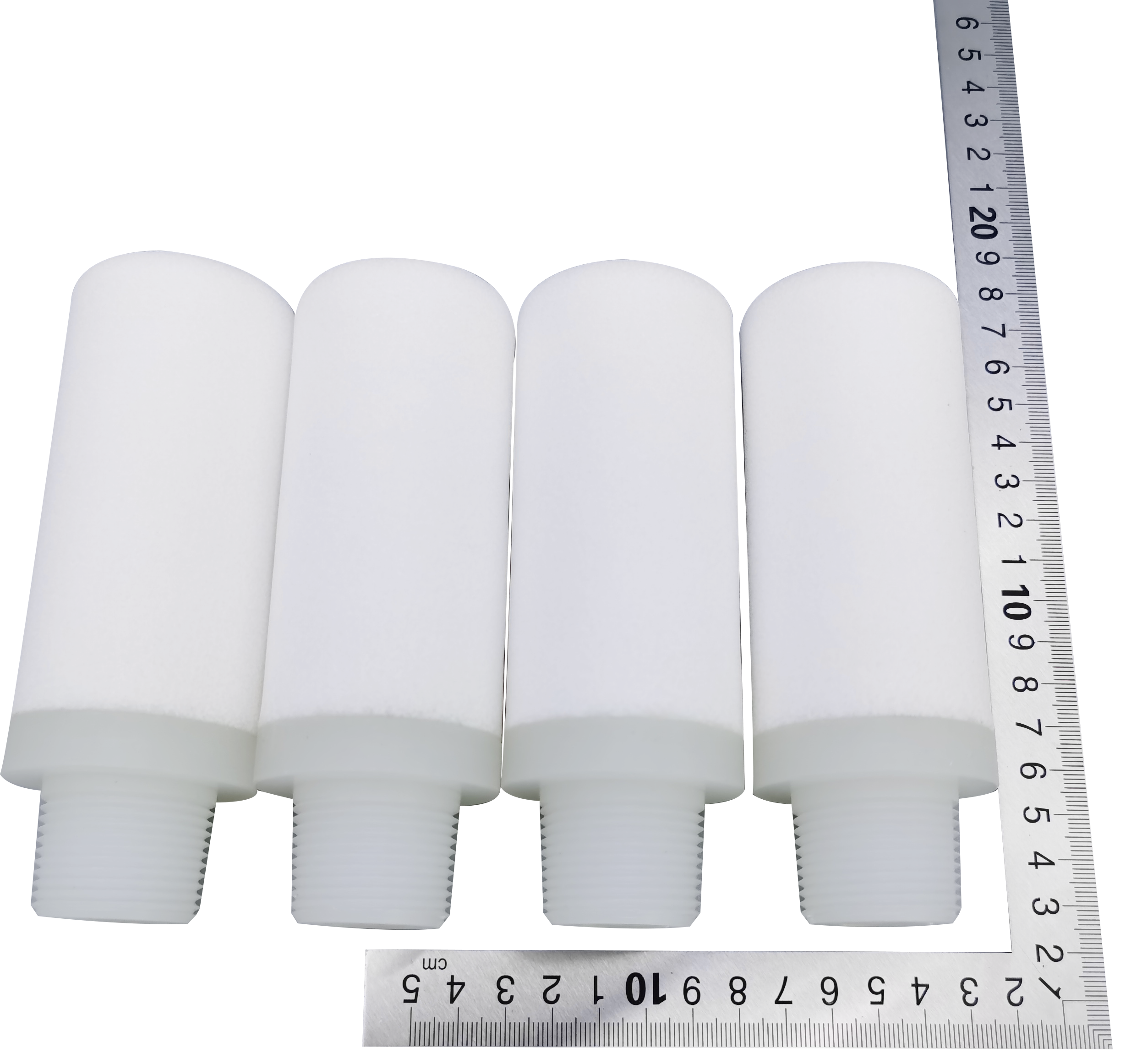
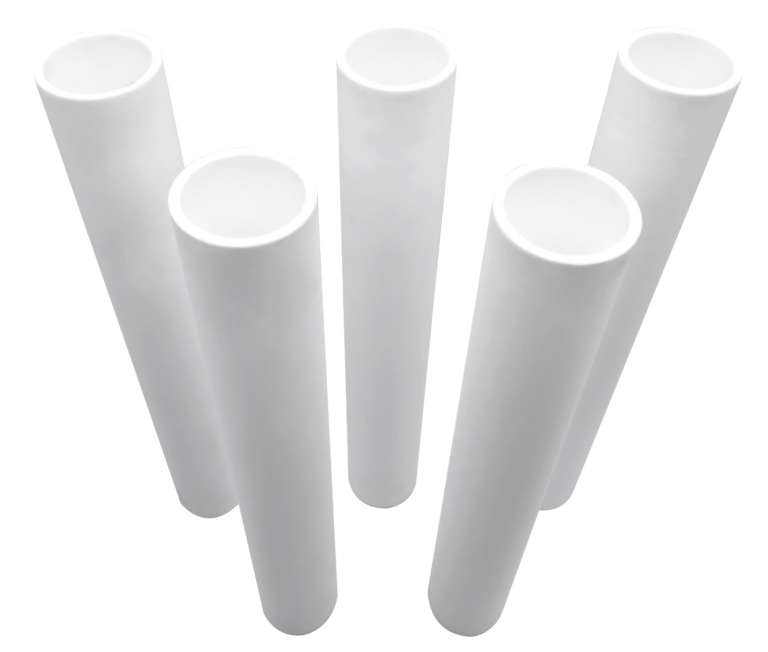
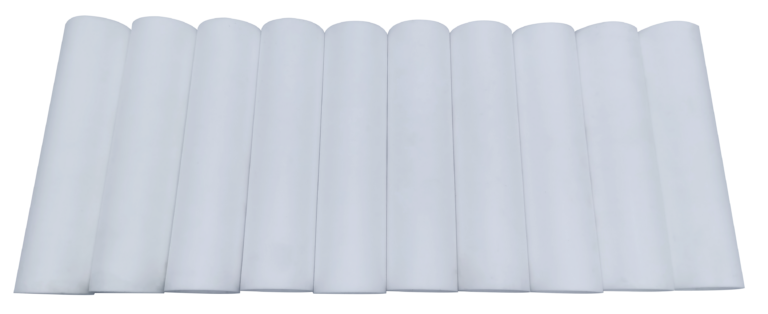
- Cylindrical cartridges
- Cups, discs, cones
- Custom housings and integrated filter elements
- Rigid parts that act as both filter and structural component
If you’re an OEM building a filtration module, design flexibility isn’t “nice to have.” It’s the whole game.
Where PE Sintered Filters Absolutely Shine (Use Cases)
Industrial Water Filtration
- Cooling circuits
- Rinse and wash systems
- Pre-filtration before fine membranes
- Solids control in recirculating loops
Pneumatics & Air Handling (when temperature is moderate)
- Dust capture
- Intake protection
- Particulate management in compressed air accessories (application-dependent)
General Process Filtration in Mild Chemistry
If your chemistry is mild and your concern is solids, PE can be a workhorse.
Where PE Is a Bad Choice (Let’s Save You a Failure Report)
High Temperature + High Differential Pressure
PE has limits. If your system runs hot and your ΔP climbs, PE can soften or creep depending on design. That’s not a moral failing; it’s physics.
Aggressive Solvents / Strong Oxidizers
If your chemical compatibility situation is “complicated,” PE might not be your safest bet. In those cases, PP or PTFE usually enter the chat.
Ultra-Fine Filtration Where Absolute Ratings Matter
If you need near-sterile performance, tight absolute retention, or regulatory-driven validation, you may want different media types—or a different polymer with more established validation pathways for that exact use.
How to Spec a PE Sintered Filter So It Doesn’t Misbehave
Define the Job Like an Engineer, Not Like a Shopper
Tell your supplier (or your future self) these things:
- Fluid type + concentration
- Operating temperature (normal and worst-case)
- Target flow rate
- Allowed ΔP (start and end of life)
- Particle size distribution (if you have it)
- Solids loading (mg/L or g/L beats vague adjectives)
- Cleaning method + frequency
- Housing dimensions + connection style
If you can’t answer half of these, don’t panic—just realize you’re still in the “discovery phase,” not the “final spec” phase.
Think in Terms of System Behavior
A filter isn’t a standalone product. It’s a restriction in a loop.
Ask:
- What happens to my pump curve as ΔP rises?
- Do I have bypass protection?
- Do I have pulsation dampening?
- Is my solids load constant or spiky?
Filtration failures are often system failures wearing a filter’s name tag.
FAQ (People Also Ask)
Are PE sintered filters good for industrial water filtration?
Yes—often excellent. They’re durable, stable, and can offer a strong flow/ΔP balance in water-like streams, especially where solids are present and maintenance cycles matter.
What are the main advantages of PE sintered filter cartridges?
The big ones are mechanical toughness, stable pore structure, depth filtration behavior, OEM design flexibility, and often good lifecycle cost in suitable applications.
Can PE sintered filters be cleaned and reused?
Often, yes—if the captured solids are removable and the cleaning method is compatible. Backwashing and ultrasonic cleaning can work in some cases. If contaminants are oily or sticky, reuse may be limited.
How do I choose the micron rating for a PE sintered filter?
Start with the particle sizes you need to remove, then validate with flow and ΔP targets. Micron rating alone is not enough—porosity, thickness, and dirt-holding capacity matter a lot.
Are PE sintered filters chemically resistant?
They’re resistant in many mild applications, especially aqueous and non-aggressive environments. For harsh chemicals, solvents, or oxidizers, you should verify compatibility carefully and consider PP or PTFE.
The Bottom Line
PE sintered filters are the kind of component that wins not by being “the best,” but by being the least dramatic. They’re tough, consistent, customizable, and—when matched to the right chemistry and temperature—annoyingly dependable.
If you want a filter that survives real industrial life (not just lab conditions), PE deserves a serious look.
Now, if you paste your Internal Links JSON, I’ll weave in 5–8 exact keyword links cleanly, and I can also tailor the article to your biggest buyer segments (water treatment, chemical processing, OEM equipment, etc.) so it pulls qualified leads instead of random clicks.