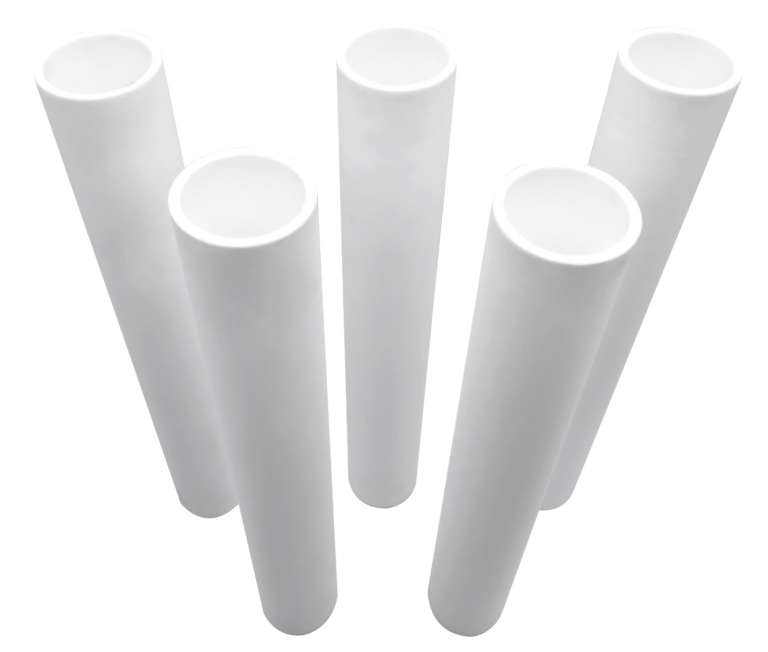
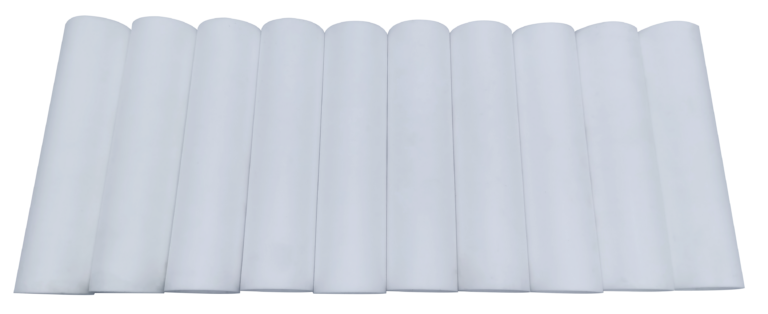
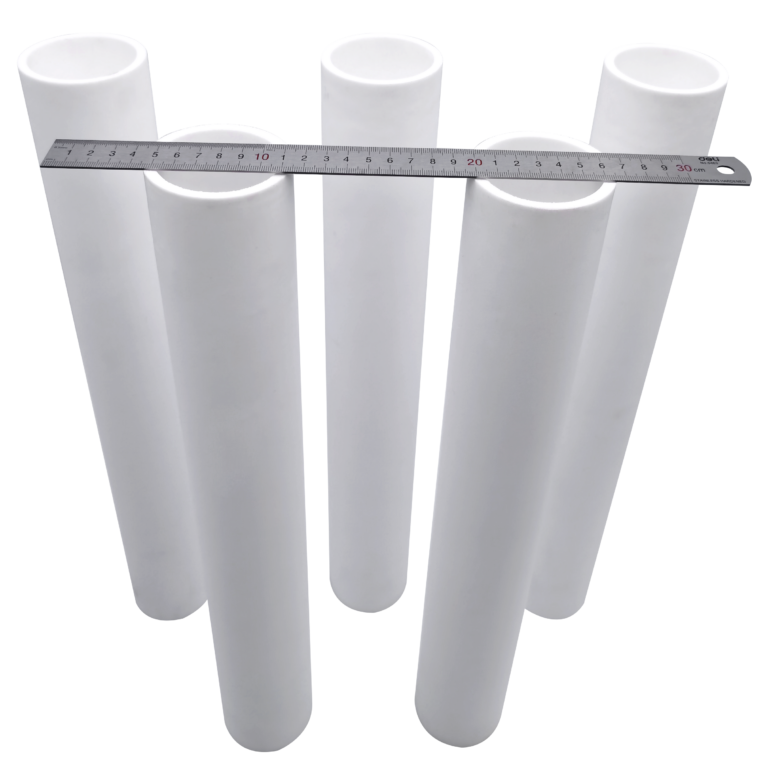
Key Takeaways
- Nylon (PA) sintered cartridges are built for abrasion-heavy, particle-laden industrial streams.
- They keep a stable pore structure under load, which helps maintain repeatable filtration.
- They’re often the sweet spot when PP is too soft and PTFE is overkill (or too pricey).
- The “best” PA filter isn’t universal—it depends on chemistry, temperature, dP, and cleaning method.
- Most failures come from wrong material compatibility or wrong pore-size assumptions, not “bad quality.”
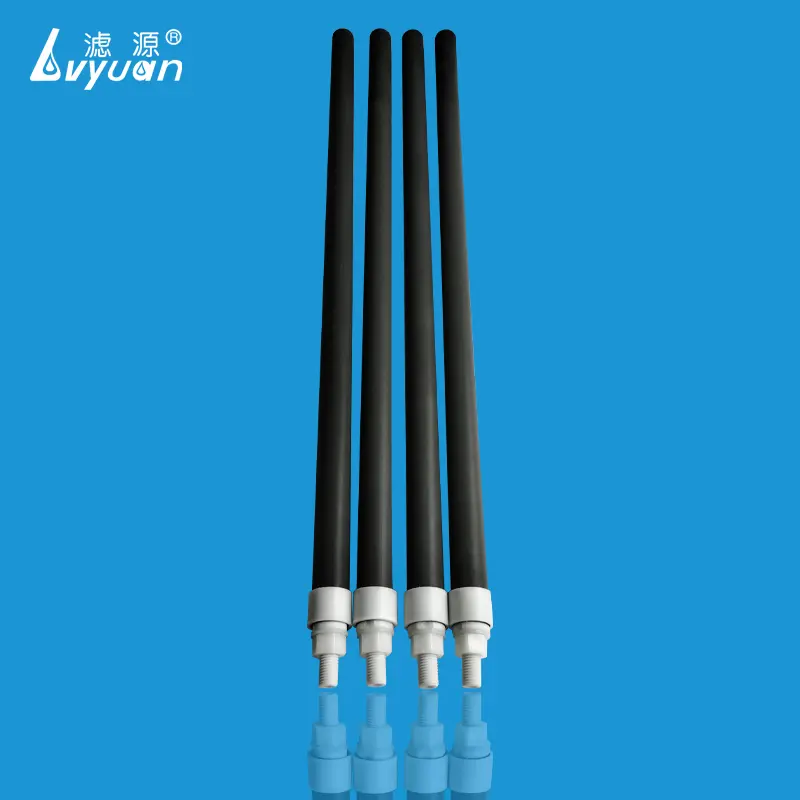
Introduction
If you’re filtering in an industrial plant, you’re not living in a polite world. You’re dealing with grit. Resin dust. Catalyst fines. Pigment sludge. Mystery particles that show up at 2 a.m. and somehow cost five figures by breakfast. Nylon (PA) sintered filter cartridges protect your process by taking the beating for your equipment—they resist abrasion, hold their shape, and keep filtration performance stable when the operating conditions get… let’s call it “unromantic.”
So why do people keep choosing PA for industrial filtration? Because it’s tough, it’s efficient, and in the right chemistry window it’s ridiculously reliable. But the ugly truth is: pick the wrong PA grade or pore spec, and you’ll blame the filter for a problem you designed.
Let’s fix that.
Why Nylon (PA) Sintered Cartridges Feel “Industrial” in the Best Way
Nylon (polyamide—often PA6 or PA66 in industry talk) has a reputation: mechanically strong, abrasion-resistant, and stable under stress. In sintered form, that reputation becomes practical: a porous structure that doesn’t collapse the minute your differential pressure climbs.
Durability isn’t a marketing word here—it’s physics
Industrial filtration is basically a tug-of-war between flow rate, particle loading, and media strength. Many materials filter fine when everything is gentle. But industrial streams aren’t gentle.
PA sintered media tends to handle:
- High particle impact (think: powder transfer, pneumatic conveying, vacuum loader lines)
- Abrasive solids (mineral fines, carbon black, pigments)
- Repeated pressure cycling (start/stop, pulse flow, “oops we deadheaded the pump” moments)
If your filtration environment behaves like a sandblaster, nylon is one of the few plastics that doesn’t flinch.
Efficiency comes from a stable, connected pore network
Sintered filters work because they create a 3D porous matrix—not just a surface screen. That matters because:
- You get depth filtration behavior (particles distribute through the structure)
- You often gain higher dirt-holding capacity than a simple mesh
- Flow stays more predictable as loading increases (up to the point physics taps out)
Is it magic? No. It’s geometry plus material strength.
Where Nylon (PA) Sintered Filters Shine in Real Industrial Filtration
Let’s get specific, because “industrial filtration” is like saying “food.” It could mean soup, or it could mean a raw onion someone dared you to eat.
1) Powder handling and pneumatic conveying
Nylon sintered elements are common where you’re moving powders: plastics compounding, additives, pharma excipients, even specialty chemicals. The pain point is always the same: dust wants into your equipment, and equipment hates dust.
PA’s abrasion resistance helps when particles slam into the media at speed.
2) Chemical processing (with the right compatibility)
Nylon isn’t PTFE. It won’t shrug at every solvent known to humanity. But within its compatibility range, it’s a strong candidate for filtering:
- process water loops
- mild chemical solutions
- certain hydrocarbons and oils (application-dependent)
- intermediate slurries with abrasive solids
If your stream includes aggressive acids, strong oxidizers, or nasty solvents, nylon might not be your friend. It’s not “bad.” It’s just not invincible.
3) Cooling systems, recirculation loops, and equipment protection
Want to keep pumps, valves, spray nozzles, and sensors alive? Filtration is your insurance policy. PA sintered cartridges are often used as protective pre-filters where you need mechanical strength more than ultra-fine membrane performance.
4) Industrial water and wastewater (selectively)
Yes, nylon can play here—especially where there’s solids load and you want robustness. But you still need to confirm:
- temperature
- pH range
- cleaning chemicals
- expected fouling type (organic vs inorganic)
Nylon vs PE vs PP vs PTFE: The Quick, Opinionated Reality Check
I’ll say it plainly: most material choices are driven by one of three things—chemistry, temperature, or abuse. The rest is procurement theater.
Nylon (PA)
- Strength / abrasion: excellent
- Temperature tolerance: generally higher than PE/PP (depends on grade)
- Chemical resistance: good in many cases, not universal
- Best for: abrasive solids, rugged industrial duty
Polypropylene (PP)
- Strength: decent, but not as abrasion-tough as PA in many setups
- Chemical resistance: very good across lots of chemicals
- Best for: broad chemical filtration, cost-sensitive industrial use
Polyethylene (PE)
- Strength: good, often flexible; excellent for certain applications
- Best for: water filtration, general industrial, good balance
PTFE
- Chemical resistance: basically the “I fear nothing” option
- Cost: you’ll feel it
- Best for: harsh chemicals, high purity, aggressive solvents, extreme environments
So if your stream is chemically vicious, PTFE wins. If your stream is mechanically vicious, PA often wins. If you want broad chemical coverage at a practical price, PP is usually the diplomat in the room.
The Stuff People Get Wrong (And Then Blame the Filter)
Here’s the ugly truth: filters usually “fail” because someone assumed something.
Mistake #1: Treating pore rating like a promise carved in stone
Pore rating isn’t always absolute. Depending on how it’s measured (bubble point, permeability, particle challenge tests), two “10 µm” filters can behave differently in real life—especially with irregular particles.
What you should do:
- define your particle distribution
- define your target protection point (what are you protecting—pump? nozzle? membrane?)
- specify test expectations (efficiency, beta ratio, or practical outcomes)
Mistake #2: Ignoring chemical compatibility because “it’s just water”
Industrial “water” is often a chemical cocktail wearing a water costume. Additives, surfactants, cleaning agents, biocides, solvents from upstream… the list gets weird fast.
If nylon is exposed to conditions that promote hydrolysis or swelling, performance will change. You’ll see pressure drop rise, dimensional shifts, or mechanical weakening.
Mistake #3: Choosing durability but forgetting cleanability
Can you backwash it? Ultrasonic clean it? Chem-clean it? If your maintenance team can’t realistically clean it, your “long-life filter” becomes a “monthly purchase order.”
How to Choose the Right Nylon (PA) Sintered Cartridge Spec
If you want a practical selection checklist, here it is—steal it for your internal SOP.
Step 1: Define what you’re protecting
- Pumps: typically larger pore, high flow, high holding capacity
- Valves/nozzles: tighter pore, stable retention
- Instruments/sensors: often tight pore, consistent performance
Step 2: Define operating conditions
- Temperature (normal + excursions)
- Differential pressure range
- Flow rate and viscosity
- Solids loading (mg/L or ppm, if you can estimate)
Step 3: Confirm compatibility (don’t guess)
- pH range
- cleaning chemicals
- oxidizers
- solvent exposure
- oils/hydrocarbons (depends on type and temperature)
Step 4: Decide: single-use vs cleanable
If it’s cleanable, specify:
- cleaning method
- acceptable cycles
- performance after cleaning (pressure drop recovery target)
Step 5: Validate with a simple field trial
A small pilot run beats a thousand arguments on a Teams call.
Efficiency: What “Good Filtration” Looks Like in Practice
Let’s talk outcomes, not buzzwords.
A nylon sintered filter cartridge is doing its job if:
- your downstream equipment stops eating grit
- pressure drop behavior is predictable (not chaotic)
- maintenance intervals become boring (boring is good)
- product quality stabilizes (less variation, fewer rejects)
- your operators stop cursing the filtration skid
That last one is the most scientific metric I know.
FAQ (People Also Ask)
What are nylon (PA) sintered filter cartridges used for?
They’re used for industrial filtration where you need mechanical strength, abrasion resistance, and stable porous performance—often in powder handling, process loops, and protective filtration for equipment.
Are PA sintered filters chemical-resistant?
They can be, within a defined compatibility range. Nylon handles many industrial fluids well, but it’s not the universal chemical shield that PTFE is. Always check pH, solvents, oxidizers, and cleaning agents.
Can nylon sintered cartridges be cleaned and reused?
Often yes—depending on fouling type and your cleaning method (backwash, rinse, ultrasonic, chemical cleaning). Reusability should be specified as part of the design and maintenance plan.
How do I select the right pore size for a PA sintered filter?
Start with what you’re protecting (pump/nozzle/membrane), then factor in particle size distribution, solids loading, and acceptable pressure drop. If you can, run a short field trial to confirm real-world performance.
Are nylon sintered filters better than PP sintered filters?
“Better” depends on your problem. PA often wins on abrasion resistance and mechanical toughness. PP often wins on broad chemical resistance and cost. Choose based on chemistry + mechanical stress + lifecycle cost.
The Bottom Line
If your filtration problem is basically “my process is chewing through filters,” nylon (PA) sintered filter cartridges deserve a serious look. They’re rugged. They’re efficient. They’re the kind of component you forget about—which, in industrial filtration, is the highest compliment.
Just don’t treat material selection like a coin flip. Define the chemistry, the temperature, the solids, the cleaning method… then spec the filter like you actually want peace in your plant.
Because you do. And so does your maintenance team.