Key Takeaways
- PP sintered filters are cost-effective because they often reduce total cost of ownership: fewer changeouts, stable filtration, and less “surprise downtime.”
- The hidden savings usually come from longer run time before ΔP spikes, not from a slightly cheaper unit price.
- PP hits a rare sweet spot: broad chemical compatibility + decent temperature tolerance + strong supply-chain availability.
- The biggest money leaks: picking by micron rating alone, ignoring ΔP and pump energy, and using PP where oxidizers/solvents cause cracking.
- If you want real ROI, specify flow at ΔP, contaminant type, cleaning cycles, and end-of-run limits—not just “10 micron.”
Introduction
If you’re asking how PP sintered filters become cost-effective in industrial applications, you’re already thinking like someone who’s been burned by “cheap” filters. Good. Cheap is a purchase price. Cost-effective is what happens after the filter meets your plant.
Here’s the direct answer: PP (polypropylene) sintered filters deliver cost-effective industrial filtration because they combine broad usefulness (many aqueous chemicals and process streams), rigid structure (less collapse and handling damage), and predictable performance that can extend run time before pressure drop forces a changeout. That means fewer shutdowns, less labor, and often better downstream protection. The catch? If you put PP in the wrong chemistry—strong oxidizers, certain solvents—or you ignore ΔP and system design, your “cost-effective” filter becomes a recurring expense with a personality.
Let’s talk about the economics people actually feel: time, labor, energy, and headaches.
What “Cost-Effective” Really Means (Hint: It’s Not the Quote on the PO)
I’ve sat in too many meetings where someone points at unit price like it’s a magic number. Then two weeks later maintenance is cursing the “cheap filter” while production is screaming for the line back.
H2: Cost-effective filtration = Total Cost of Ownership (TCO)
TCO is the full bill, including:
- filter purchase price
- labor for changeouts
- downtime and lost production
- pump energy (ΔP = energy tax)
- downstream damage (valves, nozzles, membranes)
- rejected product or rework
- spare inventory and logistics
PP sintered filters tend to win when you measure the whole bill, not just the line item.
Why PP Sintered Filters Often Save Money (The Real Mechanisms)
H2: 1) Rigid Porous Structure = Fewer “Oops” Failures
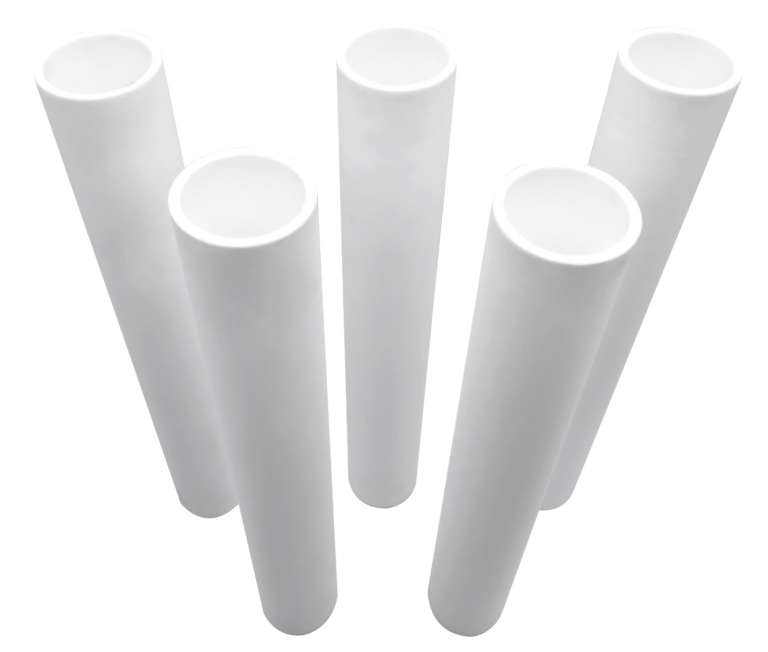
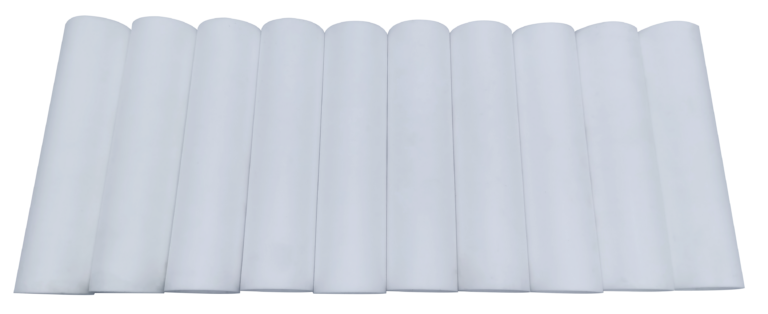
A sintered PP cartridge is a self-supporting porous body. It doesn’t rely on pleats or delicate layers.
That matters because industrial plants are not gentle places:
- pressure pulses happen
- vibration happens
- handling is… enthusiastic
- alignment isn’t always perfect
A rigid cartridge survives that world better than fragile media in many setups. Less breakage and fewer weird failures = less cost.
H2: 2) Predictable ΔP Behavior = Longer Runs (When the Job Fits)
In the right application, sintered structures can offer depth capture—particles load into the pore network rather than instantly blinding the surface.
That often means:
- slower ΔP rise
- longer time between changeouts
- fewer emergency stoppages
That’s where the money is. Not in “saving $2 per cartridge.”
H2: 3) Broad “Good Enough” Chemical Compatibility = Fewer Special Materials
PP handles a wide range of aqueous acids, bases, salts, detergents, and process water streams (conditions apply—always). So instead of stocking five exotic materials for five lines, many plants standardize around PP for a big chunk of applications.
Standardization reduces:
- purchasing complexity
- wrong-part installs
- inventory risk
- training burden for operators
And yes, the wrong filter installed at 3 a.m. is an expensive filter.
H2: 4) Supply Chain Availability = Lower Operational Friction
This one sounds boring. It isn’t.
When a filter is widely available and consistent, you get:
- fewer “lead time surprises”
- easier second-source options
- stable pricing
- less inventory hoarding
In 2026, supply chain stability is its own form of cost savings.
Where PP Sintered Filters Are Most Cost-Effective (Industrial Use Cases)
H2: Process Water and Utility Filtration
- cooling loops
- rinse water
- wash systems
- general solids control
These systems often run continuously, and the economics are dominated by maintenance and downtime. PP’s stability often pays off fast.
H2: Pre-Filtration to Protect Expensive Assets
If a PP sintered cartridge protects:
- membranes (RO/UF)
- fine cartridges
- dosing valves
- spray nozzles
- instrumentation
…the return on investment can be immediate. You’re basically paying a small amount upstream to avoid expensive pain downstream.
H2: Chemical Transfer and Mild-to-Moderate Chemical Streams
PP often makes sense for chemical filtration when chemistry is within PP’s comfort zone:
- many water-based chemicals
- many salts and brines
- many acids/bases at reasonable concentration/temperature
When chemical aggression ramps up, PP can stop being “cost-effective” and start being “repeat purchase punishment.” Know the line.
The Hidden Cost Traps (How PP Gets Blamed for Bad Decisions)
H2: Trap #1 — Spec’ing by Micron Rating Alone
“10 micron PP sintered filter.” Great. Now answer:
- at what flow rate?
- at what viscosity?
- with what particle type?
- with what solids loading?
- what ΔP is acceptable at end-of-run?
Micron rating is not the full spec. If you ignore system conditions, you’ll get:
- premature clogging
- unstable flow
- higher pump energy
- more changeouts
…and then PP gets blamed for your incomplete spec.
H2: Trap #2 — Ignoring Pump Energy (ΔP = Electricity You Pay For)
Every filtration system charges you rent in ΔP.
Higher ΔP means:
- more pump power
- more heat
- more wear
- more operational cost
A filter that clogs quickly doesn’t just cost you a cartridge—it costs you kilowatt-hours. Over a year, that’s real money.
H2: Trap #3 — Using PP Where Chemistry Triggers Cracking
PP can struggle with:
- strong oxidizers
- certain solvent families (some chlorinated and aromatic solvents)
- environments that trigger environmental stress cracking (ESC)
If PP swells, embrittles, or cracks, you’ll pay for:
- leaks and bypass
- cleanup
- unplanned downtime
- repeat failures
At that point, a “more expensive” material becomes the cheaper choice.
How to Spec PP Sintered Filters for Real Cost Savings
H2: The “ROI-first” spec checklist
If you want cost-effective performance, specify these:
- Target flow rate (normal and peak)
- ΔP limits (start-of-run and end-of-run)
- Fluid identity + concentration
- Operating temperature (normal and worst case)
- Particle type (hard grit vs gels vs fibrous solids)
- Solids loading profile (steady vs spiky)
- Cleaning method (CIP chemicals, cycles, temperature)
- Geometry (OD/ID/length, surface area, wall thickness)
- Housing and seals (compatibility matters too)
H3: A practical cost model (quick and dirty, but useful)
When comparing options, ask:
- How many cartridges per month?
- How many labor minutes per changeout?
- What is downtime cost per hour?
- What is pump energy impact from higher ΔP?
- What downstream parts does this filter protect?
That’s how you turn “filter selection” into a financial decision, not a guessing contest.
FAQ (People Also Ask)
Why are PP sintered filters considered cost-effective?
Because they often reduce total cost of ownership—stable performance, longer run time before ΔP forces changeout, broad usefulness across many streams, and fewer failures from handling or collapse.
Are PP sintered filters reusable?
Sometimes, depending on contaminant type and cleaning method. If solids are removable and chemistry is compatible, cleaning may extend life. If contaminants are oily or sticky, reuse may be limited.
What industries commonly use PP sintered filters?
Water treatment, chemical processing (moderate chemistry), manufacturing utilities, OEM filtration modules, and pre-filtration applications that protect finer media and sensitive equipment.
When is PP not cost-effective?
When chemistry is aggressive (strong oxidizers, certain solvents), when ΔP rises too fast due to poor sizing/spec, or when system design causes cracking or bypass. In those cases, a more resistant material can be cheaper over time.
How do I choose the right micron rating for cost savings?
Choose based on your contamination profile and validate using flow and ΔP targets. The “best” micron rating is the one that meets quality requirements while keeping ΔP and changeout frequency reasonable.
The Bottom Line
PP sintered filters aren’t cost-effective because they’re “cheap.” They’re cost-effective because, in the right industrial applications, they keep filtration boring: stable flow, manageable ΔP, fewer surprises, fewer changeouts, less downtime.
But you only get that outcome if you respect the details—chemistry, temperature, ΔP, contaminant type, and cleaning cycles. Ignore those, and you’ll turn a workhorse into a recurring expense.
If you paste your Internal Links JSON, I’ll re-issue this article with 5–8 exact internal links placed naturally using your specified keywords and URLs.