ご出発前に、当社の経営陣にご相談ください




Our Managing Team
お帰りになる前に、ぜひ当社の経営陣と直接ご相談ください。お客様のプロジェクトに最適な技術的なアドバイス、価格面でのサポート、カスタマイズオプションをご提供いたします。当社の専門家がお客様の要件を迅速に評価し、最適な焼結プラスチックフィルターソリューションをご提案いたします。これにより、産業用途における調達リスクを低減しつつ、効率性、一貫性、そして長期的な供給の安定性を向上させるお手伝いをいたします。.

A pleated filter is usually better when you need high flow, low initial pressure drop, compact installation, and economical replacement. A sintered filter is usually better when the process involves high temperature, high differential pressure, aggressive chemicals, repeated cleaning, catalyst recovery, steam service, or long operating campaigns.
That is the direct answer.
But it is not the answer most purchasing teams want, because “better” is often used as a substitute for a question nobody has properly defined: better at what, under which process conditions, for how many operating hours, and at whose cost?
Cheap gets expensive.
A disposable pleated cartridge that costs one-fifth as much can still become the more expensive choice after six months of replacements, shutdown labor, inventory management, product loss, and contaminated waste disposal. At the same time, specifying a heavy-duty 316L sintered element for clean ambient water at moderate pressure can be engineering theatre—technically impressive, financially weak.
So which filter should you actually buy?
My view is blunt: choose pleated media for economical surface area; choose sintered media for structural survival and repeatable recovery. Everything else is process detail.
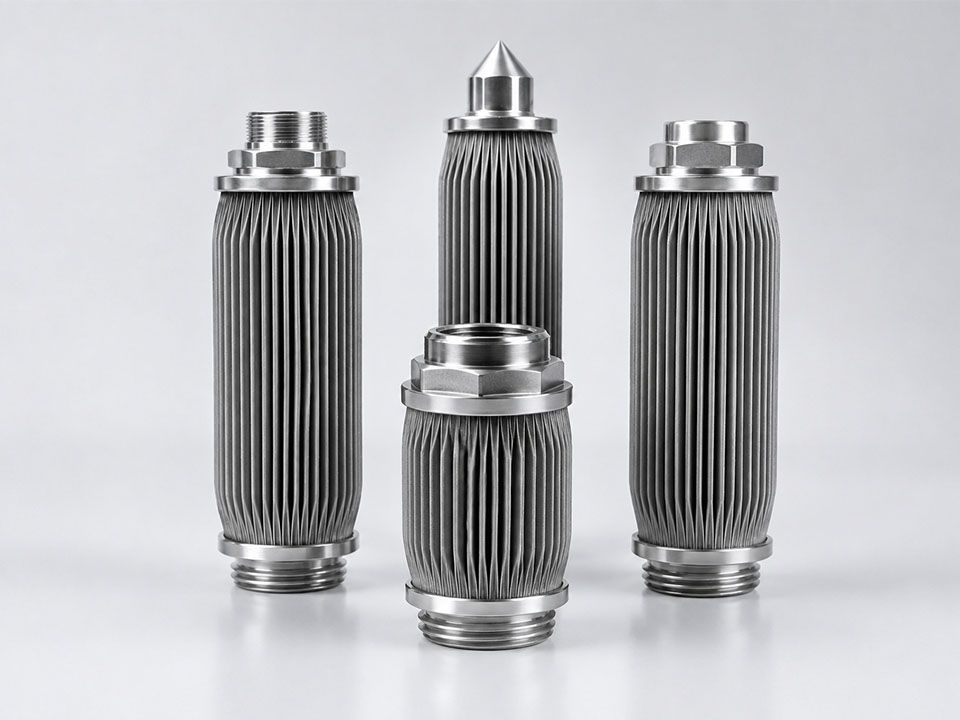
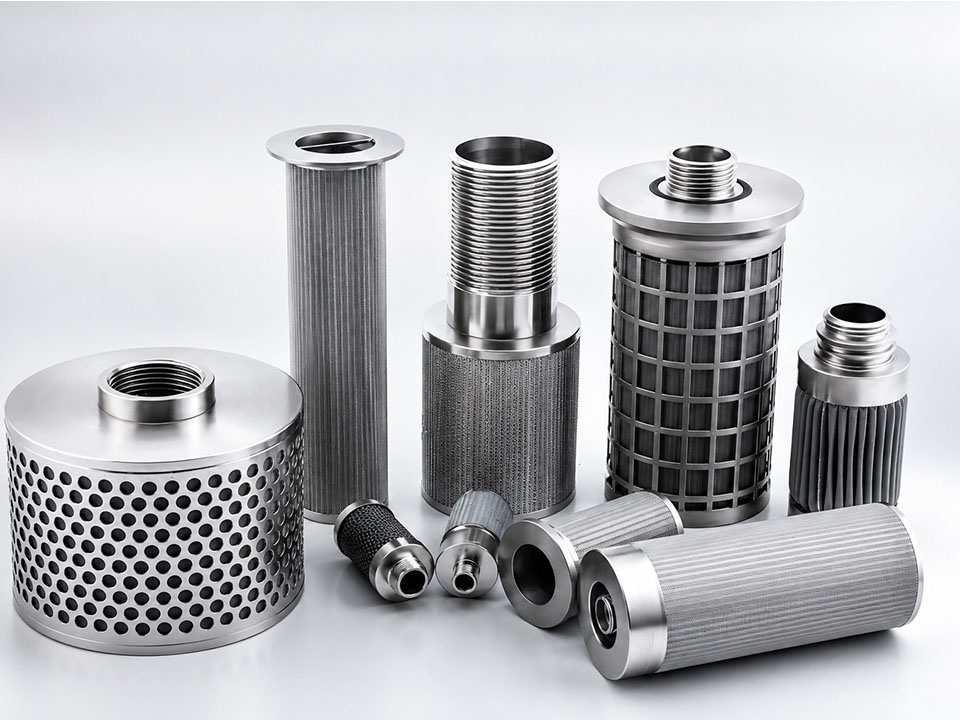
A pleated filter is made by folding a sheet of filtration media into a tightly packed cylindrical geometry. The folds multiply the effective filtration area without requiring a larger housing. Depending on the application, the media may be polypropylene, polyester, cellulose, glass fiber, PTFE membrane, stainless steel mesh, or another engineered material.
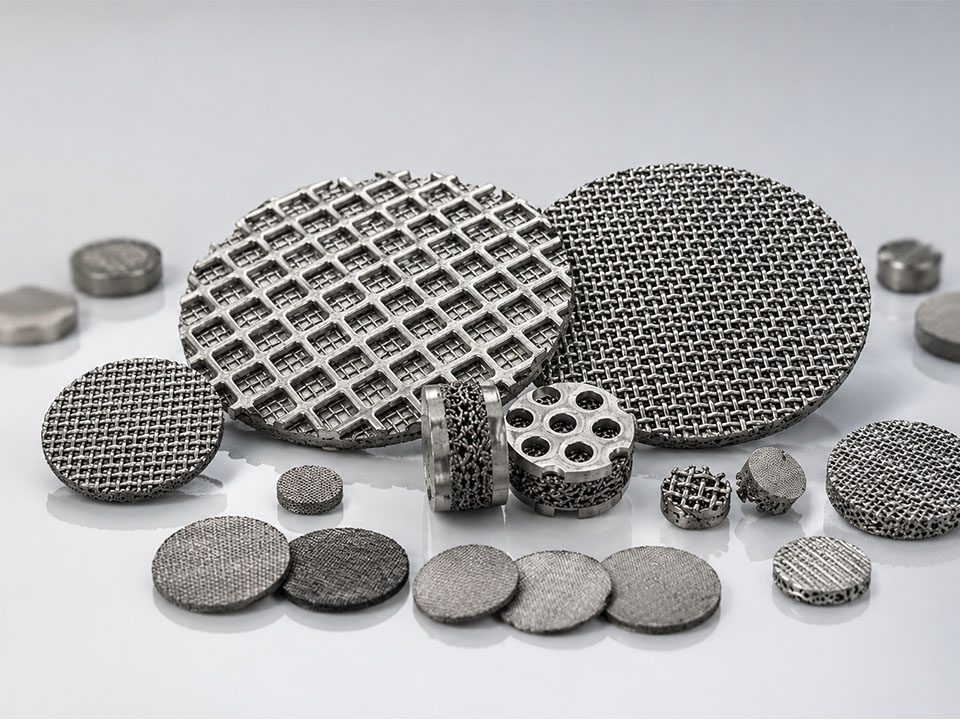
A sintered filter is produced by bonding metal powder, metal fiber, or woven wire mesh at elevated temperature below the material’s melting point. The particles or wire contact points fuse into a rigid porous structure with controlled flow paths.
One gains area through geometry.
The other gains strength through metallurgy.
That distinction affects nearly every operating variable: pressure drop, dirt capacity, thermal resistance, collapse strength, cleanability, particle shedding, chemical compatibility, service life, and acquisition cost.
It also explains why a simple pleated filter vs sintered metal filter comparison based only on micron rating is unreliable. Two elements marked “10 µm” may behave very differently because nominal rating, absolute rating, pore-size distribution, media thickness, particle shape, fluid viscosity, and challenge concentration all influence actual retention.
Choose a pleated filter when:
Choose a sintered filter when:
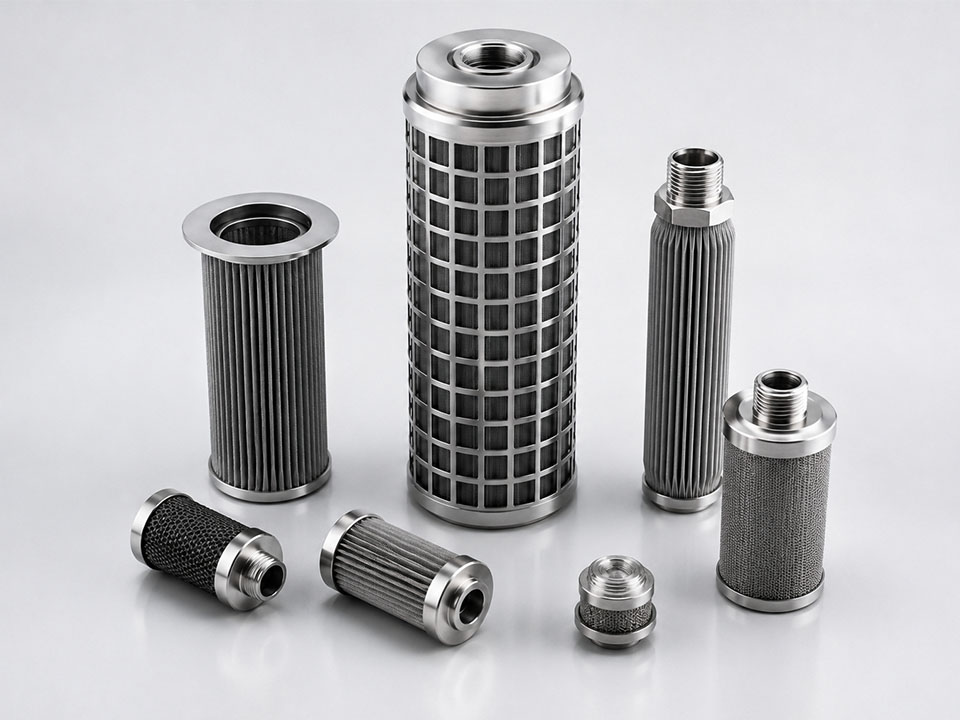
There is an awkward middle ground: a sintered pleated filter. This design combines the high area of pleats with the mechanical stability and cleanability of sintered metal fiber or mesh. It can be an excellent solution, but it should not be confused with an inexpensive polymeric pleated cartridge.
Our range of sintered pleated filter elements sits in this middle category: more area than a conventional rigid powder-metal tube, but far greater structural and thermal capability than a disposable plastic pleat.
| Selection factor | プリーツ式フィルターカートリッジ | Sintered filter cartridge | Typical winner |
|---|---|---|---|
| Initial purchase cost | Usually lower | Usually higher | Pleated |
| Filtration area | Very high because of folded media | Moderate for tubular powder media; high for pleated metal designs | Pleated or sintered pleated |
| Clean pressure drop | Usually low when properly sized | Often higher for equivalent dimensions and fine grades | Pleated |
| High-temperature resistance | Limited by media, support layers, adhesive, end caps, and seals | Excellent with suitable metal and gasket selection | Sintered |
| Differential-pressure strength | Depends heavily on core and media construction | High structural integrity | Sintered |
| 耐薬品性 | Can be excellent, but depends on the polymer and bonding materials | Excellent when the correct alloy is selected | Application-dependent |
| 洗浄のしやすさ | Some designs can be rinsed; many are treated as disposable | Designed for repeated backwash, ultrasonic, solvent, steam, or chemical cleaning | Sintered |
| Fiber or media shedding | Possible with some fibrous media | Bonded metallic structure minimizes migration | Sintered |
| Dirt-holding capacity | High in many pleated depth or multilayer designs | Good, but depends on pore structure and whether a filter cake forms | Application-dependent |
| Service model | Replace after reaching terminal ΔP | Clean, regenerate, and reuse | Sintered |
| Shutdown frequency | Can increase in difficult services | Often reduced when cleaning is effective | Sintered |
| Weight | 低 | Higher | Pleated |
| Disposal burden | More spent cartridges | Lower replacement frequency, but cleaning waste remains | Sintered |
| 最適な用途 | Water, food and beverage, general process liquids, polishing, prefiltration | Refining, chemicals, hot gas, steam, catalyst recovery, high-pressure gas | Depends on service |
Pleating creates surface area.
A lot of it.
Donaldson states that some pleated industrial designs provide approximately two to three times the filtration area within the same footprint, reducing the air-to-media ratio and pressure demand. Parker similarly describes pleated cellulosic cartridges as offering high flow capacity at low pressure drop.
This is not marketing fluff. The fluid velocity through each square centimetre of media decreases as the available area increases. Lower face velocity generally means lower clean differential pressure, provided that the pleat channels remain open and the media has not been overpacked.
But more pleats do not automatically mean better performance.
That assumption causes trouble.
If pleats are packed too closely, viscous liquid, sticky solids, or rapidly accumulating filter cake can bridge the spaces between adjacent folds. Once bridging starts, much of the advertised area stops functioning independently. The cartridge may look enormous on a datasheet yet behave like a much smaller cylinder in the vessel.
Wide pleat spacing can improve cleanability and delay bridging. Donaldson, for example, describes wide-pleat cartridge designs intended to improve pulse cleaning and control pressure drop in fibrous or agglomerative dust service.
This is why I do not accept “number of pleats” as a meaningful procurement specification by itself. Ask for:
Without those values, the comparison is incomplete.
Every filter creates resistance. As contamination accumulates, resistance usually rises.
The U.S. Department of Energy advises filtering compressed air only to the level required because unnecessary filtration raises pressure drop and resulting energy consumption. It also recommends replacing elements according to measured differential pressure rather than relying only on a calendar.
That point matters far beyond compressed air.
In a pump-driven liquid system, increasing ΔP requires additional pumping head. In a gas train, it can reduce downstream pressure, restrict throughput, or increase compressor load. In a batch plant, it can simply extend the time required to complete each transfer.
A filter with a low purchase price but a permanently high operating ΔP may consume its price difference many times over.
And the reverse is also true. A premium sintered element does not automatically save energy. If it is undersized, excessively fine, badly cleaned, or specified with the wrong pore structure, it can operate at an unnecessarily high pressure drop.
The filter must be sized for the process—not for the brochure.
This is usually the easiest part of the decision.
Standard polypropylene pleated cartridges are commonly used in water, beverages, chemicals, and general process filtration, but their operating temperature is restricted by the polymer, support structure, end-cap method, and seal material. Polyester, PTFE, glass fiber, and stainless-steel pleated designs can extend the range, yet every component still needs to be checked.
A metallic sintered element removes many of those restrictions.
Pall lists porous sintered metal designs for service up to 677°C or 1,250°F when an appropriate alloy is selected. Its standard configurations may carry lower published limits because the seal, housing, or standard material—not necessarily the porous metal itself—becomes the limiting component.
That detail is often missed.
A 316L filter body rated for several hundred degrees does not make an NBR gasket suitable for the same temperature. Nor does a high-temperature gasket solve chloride stress-corrosion problems, oxidation, or alloy embrittlement.
For the best filter cartridge for high-temperature and pressure applications, I would usually begin with a sintered metal filter cartridge system and then narrow the design by alloy, pore grade, element geometry, joint construction, seal, housing code, and cleaning method.
Not by micron rating alone.
This distinction deserves more attention.
Operating pressure is the pressure contained by the housing and element assembly. Differential pressure is the pressure difference across the filter medium. A system may operate at 200 bar while the clean filter sees only 0.1 bar differential pressure.
Then the cartridge plugs.
The upstream side remains pressurized, downstream pressure falls, and the element is suddenly exposed to a much larger crushing or collapsing load. That is where unsupported soft media can deform, split, bypass, or separate from an end cap.
A sintered structure is inherently rigid. Powder particles, fiber contacts, or mesh layers are metallurgically bonded, allowing the element to withstand pressure cycling and reverse-flow cleaning more consistently than a typical disposable polymer cartridge.
Still, “metal” does not mean indestructible.
Ask the manufacturer for the allowable forward and reverse differential pressure at operating temperature. A collapse rating measured at room temperature should not be casually applied to hot service. Welds, end fittings, perforated supports, and fatigue exposure also matter.
For high-pressure ethylene, supercritical fluids, hydraulic systems, steam, and compressed-gas duty, the filter is part of the pressure system—not a consumable accessory.
This is where procurement spreadsheets often become misleading.
The disposable cartridge normally wins the first purchase order. A sintered element may cost several times more, especially when it uses 316L stainless steel, Hastelloy C-276, Inconel 600, nickel, titanium, or a multilayer sintered-fiber construction.
But the correct calculation is not:
Unit price of pleated cartridge versus unit price of sintered cartridge.
The correct calculation is:
Total filtration cost per operating year, per cubic metre processed, or per kilogram of saleable product recovered.
A usable total-cost model should include:
| Cost component | Pleated disposable | Reusable sintered |
|---|---|---|
| Initial elements | 低 | 高い |
| Replacement frequency | Potentially high | Lower if regeneration works |
| Shutdown labor | Repeated | Reduced or shifted to cleaning |
| Cleaning equipment | Usually minimal | May require backwash, ultrasonic bath, kiln, solvent, acid, or caustic system |
| Waste disposal | Spent cartridge plus retained contaminant | Cleaning liquid, removed solids, and eventually the element |
| Inventory | More replacement stock | Fewer elements, but spares are still needed |
| Product loss | May occur during frequent changeout | May be reduced by in-place cleaning |
| Validation burden | New cartridge lots may require control | Reused elements require cleaning and integrity procedures |
| Failure consequence | Usually limited in benign service | Potentially severe in critical process service |
| Residual value | Usually none | Possible long service life and metal scrap value |
A sintered filter is not automatically economical because it is washable. Cleaning must actually restore permeability and retention performance.
That is the hard part.
Some contamination detaches easily through backpulsing. Some dissolves in a compatible solvent. Some oxidizes in a controlled furnace. Other material penetrates the pore network, polymerizes, carbonizes, scales, or chemically attacks the alloy. A filter may look clean while remaining hydraulically blinded inside.
So the real question is not, “Can it be cleaned?”
It is, “Can it be repeatedly restored to a documented baseline without enlarging the pores, damaging the welds, contaminating the product, or creating unsafe chemical waste?”
Current product literature is useful, but long-running process cases are more revealing because they expose the economics of recovery, cleaning, and uptime.
In a process-industry case published by Mott, a sintered metal system used for spent-catalyst recovery reportedly produced filtrate containing less than 1 ppm suspended solids. The backwashed solids were sent for recovery, and the system operated for more than seven years; reported catalyst-recovery savings repaid the filtration investment in a little over one year.
That case does not prove that every sintered installation will achieve a one-year payback. Feed chemistry, catalyst value, solids morphology, cycle settings, filter area, and cleaning efficiency can change the result dramatically.
But it demonstrates something pleated-disposable comparisons often ignore: when the retained solid has economic value, the filter is not merely protecting equipment. It becomes a recovery asset.
Mott also reports that gas-assisted pneumatic hydropulse backwashing has been particularly effective for sintered porous metal elements and can be automated to reduce operator exposure.
Older refinery field data remain technically relevant as well. One porous-metal filtration study reported 98.3% to 99% backwash recovery, with optically clear filtrate measured at approximately 0.2 ppm total suspended solids during testing.
Those numbers should not be copied into a purchase specification as guaranteed performance. They show what an engineered system achieved under particular conditions, not what every cartridge will achieve in every slurry.
And that difference matters.
Because they are practical.
A well-selected pleated cartridge provides large filtration area, low clean ΔP, straightforward installation, familiar housings, broad media choice, and predictable replacement. In bottled water, beverage clarification, general chemical filtration, paint, rinse water, electronics, and final polishing, that combination is difficult to beat.
Donaldson describes polypropylene pleated cartridges intended for cost-effective process prefiltration, with absolute-rated media and low clean pressure drop.
The key phrase is “intended for.”
A cartridge designed for clean water prefiltration should not be moved into hot solvent, abrasive catalyst slurry, cyclic steam, or unstable high-pressure gas service just because the nominal micron number looks correct.
For economical liquid applications, our pleated filter cartridge range is the logical starting point. For broader sediment-removal needs—where melt-blown, high-flow, pleated, PP, and sintered cartridges must be compared together—the sediment filter cartridge category provides a wider selection framework.
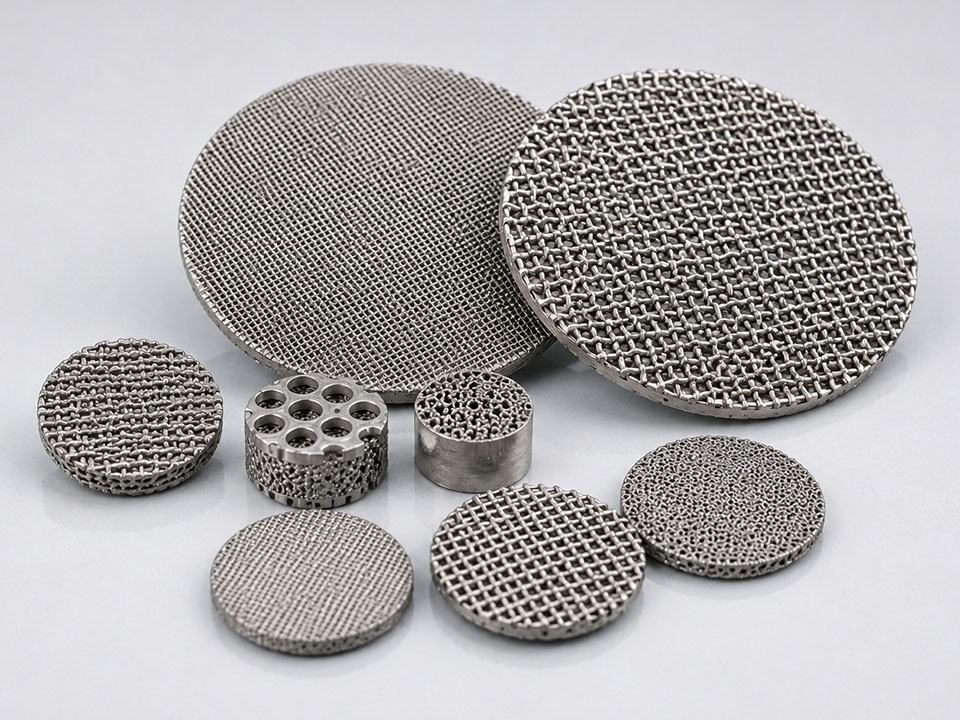
“Sintered filter” is not one product.
That label covers several structures with distinct behaviour.
Metal powder is compacted and sintered to create a rigid three-dimensional pore network. These elements are strong, dimensionally stable, and available in tubular, disc, cup, plate, and custom shapes.
They are often selected for:
The trade-off is that fine powder-metal media can have less filtration area than a pleated cartridge of equal envelope size, leading to higher face velocity unless the element is sized generously.
Multiple woven mesh layers are laminated and sintered. The layers may include a protective mesh, control layer, drainage layer, and structural support mesh.
These designs provide controlled openings, mechanical stability, and relatively easy surface cleaning. They are common in polymer processing, hydraulic service, screens, strainers, and applications where a precise woven structure is useful.
Very fine metallic fibers are formed into a porous mat and sintered at contact points. The resulting medium can provide high porosity, good permeability, and greater dirt capacity than some dense powder structures.
This format is frequently used when filtration area and cleanability must coexist.
Sintered fiber or mesh is pleated around a support core, combining large area with metal construction.
This is often the strongest answer to the simplistic sintered filter cartridge vs pleated filter cartridge debate because it demonstrates that “pleated” describes geometry while “sintered” describes how the medium is bonded.
A filter can be both.
316L is popular because it offers useful corrosion resistance, weldability, availability, and cost balance. It is not universally corrosion-proof.
Chloride concentration, pH, temperature, oxidizing potential, crevice geometry, cleaning chemicals, and exposure time can make a service unsuitable for 316L. Hydrochloric acid is an obvious problem. Hot chloride-bearing water can also cause pitting or crevice corrosion under conditions that look mild on a generic compatibility chart.
Nickel alloys may be required for stronger acids or chloride environments. Titanium may be appropriate in certain oxidizing chloride services. Porous PTFE pleated media can outperform metal in some chemically aggressive but mechanically moderate duties.
And seals fail first surprisingly often.
EPDM, FKM, NBR, silicone, PTFE, FFKM, graphite, and metal gaskets have different limits. The compatibility review must cover:
Ignore one, and the material-selection exercise is unfinished.
A 5 µm nominal pleated filter and a 5 µm absolute sintered filter are not equivalent.
Nominal ratings may describe a broad percentage of particle removal under a manufacturer-defined test. Absolute ratings are generally tied to a specified maximum particle size or beta-ratio performance, but terminology and test methods still need to be verified.
Ask for the test standard and efficiency curve.
In liquid filtration, a beta ratio is expressed as the number of upstream particles above a stated size divided by the number downstream. For example:
The efficiency is calculated as:
Efficiency = (β − 1) ÷ β × 100%
But even this does not answer everything. Deformable gels, plate-like particles, fibers, biological matter, and agglomerates may pass or bridge differently from rigid calibration dust.
For critical service, run a challenge test with the real fluid and real contaminant.
Pleated cartridges tend to work well with relatively low-to-moderate solids loads, especially when their large area delays the rise in ΔP. Multilayer pleated depth structures can capture particles through the thickness rather than only on the surface.
Sintered elements often perform best when the solids form a permeable surface cake that can be dislodged by reverse flow.
That last sentence is important.
A backwashable filter needs a backwashable contaminant. Soft, sticky, waxy, resinous, compressible, or gelatinous material may anchor inside the pores. Fine particles combined with oil can form a paste. Calcium carbonate scale may require acid. Organic residues may require caustic, solvent, steam, oxidation, or a sequence of methods.
The media and contaminant must be evaluated together.
Pleated polymeric and membrane cartridges are deeply established in food, beverage, pharmaceutical, and high-purity liquid processes because they can offer fine retention, sanitary construction, low extractables, validated performance, and easy replacement.
Sintered metal becomes attractive where steam sterilization, high temperature, mechanical strength, long service, or zero-fiber migration is the priority.
Pall notes that its sintered metal media do not shed fibers or particles and can avoid soluble extractables associated with some polymeric or resin-impregnated media.
Still, sanitary suitability cannot be inferred from “stainless steel.”
Surface finish, dead-leg control, weld quality, drainability, passivation, gasket design, clean-in-place procedure, microbial control, and applicable food-contact documentation all remain necessary.
A rough porous metal element installed in an undrainable housing is not automatically hygienic.
Some can.
Stainless-steel pleated mesh cartridges may be backflushed or ultrasonically cleaned. Donaldson describes a pleated stainless-steel cartridge that combines increased surface area with backflushing or ultrasonic cleaning, extending service life and lowering total ownership cost.
Certain polymeric pleated cartridges can also be rinsed and reused in noncritical service. But casual reuse creates risk when:
So “washable” and “validated for repeated reuse” are not the same claim.
Absolutely.
They can crack through fatigue, corrode, erode, deform under excessive differential pressure, blind internally, suffer failed welds, retain cleaning chemicals, or lose filtration integrity through improper ultrasonic or mechanical treatment.
Aggressive backpulsing can also damage a poorly designed assembly.
A sintered filter is strong, not magical.
The most common selection mistakes I see in technical specifications are conceptual rather than metallurgical:
Use the following sequence.
Specify the maximum allowable downstream contamination, not merely a preferred micron number.
Include particle concentration, size distribution, shape, hardness, and whether the retained material is waste, product, or catalyst.
Document:
A disposable filter may be ideal when cartridge changeout takes ten minutes and waste volume is minor.
A reusable filter becomes more attractive when shutdown takes eight hours, operators require protective equipment, the retained catalyst is valuable, or the plant operates continuously.
Do not accept a ΔP value without checking the test fluid, viscosity, temperature, element length, and flow basis.
Water data at 20°C cannot be directly applied to a 500 cP resin stream.
Define when the element must be replaced or cleaned. This limit may be based on collapse strength, pump capacity, process throughput, filtration efficiency, or product economics.
Measure clean-flow resistance before use, after contamination, and after each cleaning cycle.
A sensible validation program records:
Use actual labor, waste, downtime, energy, cleaning, and inventory costs.
Do not hide downtime under “maintenance overhead.” In many continuous plants, downtime is the largest number in the calculation.
| Process condition | Recommended starting point |
|---|---|
| Ambient water, modest solids, low replacement cost | Polypropylene pleated cartridge |
| Final liquid polishing with very low clean ΔP | Fine pleated cartridge or membrane |
| High-flow process water | Large-diameter pleated or high-flow cartridge |
| Hot gas above polymer limits | Sintered metal or suitable ceramic |
| Steam filtration | Sintered stainless steel with compatible seals |
| Catalyst recovery | Backwashable sintered metal |
| Aggressive solvent at moderate temperature | PTFE pleated or compatible metal alloy |
| High-pressure gas | Rigid sintered metal |
| Food and beverage prefiltration | Pleated food-contact-compliant cartridge |
| Repeated sterilization | Validated PTFE, stainless pleated, or sintered metal |
| Abrasive particles | Supported metal media, depending on velocity |
| Low solids and frequent grade changes | Disposable pleated cartridge |
| High-value retained solids | Regenerable sintered system |
| Limited housing space and high flow | Pleated or sintered pleated design |
There is no universally better filter.
There is only a filter whose failure mode is acceptable for the process.
A pleated cartridge commonly fails economically: rising ΔP, frequent changeouts, labor, waste, or lost production.
A sintered cartridge can fail economically in a different way: high capital cost, inadequate area, poor cleaning recovery, corrosion, or an overengineered system that never earns back its price.
I would choose a pleated filter without hesitation for ordinary, moderate-temperature polishing where replacement is easy.
I would not choose it for hot catalyst slurry, steam, unstable pressure cycling, or a service where media collapse could contaminate a downstream reactor.
And I would choose sintered metal for those harsh duties—but only after testing cleanability with the actual solids.
That is the part sales brochures usually skip.
A pleated filter is better for low initial cost, high filtration area, high flow, and low clean pressure drop, while a sintered filter is better for high temperature, high differential pressure, repeated cleaning, chemical resistance, and long service life. The correct choice depends on operating conditions and total lifecycle cost.
Pleated cartridges are commonly preferred in water, beverages, general chemical filtration, and polishing stages. Sintered filters are usually selected for steam, hot gas, catalyst recovery, high-pressure gas, corrosive process streams, and applications where structural integrity or regeneration is required.
The main difference is that a pleated filter gains filtration area by folding sheet media, whereas a sintered filter gains strength and controlled porosity by metallurgically bonding powder, fibers, or wire mesh. Pleating primarily changes geometry; sintering primarily changes the mechanical structure of the medium.
The categories can overlap. A sintered metal-fiber sheet can be pleated, producing a reusable sintered pleated cartridge with both high surface area and strong metallic construction.
A sintered filter is not automatically more efficient because particle-removal efficiency depends on the pore rating, rating method, media structure, challenge contaminant, flow rate, viscosity, and test standard—not simply whether the medium is sintered or pleated. Either design can provide high efficiency when properly engineered.
Compare verified absolute retention, beta-ratio data, or application-specific challenge testing. Do not compare cartridges solely by printed micron rating.
A pleated filter usually has the lower clean pressure drop because its folded geometry places a large filtration area inside a compact cartridge, reducing fluid velocity through each unit of media. However, close pleat spacing, viscous fluids, sticky solids, and filter-cake bridging can reduce the usable area.
A generously sized sintered element can also operate at low ΔP, particularly when manufactured from high-porosity metal fiber or pleated mesh. Element area and permeability matter more than the category name.
Sintered metal filters are reusable when their contamination can be removed without damaging the pore structure, alloy, welds, or seals, and when post-cleaning flow and integrity can be verified against an established acceptance limit. Common methods include backwashing, ultrasonic cleaning, solvent soaking, chemical cleaning, steam, and controlled thermal treatment.
Not every contaminant is easy to remove. Polymerized resin, scale, tar, oil-bound fines, and deformable particles may require application-specific cleaning procedures.
Many polymeric pleated cartridges are designed as disposable elements, but certain stainless-steel mesh, PTFE, polyester, and reinforced pleated cartridges may be cleaned and reused when the manufacturer permits it and the application does not require single-use validation. Reuse should be based on tested integrity and restored flow—not appearance.
In sanitary or high-purity processes, unvalidated reuse can introduce microbial, chemical, and particle-contamination risks.
A properly engineered sintered metal filter is generally the best starting point for combined high-temperature and high-pressure filtration because its bonded porous structure resists collapse, thermal cycling, vibration, and reverse-flow cleaning better than typical disposable polymeric media. Alloy, weld, seal, housing, and differential-pressure ratings must still be checked.
Depending on the process, suitable materials may include 316L stainless steel, Hastelloy, Inconel, nickel, titanium, or other specialty alloys.
A sintered filter is worth the higher price when reduced cartridge replacement, lower shutdown frequency, recoverable product or catalyst, safer automated cleaning, and longer service life outweigh the cost of the element and its cleaning system. It is usually not economical when the process is mild and disposable changeout is cheap.
Calculate annual cost per unit of processed fluid rather than comparing cartridge purchase prices alone.
A sintered filter can replace a pleated filter only when the housing dimensions, flow capacity, clean pressure drop, retention rating, seal design, chemical compatibility, collapse strength, and cleaning method have all been verified. A mechanically compatible cartridge is not necessarily hydraulically or functionally equivalent.
Sintered media may require more surface area to match the clean ΔP of a large polymeric pleated element. A pilot test is recommended for critical service.
Common sintered metal filter applications include catalyst recovery, hot-gas filtration, steam filtration, high-pressure gas service, polymer processing, refinery slurry clarification, chemical-product recovery, sparging, flow control, hydraulic protection, instrument sampling, and food or pharmaceutical processes requiring rigid non-fibrous media.
For a broader review of available geometries and materials, see our industrial sintered metal filter elements.
For clean or moderately contaminated fluids at ordinary temperatures, start with a pleated cartridge. It normally gives you more area, lower initial pressure drop, easier sourcing, and a lower purchase price.
For heat, pressure, steam, catalyst, chemical attack, repeated backwash, or costly shutdowns, start with sintered metal.
But do not finalize either choice from a catalogue.
Send the manufacturer your actual flow rate, fluid composition, viscosity, temperature range, normal and maximum differential pressure, solids concentration, target retention, cleaning plan, and required service interval. Request clean-flow data and, where failure is expensive, test the real process fluid.
Need help comparing both constructions for a specific operating condition? Send us your process data, target micron rating, flow, pressure, temperature, and cleaning requirements. Our engineering team can evaluate whether a pleated, sintered powder, sintered mesh, or sintered pleated filter offers the lowest practical lifecycle cost.
コメント