Key Takeaways
- PP sintered cartridges can be excellent at elevated temperatures when the system is designed to control ΔP and mechanical stress.
- “High temperature” isn’t one number. The real limit is temperature × differential pressure (ΔP) × time (aka creep math).
- PP often outperforms PE in heat tolerance, making it popular for hot water, heated process fluids, and warm chemical streams—within compatibility limits.
- The usual failure mode isn’t melting. It’s creep, seal drift, and deformation, especially under constant load.
- If your chemistry is aggressive or temperatures are extreme, PP stops being “perfect” and PTFE (or other engineering polymers) starts looking smarter.
Introduction
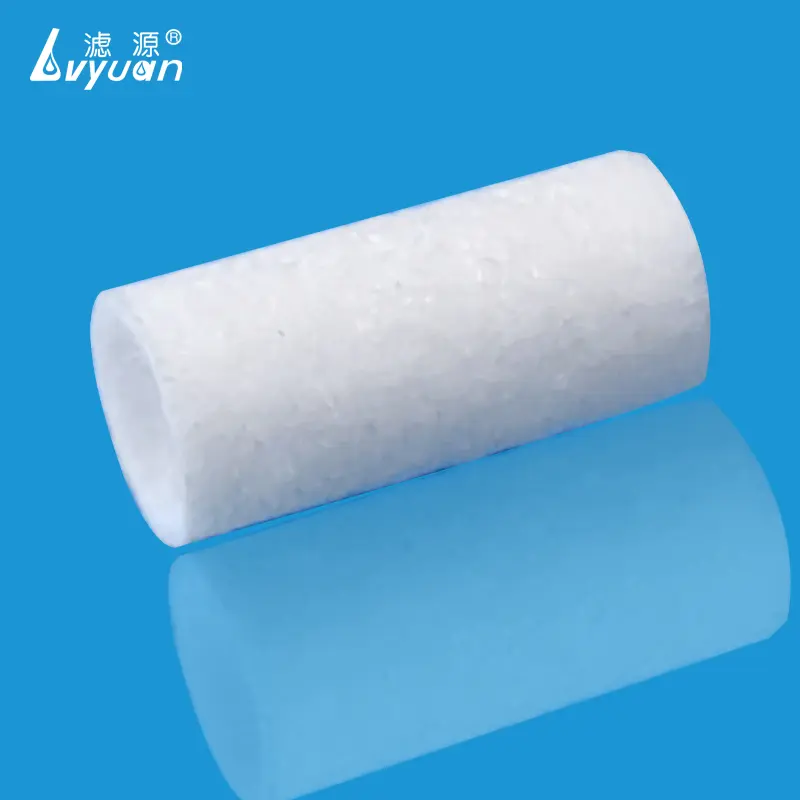
Let’s be honest: the headline “perfect for high-temperature applications” can get people in trouble if they treat it like a blanket promise. So here’s the direct answer in plain terms: polypropylene (PP) sintered filter cartridges are a strong choice for many high-temperature filtration applications because PP retains useful mechanical strength at elevated temperatures compared with PE, and the sintered structure provides a rigid, self-supporting porous body that resists collapse under real-world flow conditions. But PP’s true high-temperature performance depends on ΔP, clamping force, and exposure time—because polymers creep under heat. If you design around that, PP can be a heat-capable workhorse. If you don’t, it can quietly deform and then “mysteriously” leak.
Now let’s talk about what “high temperature” really means—and how to keep PP on your side.
First: What Counts as “High Temperature” in Filtration?
In metal filtration, “high temperature” might mean 400°C. In polymer filtration, “high temperature” often means hot enough to accelerate aging and creep, not necessarily hot enough to melt anything.
In industrial filtration systems, “high temperature” usually shows up as:
- hot process water
- heated chemical baths
- hot rinse lines
- warm solvents or intermediate streams
- equipment that runs hot because the plant runs hot
And here’s the kicker: temperature rarely comes alone. It brings friends: higher viscosity shifts, pressure spikes, pump cycles, and operators tightening clamps like they’re sealing a submarine hatch.
The Real Reason PP Works in Heat: It’s Not Just the Polymer, It’s the Structure
A sintered PP filter isn’t a flimsy sheet. It’s a rigid porous body.
That matters at elevated temperatures because many filtration problems are mechanical before they’re chemical:
- pleated media collapsing under ΔP
- fiber mats compacting and channeling
- membranes wrinkling or tearing during thermal cycles
A sintered PP cartridge is generally more stable under those mechanical realities, especially when compared to softer structures.
H2: PP vs PE in “hot-ish” applications
If you’re choosing between common porous plastics:
- PE tends to win on impact toughness at moderate temperatures
- PP often wins when temperature climbs and you want better heat tolerance
So, yes: PP is often the logical step up when your process is too hot for PE to behave predictably.
The Three Things That Decide PP’s High-Temperature Success (The “Creep Triangle”)
If you remember one concept, make it this:
H2: Temperature × ΔP × Time = Creep Risk
PP can deform slowly under sustained stress at elevated temperatures. That’s creep. It’s not dramatic. It’s not loud. It’s basically the filter quietly sighing and changing shape.
H3: 1) Temperature
Higher temperature makes polymer chains more mobile. That increases deformation risk.
H3: 2) Differential Pressure (ΔP)
ΔP is mechanical load. High ΔP compresses the filter structure and pushes the cartridge against its supports and seals.
H3: 3) Time
A short exposure at heat is one thing. Continuous operation for weeks? Different story.
Put them together, and you can predict whether PP will stay stable or slowly drift into failure.
Common High-Temperature Failure Modes (So You Can Recognize Them Early)
H2: Creep → Dimensional Drift → Seal Problems
This is the classic.
Symptoms:
- O-ring sealing issues that “weren’t there before”
- cartridge fits slightly differently after a hot run
- small bypass that shows up as downstream particles
- sudden leak after a thermal cycle
It’s rarely because the PP “melted.” It’s because it moved.
H2: Early ΔP Spike (Often Caused by Viscosity + Poor Sizing)
Hot fluids can behave unpredictably if viscosity changes over the operating cycle.
If the system is undersized or the face velocity is too high, you get:
- faster loading
- higher ΔP
- higher creep risk
- earlier changeouts
Your filter didn’t “fail.” Your sizing did.
H2: Chemical + Heat Interaction (Compatibility Gets Harder When It’s Hot)
Some fluids that seem “fine” at room temperature become aggressive at elevated temperature. Heat accelerates chemical attack and stress cracking risks.
This is why compatibility charts without temperature context are basically fortune cookies.
Where PP Sintered Cartridges Truly Shine at Elevated Temperatures
H2: Hot Water and Heated Aqueous Streams
Think:
- hot process water loops
- wash and rinse systems
- heated buffer or utility streams (industry-dependent)
PP is often strong here when chemistry is mild and ΔP is controlled.
H2: Warm Chemical Baths (Moderate Chemistry)
Many industrial chemical processes run warm, not extreme. PP often works well in these environments if:
- the chemical is within PP’s compatibility comfort zone
- the system avoids sustained high ΔP
In hot services, protecting downstream membranes or finer cartridges can be huge.
A robust PP sintered prefilter can:
- stabilize flow to downstream elements
- reduce fouling pressure
- reduce emergency changeouts mid-run
That’s where “perfect” starts to feel true—because it’s saving the expensive stuff.
Where PP Is NOT “Perfect” (And What to Use Instead)
H2: Extremely Hot Service or High-Stress Conditions
If temperatures are near the upper edge for PP and ΔP is high and runtime is continuous, PP may creep and deform.
In those cases, options include:
- redesigning for lower ΔP (more area, parallel cartridges)
- using higher-temperature materials (often PTFE or other engineering plastics, depending on chemistry)
H2: Strong Oxidizers + Heat
Strong oxidizers can embrittle PP faster—especially with heat and cycling. If you’re in oxidizer-heavy environments, be cautious.
H2: Aggressive Solvent Systems at Temperature
Some solvent families can be problematic for PP, and heat makes it worse. If you’re solvent-heavy at elevated temps, PP might not be the right hero.
How to Spec PP Sintered Filters for High-Temperature Success
H2: The “don’t make me investigate this later” checklist
- Fluid identity + concentration
- Operating temperature (normal + worst-case, including spikes)
- Target flow rate (average + peak)
- Allowable ΔP (start-of-run and end-of-run)
- Particle type and loading profile
- Housing support strategy (avoid unsupported thin sections)
- Seal materials (O-rings that survive temperature + chemistry)
- Cleaning cycles (CIP chemicals + temperature + frequency)
H3: Design tricks that reduce creep risk
- increase filtration area to reduce face velocity
- use thicker walls or better structural support
- avoid running at high ΔP “just because the pump can”
- control pressure spikes during startups and shutdowns
You want the filter to live a boring life. That’s the goal.
FAQ (People Also Ask)
Are polypropylene sintered filter cartridges suitable for high-temperature applications?
Yes, for many elevated-temperature industrial applications—especially hot water and warm chemical streams—provided ΔP and mechanical stress are controlled and the chemistry is compatible.
What limits PP filters at high temperature?
The main limitation is creep under sustained load. Temperature plus ΔP plus time can cause dimensional drift, seal leaks, or deformation even without melting.
Reduce ΔP by increasing filtration area, improving support, and avoiding pressure spikes. Also ensure the housing and seals are designed for temperature and chemical exposure.
Is PP better than PE for high temperature filtration?
Often, yes. PP generally handles higher temperatures better than PE in many industrial filtration contexts, though the exact performance depends on design and operating conditions.
When should I choose PTFE instead of PP?
Choose PTFE when you need stronger chemical resistance, higher temperature stability, or when the process involves aggressive acids/alkalis/solvents that push PP beyond its safe operating window.
The Bottom Line
PP sintered filter cartridges can be “perfect” for high-temperature applications when the heat is real but not extreme, the chemistry is within PP’s comfort zone, and the system isn’t forcing the filter to live under constant high ΔP stress.
Respect the creep triangle—temperature × ΔP × time—and PP will reward you with stable filtration and sane operating costs. Ignore it, and you’ll be chasing leaks and wondering why the “same filter” suddenly behaves differently after a hot run.
If you paste your Internal Links JSON, I’ll re-issue this WordPress-ready post with 5–8 exact internal links inserted naturally, using your required anchor keywords and URLs.