Key Takeaways
- PP sintered filter cartridges are versatile because they handle many acids, bases, salts, and aqueous chemical streams with strong cost/performance.
- Their rigid porous structure delivers repeatable filtration and often better resilience than delicate media in real plant conditions.
- The real “compatibility secret” is not the polymer name—it’s concentration + temperature + exposure time + ΔP cycling + cleaning chemistry.
- PP’s common weak spots: strong oxidizers, some chlorinated/aromatic solvents, and environmental stress cracking (ESC) under mechanical load.
- You get the best results by specifying flow at ΔP, dirt holding capacity, pore structure, and cleaning cycles—not just micron rating.
Introduction
Here’s the straight answer: polypropylene (PP) sintered filter cartridges are versatile for chemical filtration because PP offers broad resistance in many water-based chemical streams—acids, bases, salts, detergents—while remaining cost-effective and mechanically stable in cartridge form. That combination makes PP a go-to for process filtration, transfer lines, and pre-filtration upstream of finer media. But PP is not a universal shield; it can struggle with strong oxidizers and certain solvent families, and it can crack via environmental stress cracking if chemistry and mechanical stress team up. If you choose PP with your eyes open, it’s one of the smartest “default” materials in chemical filtration.
Let’s talk about why it’s everywhere—and how to avoid the mistakes that make people swear it’s “junk plastic.”
Why PP Sintered Cartridges Feel “Versatile” in the Real World
Versatility isn’t just “it resists many chemicals.” It’s also:
- easy to integrate into housings and OEM modules
- stable across normal pressure fluctuations
- predictable filtration performance when properly specified
- cost that doesn’t make procurement cry
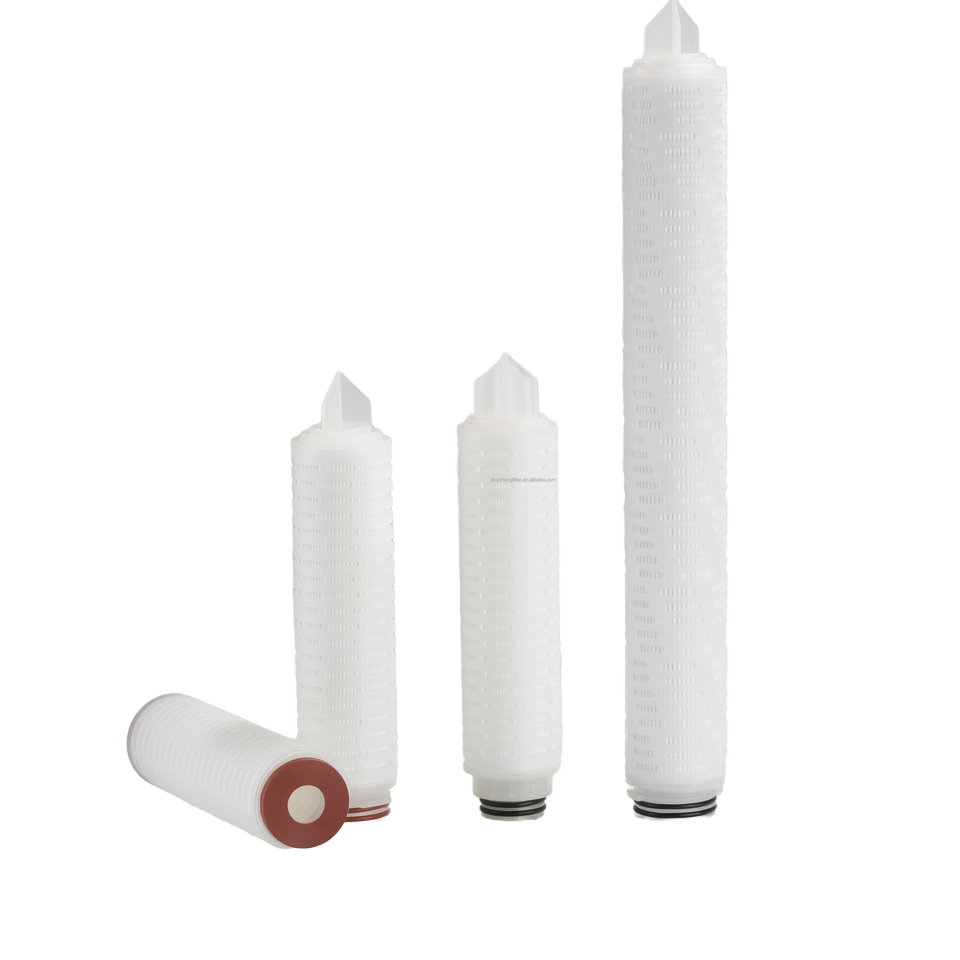
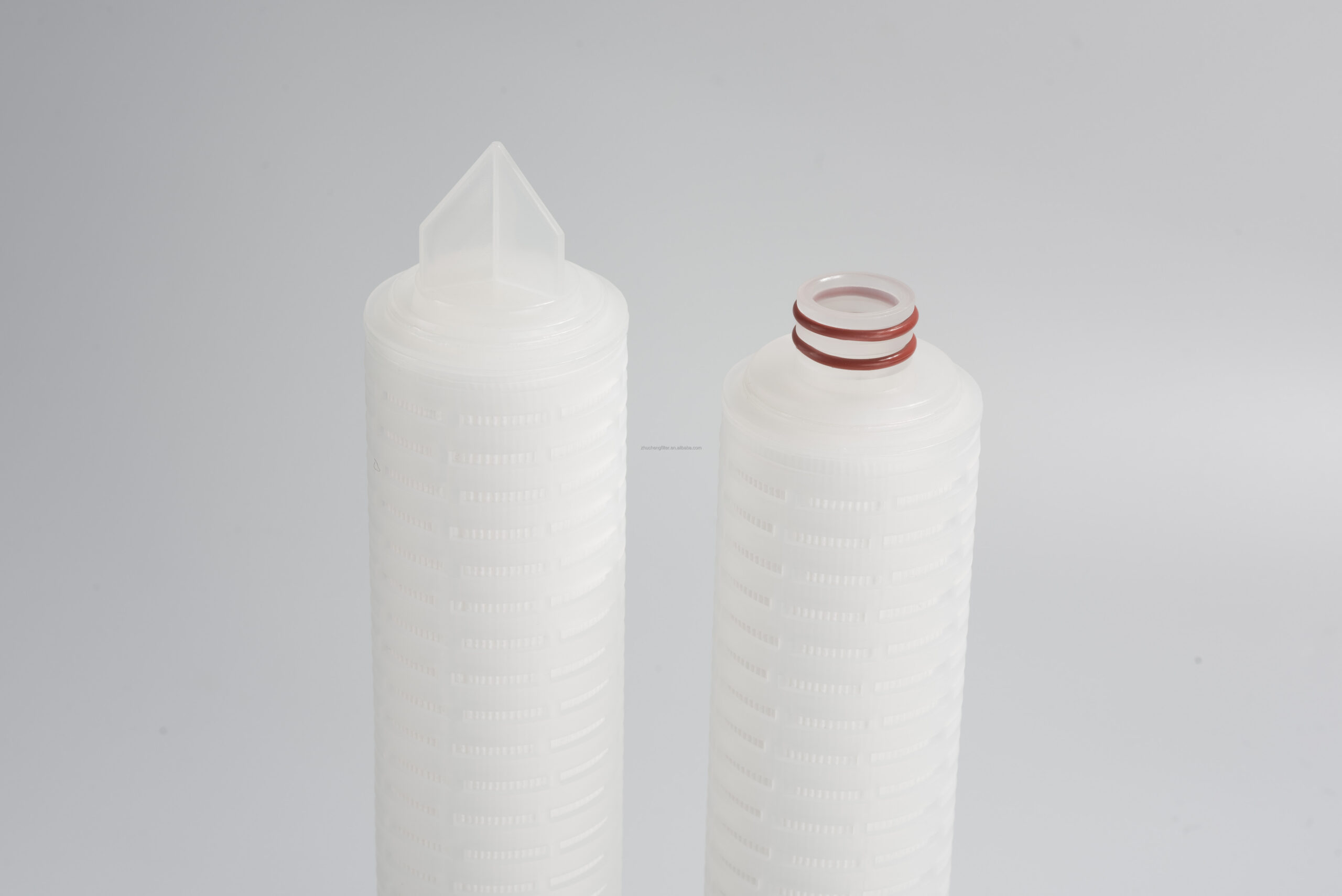
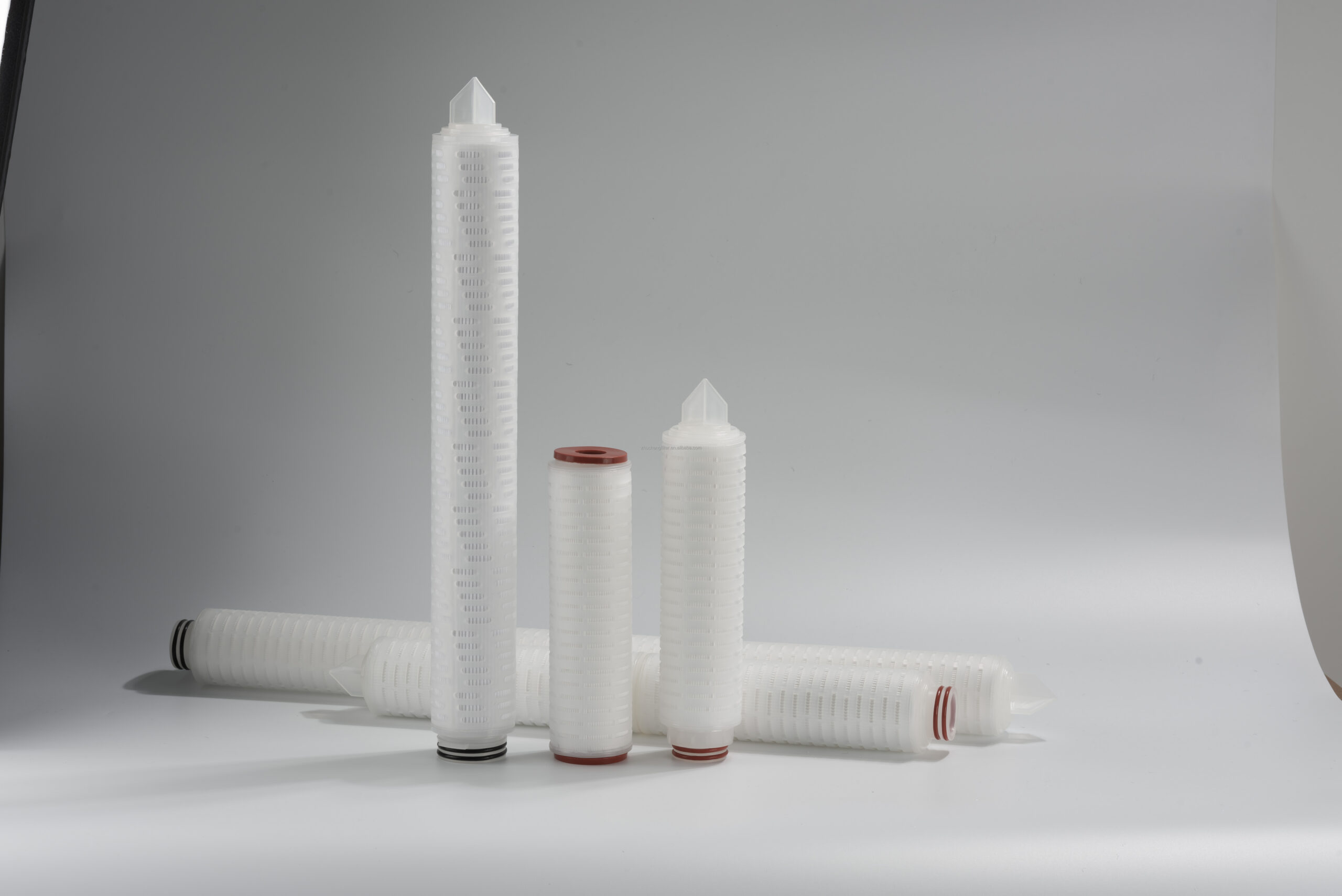
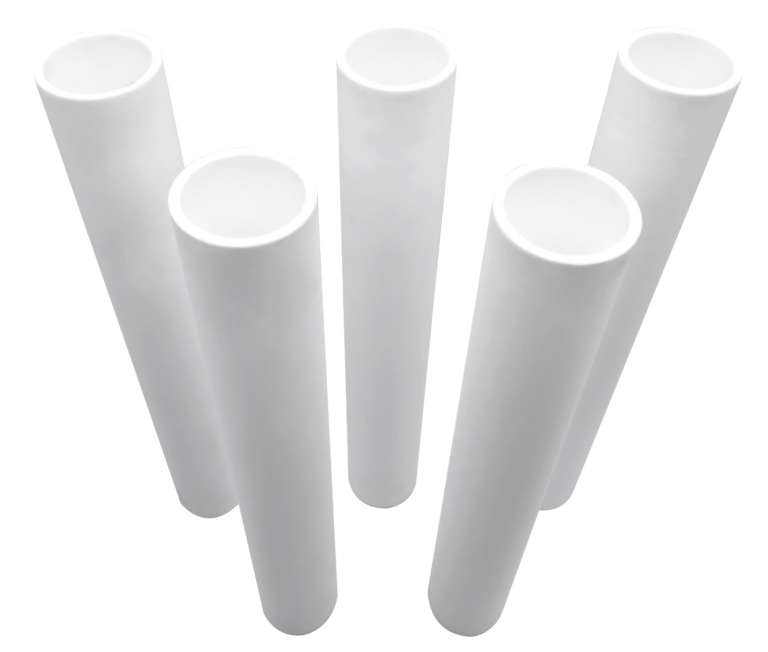
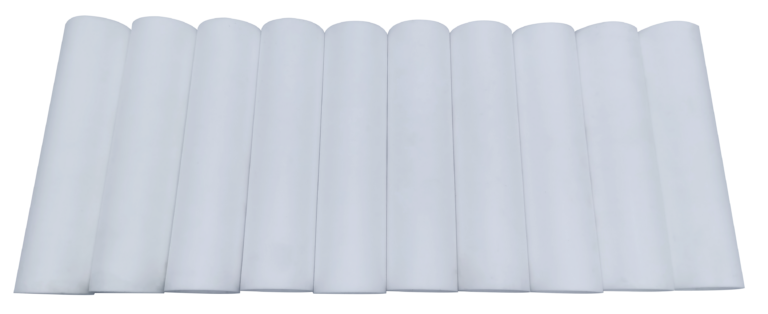
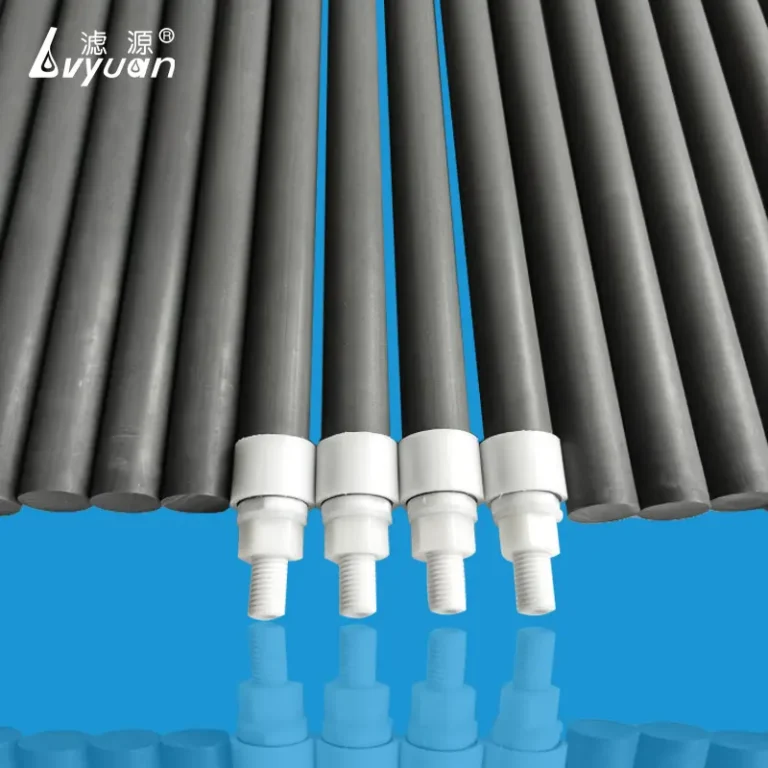
Sintered PP is a rigid porous body made by fusing polypropylene powder particles. That rigid structure tends to tolerate:
- pressure pulses from pumps
- vibration on skids
- frequent cartridge swaps
- less-than-gentle installation habits
And yes, that matters. Filters don’t fail in spreadsheets. They fail at 2 a.m. next to a pump that’s screaming.
What Chemical Filtration Jobs PP Handles Well
H2: 1) Acids and Bases (In the “Common Industrial Range”)
PP is widely used around many acids and caustics in industrial filtration—especially when the stream is aqueous and temperatures are reasonable.
Where PP often performs well:
- many mineral acids (process-dependent)
- many caustic solutions (process-dependent)
- neutralization streams and salt-rich solutions
But: “PP is compatible” isn’t a blanket statement. Concentration and temperature decide whether PP is your friend or your future failure analysis report.
H2: 2) Salts, Brines, and High-Ionic Streams
Salty streams show up everywhere: chemical production, surface treatment, waste treatment, rinse systems. PP tends to handle these reliably, which is one reason it’s a classic for utility-like chemical filtration.
H2: 3) Process Water + Chemical Additives (The Daily Grind)
A lot of “chemical filtration” is actually “water that has strong opinions.” Detergents, surfactants, mild acids/bases, pH adjusters, corrosion inhibitors—PP often handles these streams efficiently.
PP sintered cartridges are frequently used upstream to protect:
- membranes
- finer cartridges
- valves, nozzles, instrumentation
- pumps and seals that hate grit
This is the unglamorous way filtration saves money: stop abrasive particles early, keep the expensive stuff happier downstream.
Where PP’s Versatility Ends (And People Get Hurt)
Let’s not pretend. PP has enemies.
H2: Strong Oxidizers (The Fast Track to Embrittlement)
Strong oxidizing environments can degrade PP over time—often by making it brittle.
This can show up as:
- cracking at stress points
- chips during changeout
- leaks that appear “randomly” after cleaning cycles
If oxidizers are part of your process (or CIP), compatibility must be validated, not assumed.
H2: Certain Solvent Families (Especially Chlorinated and Aromatic)
Solvents aren’t one category; they’re a whole ecosystem.
PP can struggle with:
- some chlorinated solvents
- some aromatic hydrocarbons
Sometimes the cartridge doesn’t dissolve—it just swells slightly, changes dimension, and suddenly your seal is a bypass highway.
H2: Environmental Stress Cracking (ESC): The Silent Saboteur
ESC is where PP gets framed for crimes it didn’t commit alone.
It happens when:
- PP is under mechanical stress (ΔP cycling, clamp force, vibration)
- a chemical acts as a cracking agent under that stress
- micro-cracks form and grow over time
Then you find a crack and someone says, “Bad quality.” No. Often it’s chemistry + stress doing teamwork.
H2: Rigid structure = fewer surprises
Pleated and fibrous media can be fantastic, but in chemical service they can be more sensitive to:
- collapse or channeling under ΔP spikes
- adhesive failures or delamination (design-dependent)
- handling damage
A sintered PP body is robust and self-supporting. In harsh plant conditions, that can translate into more consistent performance.
H2: Depth capture can extend run time
Because contaminant capture occurs throughout the pore network (not just at the surface), sintered structures can sometimes run longer before ΔP climbs—depending on particle type and loading.
How to Spec PP Sintered Cartridges for Chemical Filtration (So They Don’t Betray You)
H2: The “adult spec” checklist
Give these to your supplier (or your internal team):
- Chemical identity + concentration
- Operating temperature range
- Target flow rate
- Allowable ΔP (initial and end-of-run)
- Contaminant type (hard grit vs gels vs fibrous solids)
- Solids loading profile (steady vs spiky)
- Cleaning chemistry (CIP solvents/oxidizers, temperature, cycles)
- Dimensions and connections (OD/ID/length/end caps)
- Housing and seal materials (don’t let the O-ring be the weak link)
H3: Micron rating is not the whole spec
If you only specify “10 micron,” you’ll get 10 micron problems.
You also need:
- pore distribution expectations
- filtration area and face velocity
- dirt holding capacity
- flow performance at defined ΔP
PP wins when you spec it like a system component, not a commodity part.
A Simple Compatibility Validation Method (Before You Scale)
If you’re uncertain, do this before committing to a big run:
H2: Soak + Hot soak + Stressed soak
- Soak test at real concentration (measure weight and dimensions)
- Hot soak at operating temperature (heat accelerates incompatibility)
- Stressed soak while clamped/compressed (to reveal ESC risk)
- Include cleaning cycles if CIP is part of life
I’d rather break a coupon than break a schedule.
FAQ (People Also Ask)
What makes PP sintered filter cartridges versatile for chemical filtration?
PP offers broad resistance in many aqueous chemical streams and can be manufactured as a rigid porous body that tolerates real-world plant conditions, making it useful across many processes.
Are PP sintered cartridges good for acids and caustics?
Often yes in many industrial scenarios, but compatibility depends on concentration, temperature, and exposure time. Validation is recommended for harsh or hot service.
What chemicals should polypropylene filters avoid?
Strong oxidizers are a major risk. Certain chlorinated solvents and aromatic hydrocarbons can also be problematic depending on conditions.
Why do PP filter cartridges crack in chemical service?
Environmental stress cracking (ESC) can occur when chemical exposure combines with mechanical stress like clamp load or ΔP cycling, producing cracks even if static charts suggest compatibility.
How do I choose the right micron rating for PP sintered filters?
Start with the particle removal target, then validate using flow rate and ΔP requirements. Consider pore structure, filtration area, and dirt holding capacity—not micron rating alone.
Final Thoughts
PP sintered filter cartridges are versatile because they’re the rare combination of chemically capable, mechanically stable, and financially sane. They thrive in many water-based chemical streams, they integrate easily into systems, and they tolerate real plant life better than a lot of delicate media.
But PP isn’t invincible. Strong oxidizers, certain solvents, and ESC under stress can turn a “safe” choice into a slow-motion failure.
If you want PP to be the hero, treat it like a system decision: define chemistry, temperature, flow, ΔP, and cleaning cycles—then validate the edge cases. That’s how you keep filtration boring. And boring is the goal.
If you paste your Internal Links JSON, I’ll produce the strict-linked WordPress-ready version with 5–8 exact keyword internal links woven in naturally.