Поговорите с нашей руководящей командой, прежде чем уехать
Our Managing Team
Прежде чем покинуть сайт, мы приглашаем вас напрямую пообщаться с нашей руководящей командой, чтобы вы получили максимально точные технические рекомендации, консультации по ценам и варианты индивидуальной настройки для вашего проекта. Наши эксперты смогут быстро оценить ваши требования, порекомендовать подходящие решения на основе фильтров из спеченного пластика и помочь вам снизить риски, связанные с поставками, одновременно повысив эффективность, стабильность и долгосрочную надежность поставок для ваших промышленных применений.
Нужна помощь в выборе подходящего фильтрующего картриджа?
Our Sales Team
Сообщите нашей службе поддержки продаж тип вашего изделия, степень очистки в микронах, размер, область применения, фильтрующий материал, рабочую температуру, давление и ориентировочное количество. Мы поможем вам подобрать подходящий картридж из спеченного пластика, спеченного металла или осадочный фильтр.
The trouble starts when a buyer sees “PP cartridge” on a quotation and assumes those two letters explain the cartridge’s filtration accuracy, construction, chemical compatibility, pressure limit, service life, and cleanliness level—when, in reality, they explain almost none of that.
See the problem?
Этот PP cartridge full form is polypropylene cartridge. Polypropylene is a thermoplastic polyolefin commonly represented by the repeating chemical unit ((C_3H_6)_n), while polypropylene homopolymer is associated with CAS No. 9003-07-0. (pubchem.ncbi.nlm.nih.gov) (PubChem)
But PP is only the material name.
A finished PP filter cartridge might be melt-blown, pleated, membrane-based, spun-bonded, wound, molded, or sintered. Those designs don’t behave alike. Not even close.
One may be a cheap throwaway prefilter that catches pipe rust before an RO membrane. Another may be a rigid, drawing-made porous component fitted inside chemical dosing equipment. Same polymer. Different animal.
Here’s the ugly truth: writing “5-micron PP cartridge” on a purchase order is often treated as a technical specification, although it leaves several expensive questions unanswered.
Этот рейтинг — номинальный или абсолютный?
What is the tested retention efficiency?
What pressure drop was recorded at the stated flow?
Which PP grade was used?
Are the end caps, support cage and seals also polypropylene?
And can the supplier prove any of it?
What Does PP Stand for in a Filter Cartridge?
In filtration terminology, PP stands for polypropylene.
Polypropylene can be processed into fine fibers, flat-sheet media, support cages, central cores, end caps, molded fittings, microporous membranes and rigid sintered bodies. That manufacturing flexibility—not some magical filtration property—is one reason PP appears in so many cartridge catalogs.
And it appears everywhere.
The 2024 Plastics Europe’s Fast Facts report reported 413.8 million metric tonnes of global plastics production in 2023. PP represented 19.0% of that total, making it the largest individual polymer category shown in the report.
That scale keeps resin available and usually keeps cartridge pricing competitive.
Useful? Absolutely.
Proof of process compatibility? No.
I frankly believe “PP is chemically resistant” has become one of the laziest sentences in industrial filtration. Resistant to what—10% sodium hydroxide at 20°C, concentrated oxidizing acid at 70°C, an aromatic solvent blend, or a mixed process stream that changes every shift?
Concentration matters. Temperature matters. So does soak time, stress cracking, pressure cycling, cleaning chemistry and the exact resin formulation.
The initials don’t answer those questions.
A PP Cartridge Is Not One Product
Ask three suppliers for a PP filter cartridge and you may receive three objects that happen to share a polymer but little else.
One might be a fuzzy melt-blown tube.
Another arrives with a pleated pack, cage, core and 222 O-rings.
Calling all three “PP cartridges” is technically correct. It’s also a great way to create a bad comparison sheet.
PP melt-blown filter cartridge
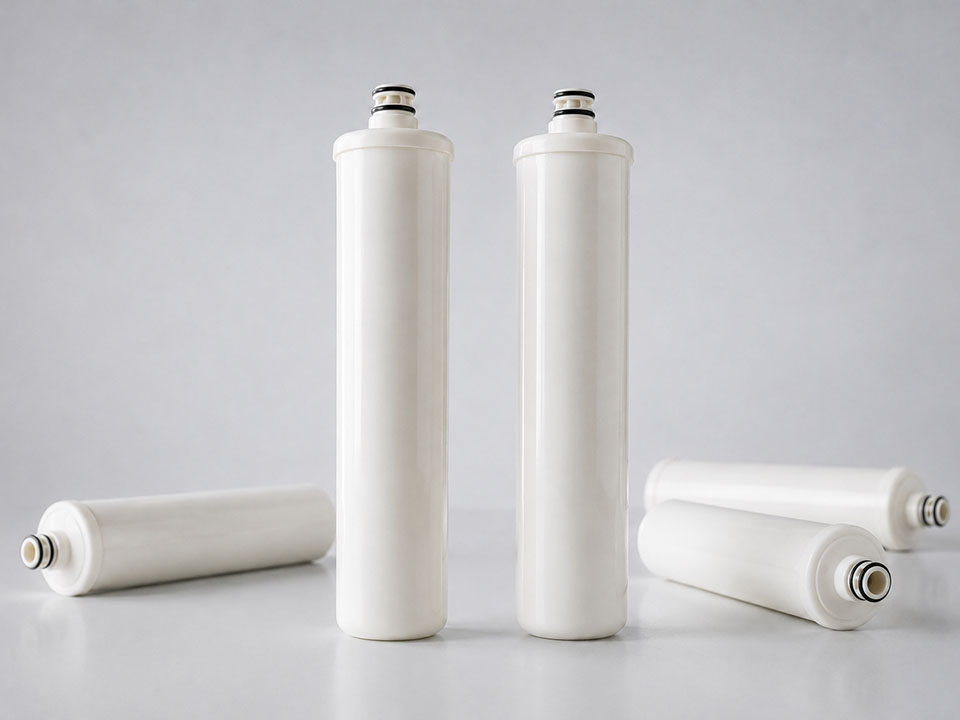
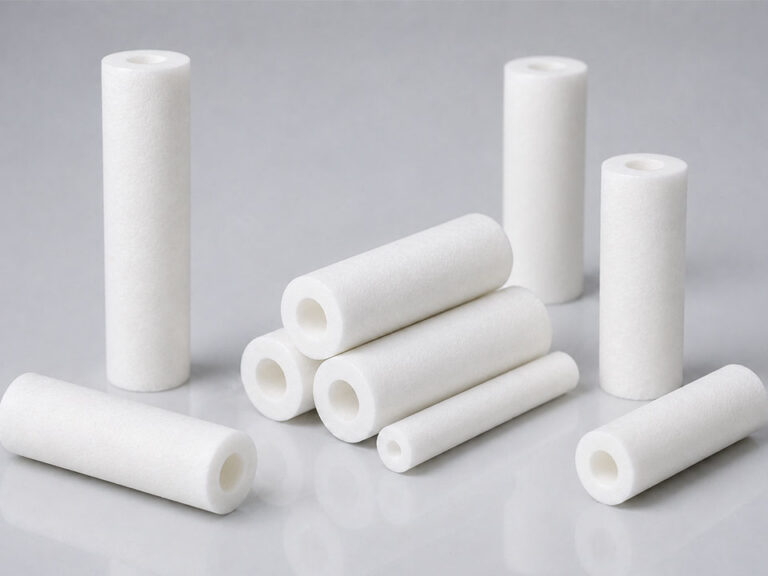
A PP melt-blown filter cartridge is made by extruding molten polypropylene into fine fibers and thermally bonding those fibers into a porous depth-filter matrix.
No woven cloth. Usually no resin binder.
The better cartridges use a graded-density build: a more open upstream zone takes the chunky debris, while tighter inner layers catch progressively smaller particles. The dirt doesn’t merely sit on the outside—it loads through the media depth.
At least, that’s the idea.
This format is commonly selected for rust, sand, silt, pipe scale and general suspended solids. Typical catalog ratings include 1, 5, 10, 20, 25 and 50 μm, though a printed micron number is meaningless unless the supplier also states the test method and efficiency.
A 5 μm label isn’t sacred.
A nominal 5 μm melt-blown cartridge may allow a meaningful portion of 5 μm particles through, while still being sold honestly under the supplier’s own nominal-rating convention. That’s why experienced buyers ask for efficiency data instead of staring at the sticker.
The broader LVYN range of industrial sediment filter cartridges includes melt-blown, pleated, high-flow, sintered and PP structures for different loading patterns and flow requirements. (lvyn)
PP pleated filter cartridge
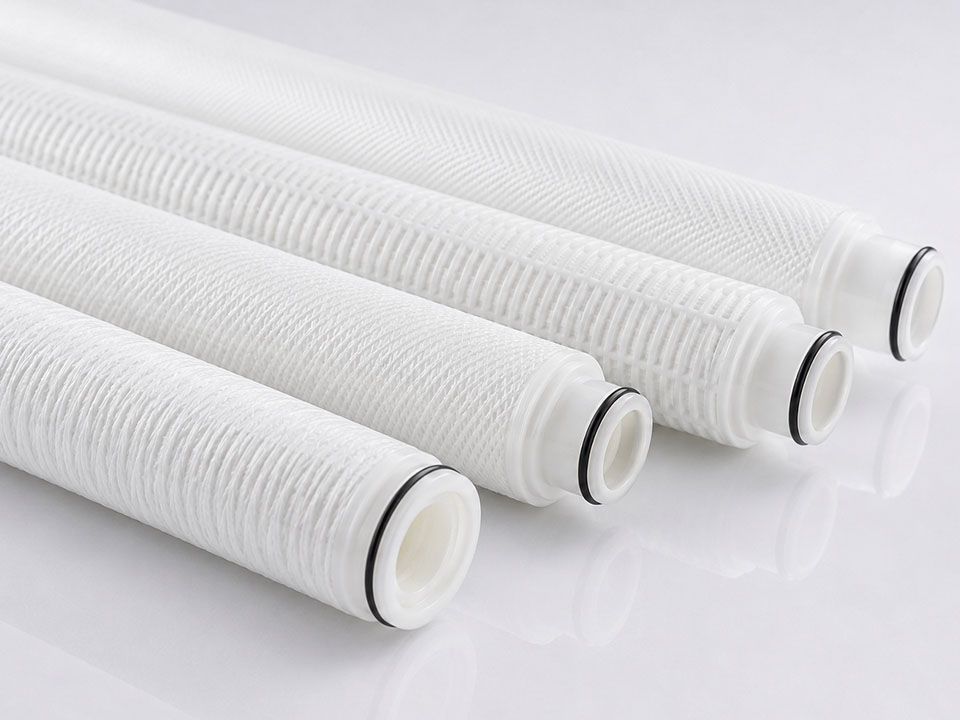
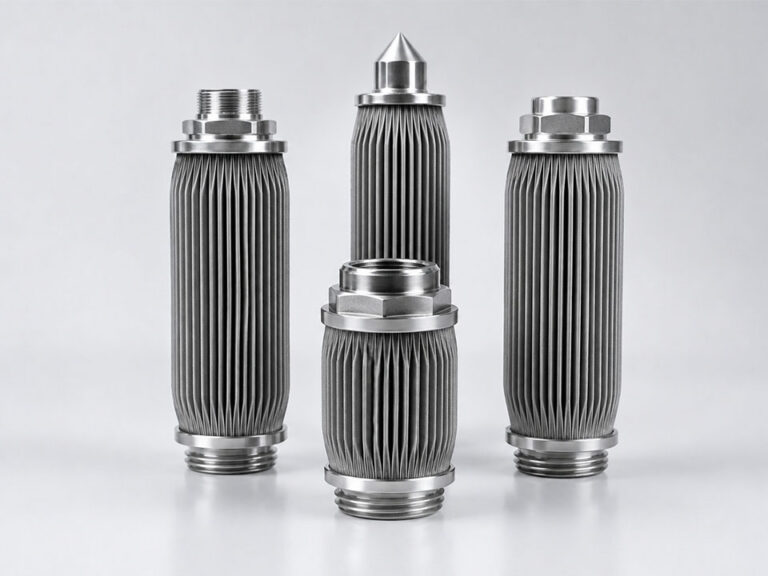
Pleated PP cartridges fold flat filtration media into repeated peaks and valleys. More folds mean more usable surface area—assuming the pleats are spaced properly and don’t collapse or bunch under flow.
Sounds obvious.
Yet I’ve seen buyers compare pleated counts as though more pleats automatically meant a better filter. It doesn’t. A tightly packed pleat bundle can restrict flow channels, trap air, load unevenly and lose the very surface-area advantage it was supposed to create.
The full build matters:
Filtration media
Upstream and downstream support layers
Outer cage
Inner core
End caps
Bonding method
O-rings or gaskets
Adapter geometry
Pleated cartridges are often chosen where relatively low initial pressure drop, larger effective area or more defined surface retention is needed. They generally make more sense with controlled particle loading than with a feed full of heavy sludge.
But again—“PP pleated” isn’t a complete spec.
Sintered PP filter cartridge
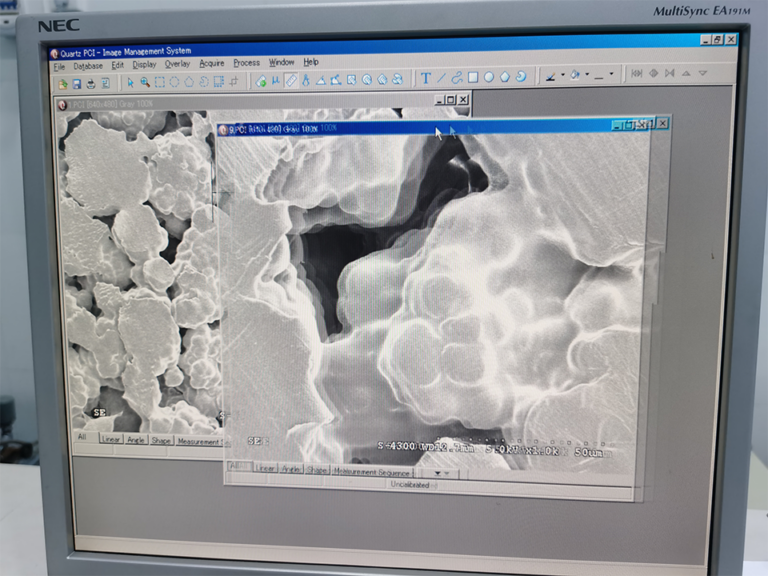
A sintered PP element is produced by heating selected polypropylene particles until they bond at their contact points without turning the entire part into a solid plastic lump.
The voids remain.
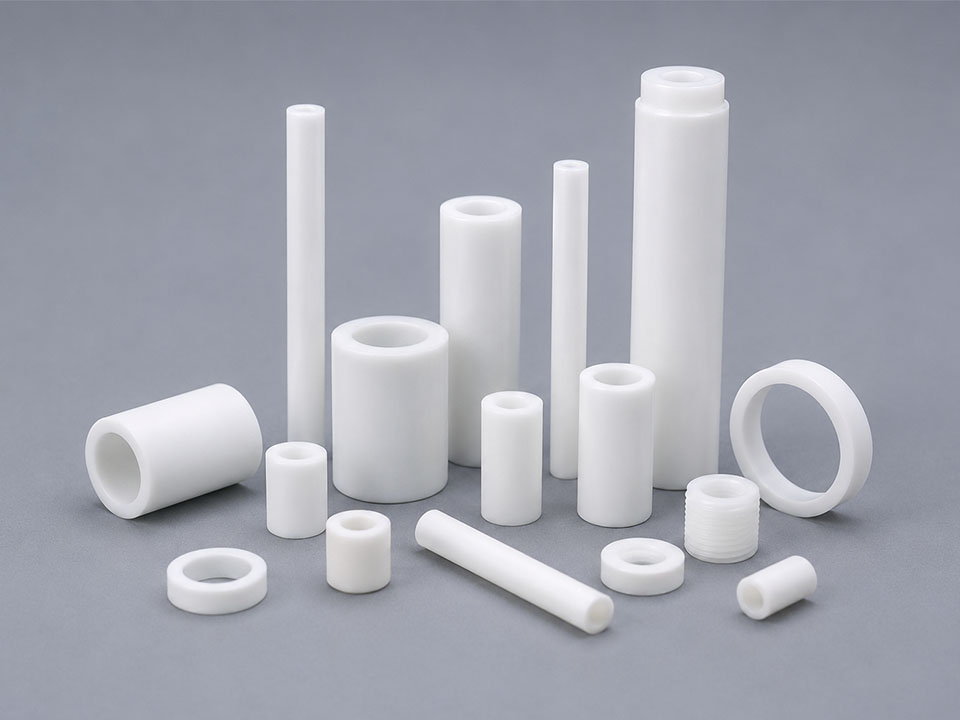
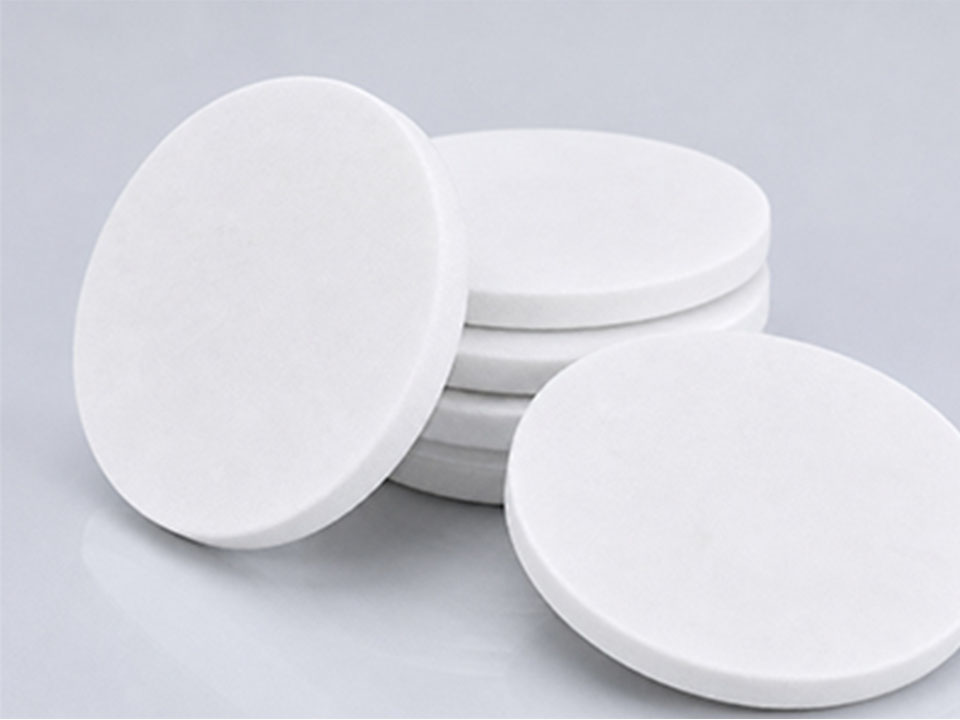
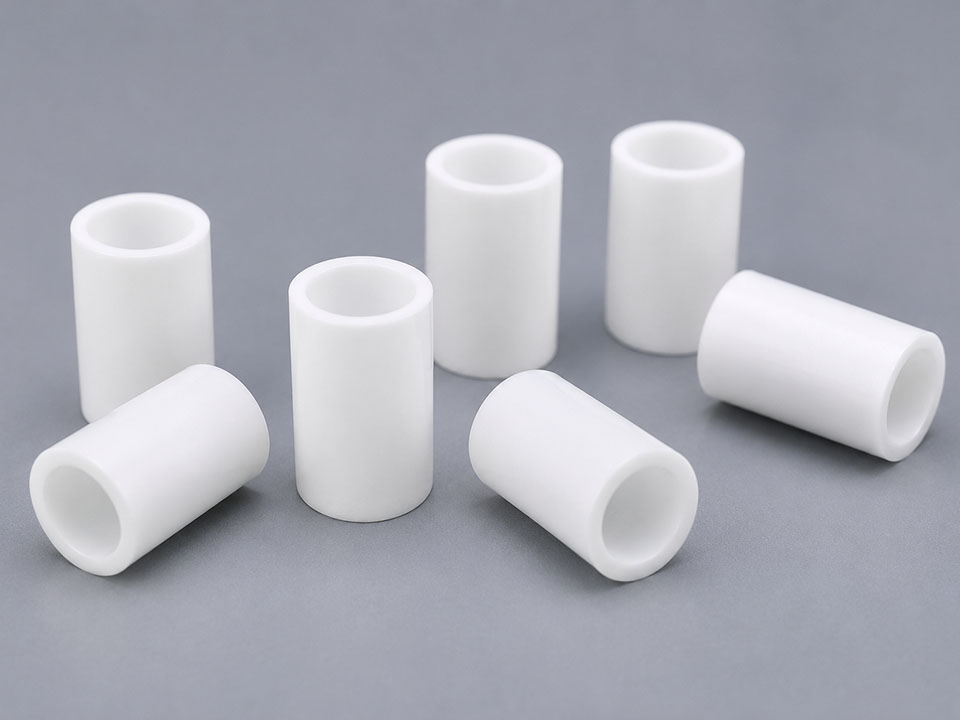
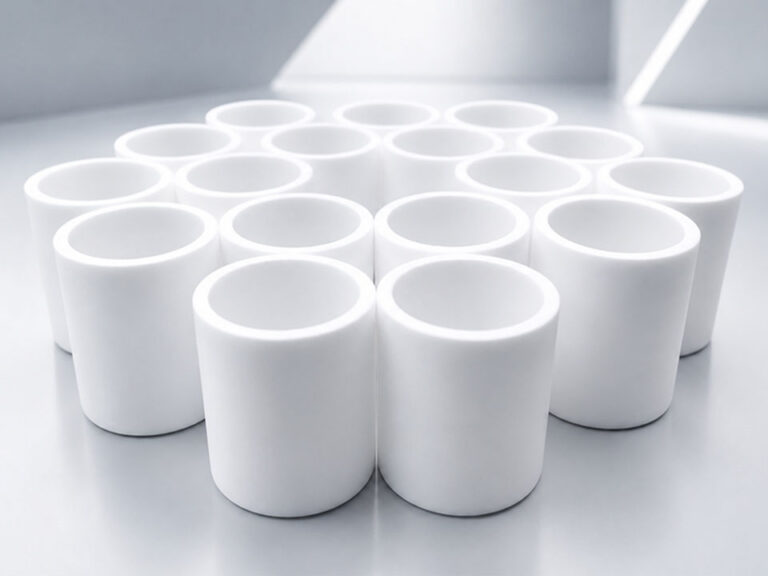
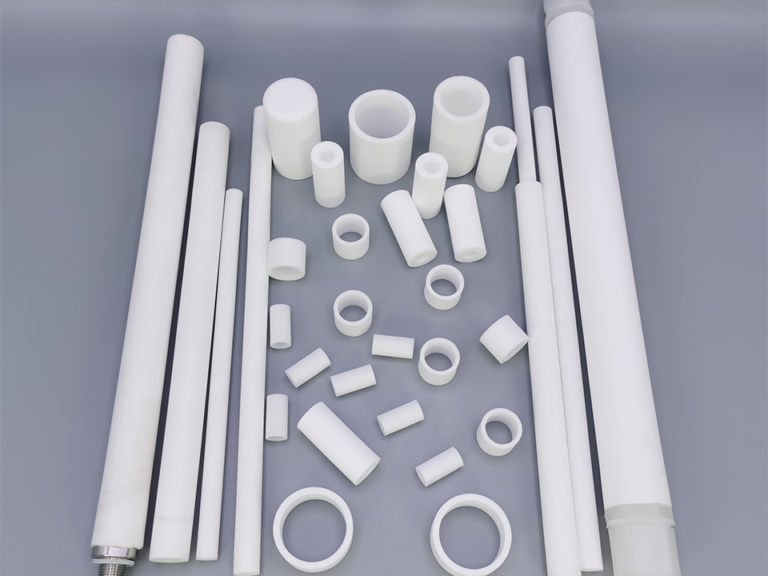
Those interconnected voids become the flow paths, creating a rigid, self-supporting porous body that can be made as a tube, cylinder, rod, plate, disc, cup, plug, sleeve or odd-shaped OEM insert.
That’s where sintered PP earns its keep.
It isn’t simply a harder melt-blown cartridge. The pore network, wall thickness, particle size distribution, forming pressure and sintering cycle all influence permeability, retention behavior and mechanical strength.
Change one variable and the flow curve can shift.
From my review of porous-plastic specifications, buyers frequently demand a very fine micron grade, high flow and a thick wall at the same time. Physics sends the invoice later—in the form of excessive differential pressure.
A finer structure usually means more flow resistance. A thicker wall creates a longer tortuous path. And a highly open body may flow better but provide different retention behavior.
Trade-offs. Always.
LVYN’s PP product guidance states that final limits for temperature, pressure and chemical exposure vary with resin grade and construction, and PP shouldn’t be automatically selected for high-temperature or high-differential-pressure service without engineering confirmation. (lvyn)
PP Cartridge Types Compared
PP cartridge type
Media structure
Main capture mechanism
Typical strength
Cleaning potential
Общее применение
Main purchasing risk
Melt-blown PP
Thermally bonded microfiber depth matrix
Progressive depth capture
От низкого до умеренного
Usually replaced
Sediment prefiltration, process water, RO protection
OEM components, chemical fluids, venting, diffusion
Assuming PP suits every chemical or temperature
PP membrane cartridge
Microporous membrane with support layers
Defined membrane interception
Construction-dependent
Usually application-specific
Fine process filtration and higher-purity service
Confusing membrane rating with ordinary sediment-filter performance
How Does a PP Filter Cartridge Work?
A PP filter cartridge works by making fluid pass through a porous polypropylene structure while particles are retained on the surface, inside the media, or along the cartridge’s winding pore channels.
Simple in theory.
Inside a real housing, however, the result depends on flow direction, viscosity, solids concentration, particle shape, pressure drop, media compression, contaminant deformability and whether the cartridge seals correctly against the housing interface.
A perfect filter with a bad O-ring fit is a bypass tube.
Several capture mechanisms may operate at once.
Size exclusion occurs when particles are too large to pass through an effective opening.
Depth capture occurs when particles travel into a fibrous matrix and become lodged within its twisting internal pathways.
Surface interception happens when contaminants collect mainly on the upstream face of pleated or membrane media.
Inertial impaction occurs when a particle can’t follow the fluid streamline and crashes into a fiber.
Bridging happens when multiple particles span an opening and form a temporary cake layer.
That cake can improve apparent retention. It can also choke the cartridge.
As solids accumulate, differential pressure rises. Operators often call this “filter loading,” though the phrase hides two separate things: contaminant accumulation and the resulting loss of hydraulic capacity.
Watch the ΔP.
A cartridge may still look clean from the outside while its inner gradient has already packed with fines. Conversely, a heavily discolored cartridge isn’t automatically exhausted if its flow and pressure-drop behavior remain inside the validated operating window.
Colour isn’t data.
Nominal Micron Rating Versus Absolute Retention
This is where the brochure language gets slippery.
A nominal micron rating generally indicates that a cartridge removes some stated proportion of particles around the listed size under specified test conditions. The removal percentage may differ between manufacturers.
Один absolute rating usually refers to a more tightly defined retention threshold, often supported by a challenge test, efficiency curve or beta-ratio value.
They’re not interchangeable.
Suppose two cartridges are both advertised as 5 μm.
Cartridge A removes 90% of 5 μm particles during the supplier’s test.
Cartridge B achieves 99.98% at 5 μm under another protocol.
To a rushed buyer, both boxes say “5 micron.” To the downstream process, they’re different products.
And there’s another snag: particle shape.
A rigid spherical challenge particle doesn’t behave exactly like fibrous debris, soft biological matter, irregular corrosion scale or a compressible gel. The test result is still useful—but only when the buyer knows how the test was run.
I’d ask four questions before approving a cartridge:
Этот рейтинг — номинальный или абсолютный?
What efficiency was recorded at the rated particle size?
Which challenge material and test method were used?
At what flow rate, viscosity and differential pressure was the result measured?
No answers?
Then the micron claim is mostly sales shorthand.
Why Is Polypropylene Used for Filter Cartridges?
PP sits in a practical middle ground.
It’s generally lighter and less expensive than metal, can be thermally processed into several media structures, absorbs little water and offers useful resistance to many acids, alkalis and aqueous process fluids.
That combination is hard to ignore.
Manufacturers can turn the same polymer family into disposable sediment filters, pleated process cartridges, support components or rigid porous bodies. For buyers, this means broad availability and plenty of configuration options.
But broad resistance isn’t universal resistance.
Strong oxidizers may attack PP. Certain hydrocarbons and solvents can produce swelling or stress-related failure. Elevated temperature can reduce mechanical stiffness, while a cartridge that survives static immersion may still deform under differential pressure.
That last point gets missed.
Chemical compatibility charts are usually screening references, not process guarantees. They rarely reproduce the precise cocktail of temperature, concentration, mechanical loading, cleaning exposure and contact duration inside your plant.
So test it.
Этот sintered plastic filter cartridge range includes PP, PE, PTFE, nylon and engineering-polymer options because no honest engineer should claim one plastic fits every fluid and every operating window. (lvyn)
Is Every PP Cartridge Food Grade?
Нет.
And this is one of the most abused claims in the business.
Under FDA 21 CFR §177.1520, qualifying olefin polymers—including specified polypropylene materials—may be used for food-contact articles or article components when the regulation’s composition, testing and conditions-of-use provisions are met. ([电子联邦法规][5])
Notice what that doesn’t say.
It doesn’t say every item molded from white polypropylene is automatically “FDA approved.” It doesn’t validate the assembled cartridge for every food type, contact time, processing temperature or sanitation cycle.
The resin is only one component.
A finished cartridge may also contain:
Pigments
Processing additives
Support layers
Inner cores
Outer cages
End caps
Welded interfaces
Elastomeric seals
Silicone, EPDM, FKM or other gaskets
Packaging residues
And the supposedly “all-PP” cartridge may still be manufactured, handled or packaged in a way that fails the buyer’s cleanliness requirements.
I don’t like the phrase “food-grade” when it arrives without paperwork. It’s mushy.
For food, beverage, laboratory or pharmaceutical procurement, request the exact resin declaration, finished-component material list, lot traceability, applicable FDA or EU references, extractables data where needed, manufacturing controls and the proposed temperature/contact conditions.
A supplier saying “100% PP” isn’t the same thing as proving suitability.
What PP Filters Can—and Cannot—Remove
A standard PP sediment filter is a particle-control device.
It may retain rust, sand, silt, pipe scale, fragments of process debris and other suspended solids—provided those contaminants fall within the cartridge’s effective retention range.
It doesn’t make dissolved contaminants disappear.
That distinction seems elementary, yet product pages routinely blur sediment filtration with water purification until the cartridge sounds capable of fixing everything from cloudy water to heavy metals.
It can’t.
A plain PP sediment cartridge doesn’t automatically remove:
Dissolved mineral salts
Hardness ions
Dissolved lead or arsenic
Chlorine
Dissolved organic chemicals
Taste and odor compounds
Viruses
Dissolved PFAS
Those contaminants require different treatment mechanisms: adsorption, ion exchange, membrane separation, disinfection, precipitation or some engineered combination.
PP cartridges still play an important supporting role. The US EPA’s March 2024 technical support document on drinking-water treatment explains that reverse-osmosis and nanofiltration systems commonly include a prescreen or cartridge filter to remove sediment that could damage the membranes. (EPA)
Protection—not desalination.
PFAS is a useful reality check. The EPA states that not every household filter addresses PFAS, and its April 2024 guidance warned that existing PFOA/PFOS certification standards did not yet demonstrate removal down to the newly established federal drinking-water levels. (epa.gov) (US EPA)
So no, a generic PP cartridge shouldn’t be sold as a PFAS solution.
Not without validated system-level evidence.
How to Select the Best Polypropylene Filter Cartridge
Start with the dirty fluid.
Not the catalogue photo, not the lowest unit price, and certainly not a competitor’s cartridge colour.
Write down the actual operating conditions:
Fluid or gas identity
Chemical concentration
pH range
Normal and peak temperature
Требуемый расход
Housing pressure
Максимальный перепад давления
Particle composition
Particle-size distribution
Solids loading
Target outlet quality
Cartridge dimensions
End-cap and seal geometry
Cleaning or replacement plan
Required certificates
Estimated annual usage
Then choose the structure.
For general sediment and economical prefiltration, a PP melt-blown depth cartridge is often the obvious first candidate.
For relatively clean fluids, high area and lower initial resistance, a pleated PP format may fit better.
For rigid geometry, controlled porous flow, diffuser duty, venting, instrument protection or a custom equipment insert, evaluate sintered PP.
And when operating conditions move beyond PP’s comfortable window—high heat, harsh solvent exposure, severe oxidizing chemistry, abrasive solids or punishing ΔP—stop trying to make PP win the argument.
Choose another material.
Этот sintered plastic filter applications page shows how material and geometry vary across medical, laboratory, domestic, industrial and material-processing duties. (lvyn)
Buying Mistakes That Look Cheap—Until Startup
I keep seeing the same sourcing errors.
The first is buying on cartridge price alone. A cartridge that costs 20% less but blocks twice as fast isn’t cheaper; it simply moves the cost into labour, downtime, disposal and lost production.
Then there’s seal blindness.
A nominally correct 10-inch cartridge with the wrong end-cap profile, gasket hardness or O-ring chemistry can leak around the media. The system still flows beautifully—which is exactly the problem.
Bypass is quiet.
Another mistake is treating pressure rating as a single number. System pressure and differential pressure aren’t the same thing. A cartridge may sit inside a housing operating at several bar while experiencing only modest differential pressure, or it may buckle during blockage even though the housing pressure remains within design limits.
Ask for collapse data where it matters.
And don’t ignore tolerances. In an OEM assembly, half a millimetre can decide whether a porous tube seals, rattles, cracks during installation or simply doesn’t fit.
That’s why photos aren’t enough for replacement projects. Drawings, samples, interface dimensions and operating data reduce guesswork considerably. LVYN’s PP guidance similarly recommends supplying housing details, dimensions, seals, flow, pressure, temperature and the actual process medium before final selection. (lvyn)
Часто задаваемые вопросы
What does PP stand for in a filter cartridge?
PP stands for polypropylene, a thermoplastic polyolefin used as the main filtration medium or structural material in melt-blown depth filters, pleated cartridges, membrane assemblies and rigid sintered elements; the abbreviation identifies the polymer family but doesn’t define retention efficiency, pore consistency, pressure capacity, temperature limit or finished-cartridge cleanliness.
That’s the distinction buyers miss.
What is a PP filter cartridge?
A PP filter cartridge is a replaceable or cleanable filtration element made primarily from polypropylene and designed to retain particles from compatible liquids or gases through a fibrous, pleated, membrane-based or sintered porous structure, with actual performance determined by media construction, rating method, dimensions, seals, support design and operating conditions.
The word “PP” alone tells you very little about performance.
How does a PP filter cartridge work?
A PP filter cartridge works by directing liquid or gas through a porous polypropylene medium that retains contaminants on its surface, inside a depth-gradient fiber matrix or along controlled sintered pore paths, depending on its construction, flow direction, particle loading, pressure differential, pore distribution and the manufacturer’s stated retention-efficiency method.
And poor sealing can bypass the whole process.
What is the difference between a PP melt-blown and sintered cartridge?
A PP melt-blown cartridge is normally a disposable fibrous depth filter formed from thermally bonded microfibers, whereas a sintered PP cartridge is a rigid porous body made from fused polymer particles and is usually selected when dimensional stability, controlled flow, custom geometry, equipment integration or validated cleaning matters more than minimum replacement price.
They’re not interchangeable parts.
Is a PP filter cartridge food grade?
A PP filter cartridge is suitable for food contact only when its complete construction—not merely the base resin—meets the applicable regulatory conditions, material declarations, migration requirements and process specifications, including support components, end caps, seals, additives, manufacturing cleanliness, contact temperature, food type and any cleaning or sterilization exposure.
“FDA material” isn’t a finished-system certificate.
Can a PP cartridge remove bacteria or PFAS?
A standard PP sediment cartridge primarily removes suspended particles within its validated retention range and shouldn’t be represented as a bacteria, virus, dissolved-chemical or PFAS barrier unless the finished cartridge and complete treatment system have application-specific challenge data or certification supporting those reduction claims under clearly stated operating conditions.
Sediment control isn’t dissolved-contaminant treatment.
What is the best polypropylene filter cartridge?
The best polypropylene filter cartridge is the one whose resin grade, media structure, micron-rating method, dimensions, seals, pressure-drop curve, differential-pressure strength, temperature range, chemical compatibility, sanitation method and replacement economics match the documented process—not the one with the cheapest quotation, the whitest media or the boldest micron claim.
Boring specifications usually prevent exciting failures.
Send the Specification, Not Just the Name
Don’t send an inquiry saying, “Please quote PP cartridge.”
Send the fluid, particle target, cartridge dimensions, flow, temperature, pressure, seal arrangement, quantity and required documentation. Add a drawing. Better still, include an existing sample and the failure you’re trying to fix.
That gives engineering something real to work with.
LVYN’s industrial filtration factory reports a 21,000 m² site, 20,000 m² building area, 4,200 m² clean workshop and 62 production machines, supporting both prototypes and batch manufacturing. (lvyn)
For non-standard dimensions, porous geometries, replacement components or private-label projects, its OEM/ODM filter cartridge service supports drawing-based customization, prototypes and performance-validation work. (lvyn)
Submit your drawing, existing sample or operating data to receive a technically reviewed PP filter cartridge proposal—not another vague catalog recommendation.