Contact our boss directly.

Have a question about custom filters, pricing, or material options?
Don’t wait — our boss replies within 20 minutes to all inquiries.
Submit your question now and get professional feedback, accurate pricing, and technical advice — fast.
Popup Form

Start your collaboration with us.

Looking for a reliable OEM partner for sintered filter cartridge?
Our team specializes in B2B manufacturing of PE, PP, PTFE, and PA filter cartridges for medical, industrial, and water treatment applications.
Submit your inquiry today to get customized solutions, bulk pricing, and technical support from our engineering experts within 24 hours.
Popup Form

Understanding the Role of Polypropylene Filters in Pharmaceutical Manufacturing

Key Takeaways

  • In pharma, polypropylene (PP) filters are often the workhorse prefilters that protect membranes, pumps, and final sterile steps—not the glamorous “final filter” in the spotlight.
  • PP shows up everywhere because it’s cost-stable, broadly compatible with aqueous streams, and available in high-quality, validated formats.
  • What matters most isn’t “micron rating,” it’s process fit: flow, differential pressure (ΔP), bioburden strategy, and how the filter behaves during CIP/SIP (if applicable).
  • Quality teams care about extractables & leachables (E&L), integrity of the filtration train, traceability, and change control—not marketing claims.
  • The fastest way to misuse PP in pharma is to treat it like a universal sterile barrier. It’s usually a protector, not the gatekeeper.
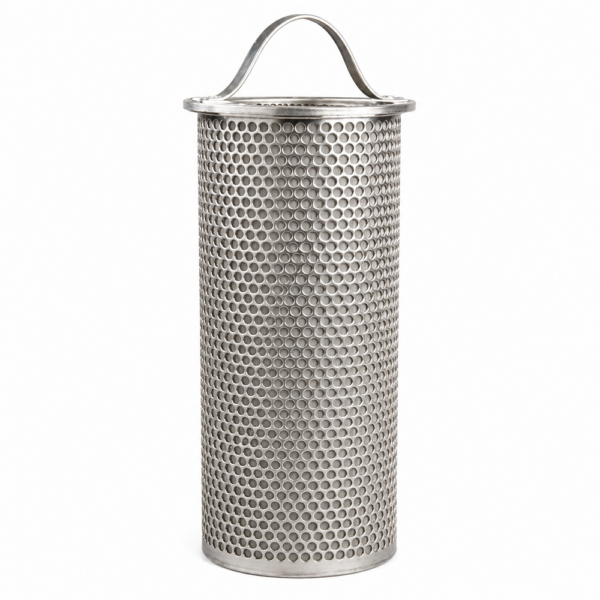
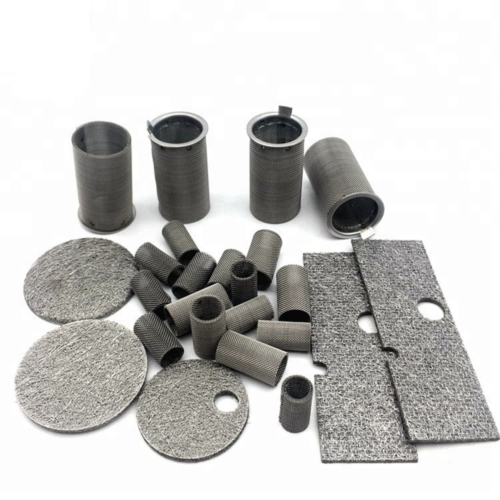
High-Flow Sintered PP Filter for Chemical Resistance

Introduction

Let’s answer the question you actually mean: Why does polypropylene show up in pharmaceutical manufacturing when everyone talks about “sterile filtration” and membranes?

Here’s the direct answer: polypropylene filters are used throughout pharmaceutical manufacturing as robust, economical, and widely validated prefiltration and clarification steps that reduce particle load and bioburden, protect expensive downstream membranes, and stabilize process flow. They’re common in water systems, buffer and excipient prep, process transfers, and upstream protection for sterile-grade filters. PP isn’t always the “final sterile barrier,” but it’s often the difference between a smooth batch and a batch that dies slowly under rising ΔP and membrane fouling.

Now let’s talk about what PP actually does in a GMP world—without the brochure fluff.


Why Pharma Uses PP Filters (Even When Sterile Filters Get All the Attention)

Pharma filtration is like airport security. The final checkpoint matters, sure—but if you don’t manage the crowd upstream, everything collapses.

PP filters are popular because they can be:

  • consistent across lots and suppliers (when sourced correctly)
  • compatible with many aqueous solutions and buffer systems
  • stable in many cleaning/handling routines (process-dependent)
  • available in formats that support documentation, traceability, and validation packages

And, bluntly: they’re a practical way to reduce the “load” on the expensive parts of your filtration train.


Where Polypropylene Filters Fit in the Pharmaceutical Process

H2: 1) Prefiltration Before Sterile-Grade Membranes

This is the classic use case.

If you’re running a 0.2 µm sterile-grade membrane downstream, the fastest way to ruin your day is to feed it a stream full of particles, gels, or precipitates.

A PP prefilter upstream can:

  • reduce particulate loading
  • slow membrane fouling
  • stabilize flow and extend run time
  • reduce pressure spikes that make operators nervous (and make quality teams ask questions)

This is not glamorous work. It’s essential work.

H2: 2) Buffer Prep and Excipient Solutions

Buffers and excipient solutions can carry:

  • insoluble particles
  • undissolved powders
  • container shedding (yes, really)
  • precipitates if pH/temperature drifts

PP filters often serve as clarification steps here—especially when you want dependable filtration without turning every batch into an engineering experiment.

H2: 3) Water Systems (Process Water / Utility Filtration)

Pharma water systems are their own universe: PW, WFI, distribution loops, points of use.

PP filters can appear in supporting roles (application-specific, validation-specific) such as:

  • point-of-use particulate reduction
  • protection for instruments and valves
  • upstream clarification depending on system design

This is where “broad compatibility” matters—because water systems touch everything.

H2: 4) Intermediate Filtration During Processing

During drug substance (DS) or drug product (DP) manufacturing, there are points where you want to remove:

  • particulate contamination
  • processing residues
  • precipitated materials

PP filtration can be used when the goal is clarification/protection—not necessarily final sterilization.

H2: 5) Vent and Gas Filtration (Process-Dependent)

Some PP media designs can be used in gas filtration applications, but pharma gas filtration often has specialized requirements. The key is that PP can show up, but it’s rarely a “default” here without validation context.


The Real “Role” of PP in Pharma: It Protects the Expensive Stuff

Here’s my opinion, stated loudly: PP filters are the bouncers, not the judge. They keep trouble out so the sterile-grade membrane can do its job consistently.

If your sterile filter is the last door before fill/finish, PP is the crowd control before that door.

What PP protection can reduce:

  • premature ΔP rise
  • filter changeouts mid-batch
  • membrane integrity test failures due to fouling stress
  • batch delays and deviations

And deviations are the real currency of pain in pharma.


What Pharma Teams Actually Worry About With PP Filters

H2: Extractables and Leachables (E&L)

If you work in pharma, you’ve heard the phrase enough times to dream in it.

Even when PP is widely used, quality teams still ask:

  • What additives are present in the polymer formulation?
  • What’s the extractables profile under process conditions?
  • What’s the risk of leachables into the product?
  • Do we have supplier documentation? Lot traceability?

PP isn’t automatically “clean.” It’s just a material with a long history and a lot of available validation support—when sourced properly.

H2: Bioburden Control Strategy

PP filters can be part of a bioburden reduction strategy, but they are not always the sterile barrier.

In GMP manufacturing, you need clarity on:

  • where bioburden is controlled
  • where sterilization occurs
  • what the filtration step is responsible for (particles? microbes? both?)

Mixing these roles casually is how processes get into trouble during audits.

H2: Compatibility With CIP/SIP (If Used)

Not every PP filter is used in SIP conditions. But when filters see cleaning cycles, questions get sharp:

  • chemical exposure (caustic, acids, detergents)
  • temperature exposure
  • cycle frequency
  • performance drift over time

A filter that “survives” chemically but drifts dimensionally can create bypass or sealing issues. In pharma, bypass is not a cute mistake.

H2: Change Control and Supplier Consistency

Pharma loves one thing more than yield: consistency.

If a filter supplier changes resin, additives, or manufacturing parameters, you may need:

  • change notification
  • requalification
  • risk assessment updates

A technically “better” filter that changes every six months is operationally worse.


The Most Common Ways PP Filters Get Misused in Pharma

H2: Mistake #1 — Treating PP as a Universal Sterile Filter

Some PP filters are used for microbial reduction in specific contexts, but in many sterile processes the sterile-grade membrane is the true barrier.

Using PP where a validated sterile barrier is required can create:

  • compliance risk
  • product risk
  • audit risk
  • and a lot of paperwork misery

H2: Mistake #2 — Ignoring ΔP and Flow Design

Pharma processes hate surprises. A filter that clogs early can trigger:

  • batch holds
  • emergency changeouts
  • integrity test complications downstream
  • deviations and investigations

If your filtration train is a domino chain, ΔP is the finger that tips it.

H2: Mistake #3 — Spec’ing Only by Micron Rating

Micron rating is a spec. It’s not the whole spec.

You also need:

  • flow at defined ΔP
  • dirt holding capacity
  • pore structure
  • lot-to-lot consistency
  • compatibility with product and cleaning conditions

How to Specify PP Filters for Pharma (The Checklist People Wish They Had)

H2: What you should define up front

  1. Fluid type (buffer, excipient, water, intermediate)
  2. Temperature range
  3. Viscosity and solids loading
  4. Target flow rate and allowable ΔP
  5. Required particle reduction vs microbial reduction role
  6. Cleaning/sterilization exposure (CIP/SIP, gamma, autoclave—if applicable)
  7. Documentation needs (CoC, CoA, lot traceability, E&L package)
  8. Housing and seal materials (because O-rings can be the weak link)

H3: A quick sanity test: “What is this filter responsible for?”

If the answer is unclear, fix that first. In pharma, unclear responsibilities turn into investigations.


FAQ (People Also Ask)

What is the role of polypropylene filters in pharmaceutical manufacturing?

PP filters are commonly used as prefilters and clarification steps to reduce particle load and protect downstream membranes and sterile filtration, improving process stability and reducing fouling-related downtime.

Are polypropylene filters used for sterile filtration in pharma?

Usually PP filters are not the final sterile barrier; sterile-grade membranes (often 0.2 µm rated) typically serve that role. PP is more commonly used upstream for protection and clarification, depending on the validated process design.

Because PP is cost-stable, broadly compatible with many aqueous streams, available in consistent manufacturing formats, and often supported by documentation packages needed for GMP validation and change control.

What should I consider regarding extractables and leachables?

You should evaluate E&L profiles under process conditions, ensure supplier documentation and traceability, and assess risk based on product contact time, temperature, and solvent/chemical exposure.

How do PP filters reduce filtration costs in pharma?

By protecting expensive downstream filters, reducing membrane fouling, extending run time before ΔP spikes, and lowering the frequency of unplanned changeouts and deviations.


The Bottom Line

Polypropylene filters in pharmaceutical manufacturing are rarely the headline act—and that’s exactly why they matter. They’re the upstream workhorses that make sterile steps predictable, keep ΔP under control, and help you avoid the kind of mid-batch filter drama that turns into deviations, investigations, and long meetings with too many acronyms.

If you want PP to shine in pharma, treat it like a controlled component of a validated filtration train: define the role, validate compatibility, respect E&L, and don’t let the “simple prefilter” become an unexamined risk.

Send your Internal Links JSON, and I’ll produce the strict-linked version with 5–8 exact internal links woven in naturally—no forced anchors, no spammy placement.

Comments

Поделитесь с друзьями