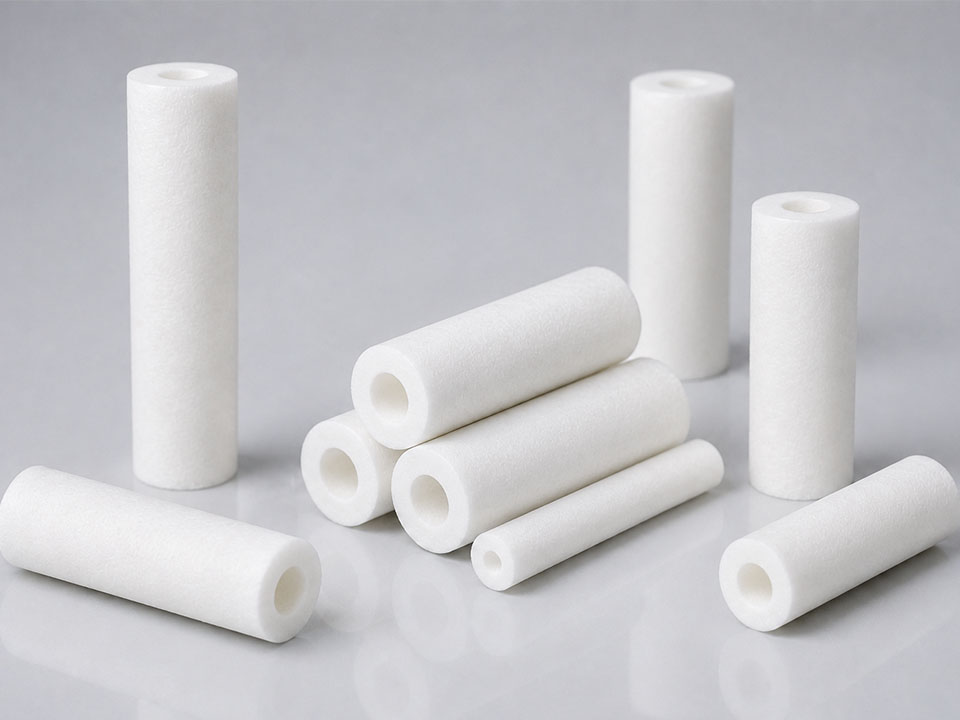
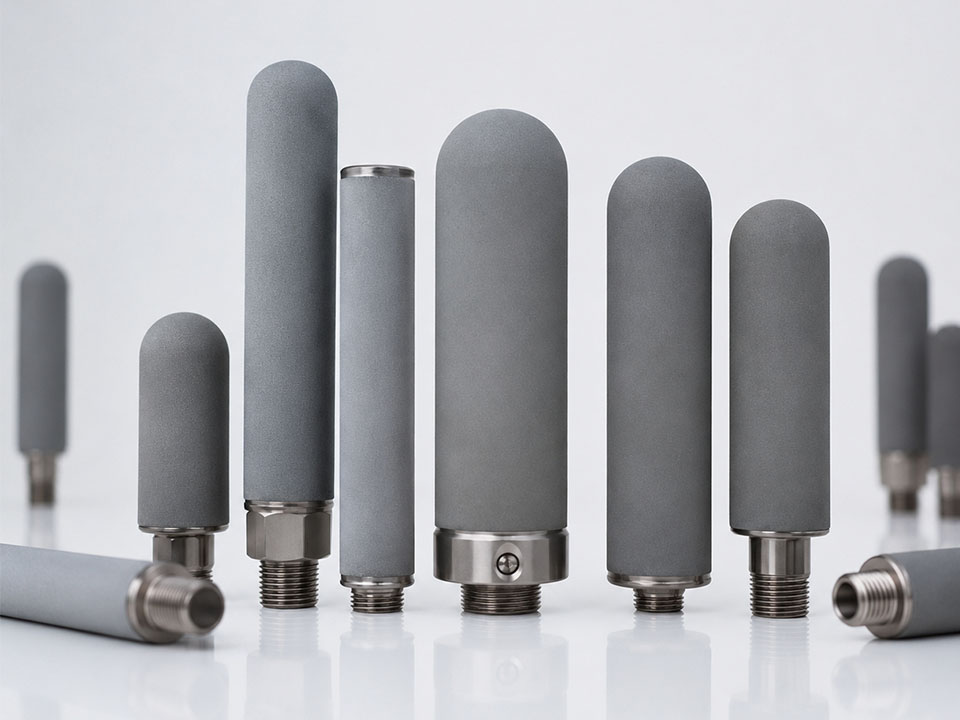
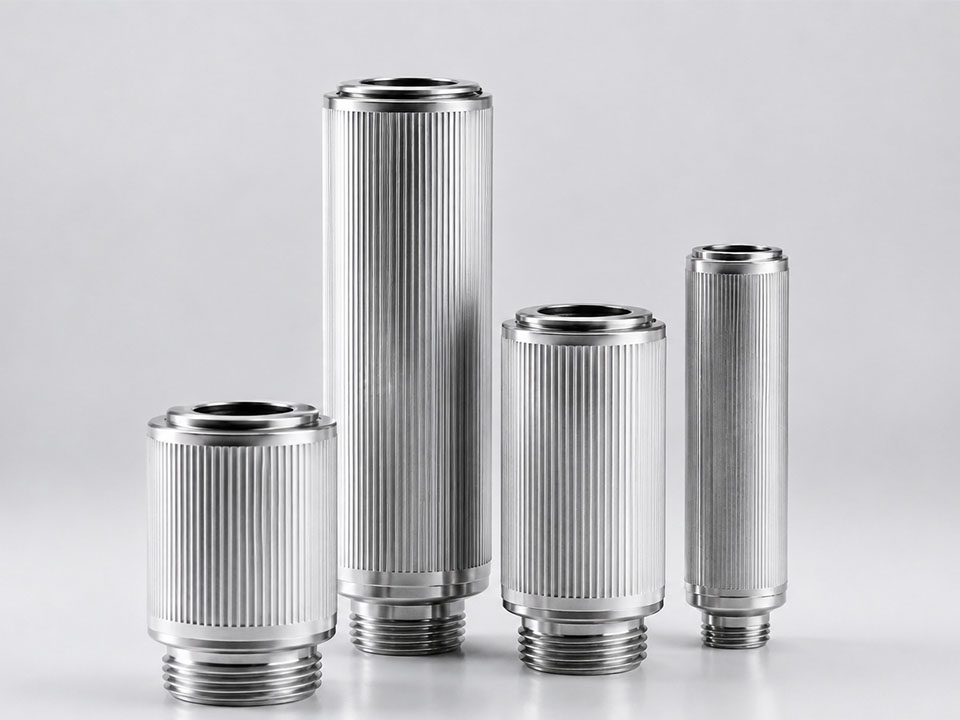
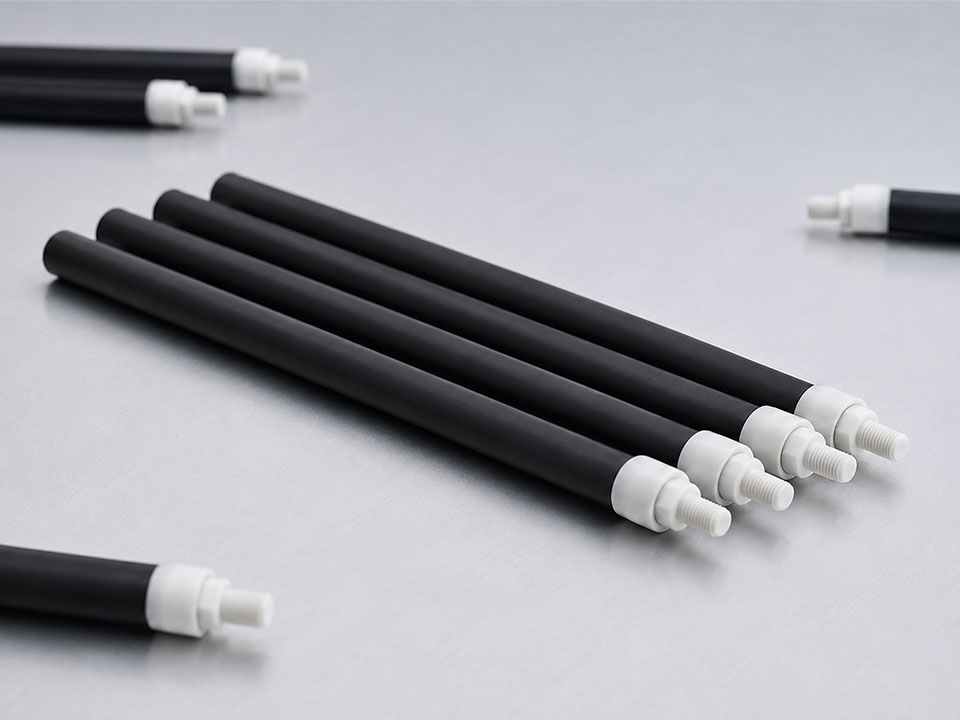
قبل مغادرتك، ندعوك للتحدث مباشرة مع فريق الإدارة لدينا لضمان حصولك على الإرشادات الفنية الأكثر دقة، والدعم في مجال التسعير، وخيارات التخصيص المناسبة لمشروعك. يمكن لخبرائنا تقييم متطلباتك بسرعة، والتوصية بحلول المرشحات البلاستيكية الملبدة المناسبة، ومساعدتك في تقليل مخاطر التوريد مع تحسين الكفاءة والاتساق واستقرار الإمداد على المدى الطويل لتطبيقاتك الصناعية.
هل تحتاج إلى مساعدة في اختيار خرطوشة الترشيح المناسبة؟
Our Sales Team
يرجى إبلاغ فريق دعم المبيعات لدينا بنوع المنتج، ودرجة الترشيح بالميكرون، والحجم، والتطبيق، ووسيلة الترشيح، ودرجة حرارة التشغيل، والضغط، والكمية التقديرية. وسنساعدك في اختيار خرطوشة الترشيح المناسبة من البلاستيك المُتكلس أو المعدن المُتكلس أو خرطوشة الترشيح الرواسبية.
What are the different types of cartridge filters?
Six white cylinders land on a purchasing manager’s desk.
Same length. Same outside diameter. Same “5 micron” marking.
Apparently, they’re interchangeable.
They’re not.
A polypropylene spun filter cartridge may trap grit through a thick, graded fiber bed; a pleated filter may load mainly along its folded surface; a PTFE membrane might handle an aggressive solvent that would swell another polymer, while a sintered stainless steel element could survive repeated backwashing long after every disposable cartridge has gone into the waste drum.
Small difference?
Hardly.
The media hidden inside that innocent-looking cylinder decides pressure drop, dirt capacity, particle-release risk, chemical resistance, cleanability, service life, and—when the specification is sloppy—whether the downstream membrane lasts six months or plugs before lunch.
So why do so many requests for quotation contain little more than this?
“Need 5-micron cartridge. Best price.”
That’s not a specification. It’s a gamble.
I frankly believe the cartridge filter business has spent too many years making radically different products look deceptively similar. Catalog pages encourage the problem: clean product photo, micron number, cartridge length, done.
Real filtration isn’t that tidy.
The short answer: six cartridge filter types dominate industrial selection
The main types of cartridge filters covered in industrial sourcing are:
Polypropylene spun or melt-blown filter cartridges
Polypropylene string wound filter cartridges
Polypropylene pleated filter cartridges
PTFE pleated filter cartridges
Resin-bonded filter cartridges
Stainless steel filter cartridges
Yes, there are more—ceramic elements, activated-carbon blocks, glass microfiber cartridges, PES membranes, nylon membranes, high-flow formats, coalescers, and hybrid assemblies.
But these six families show up constantly in water treatment, chemical processing, coatings, food production, RO prefiltration, gas venting, hydraulic systems, and general factory filtration.
Here’s the ugly truth: the cartridge with the lowest quotation often becomes the most expensive one in operation.
ليس دائمًا.
But often enough.
When a buyer compares two cartridges only by the number printed after “µm,” while ignoring retention efficiency, loading mechanism, fluid viscosity, pressure pulses, seal material, pore morphology, and whether the rating is nominal or absolute, the commercial comparison is already broken before either sample reaches the plant.
لماذا؟
Because “5 micron” doesn’t necessarily mean the same thing twice.
One supplier may use the label for a nominal depth element. Another may mean a high-efficiency pleated cartridge. A third might be quoting an absolute membrane grade tested under a defined challenge protocol.
Same number. Different job.
1. Polypropylene spun filter cartridge
Walk through almost any RO pretreatment room and there’s a decent chance you’ll see one: a plain polypropylene spun filter cartridge, usually white, usually inexpensive, usually treated as though there’s nothing technical left to discuss.
There is.
A spun cartridge—often sold as a melt-blown cartridge—is formed from polypropylene fibers deposited into a tubular depth structure. Better designs don’t use one uniform density from outside to inside. The outer zone stays relatively open, while the inner layers become progressively tighter.
Large debris enters first.
Fine particles travel deeper.
That’s the basic trick.
A graded structure can store contamination through more of the cartridge wall instead of building one compact cake immediately on the outer surface. When it’s designed properly, that means useful dirt capacity without string, adhesive, or a separate winding process.
Polypropylene’s repeating polymer unit is commonly written as (C₃H₆)ₙ. It’s light, relatively economical, and compatible with many water-based fluids and industrial chemicals.
That doesn’t make it universal.
Parker’s Polyflow-G literature, for example, describes an all-polypropylene, thermally bonded depth cartridge for clarification and general prefiltration. That particular family is offered in nominal grades from 0.2 to 30 µm, with its own defined flow, temperature, and differential-pressure limits. Those figures belong to that product—not every generic spun cartridge on an online marketplace. (parker.com)
That distinction matters.
كثيرًا.
Where spun polypropylene performs well
Spun filter cartridges are commonly used for:
General water clarification
Sand, rust, scale, and suspended-solids reduction
Reverse-osmosis prefiltration
Plating solutions
Food and beverage prefiltration
Low-cost industrial liquid filtration
Protection of pumps, valves, and downstream membranes
For dirty water and routine prefiltration, a properly made polypropylene depth cartridge can be a very sensible choice.
I don’t buy the idea that disposable automatically means inferior.
Sometimes the process needs a clean, low-cost element that loads, gets changed, and leaves the system without a complicated cleaning-validation exercise. That’s perfectly rational.
But there’s a catch.
A large share of the market is sold using nominal ratings with poorly stated efficiency. A label saying “5 µm” may not tell you whether the cartridge removes 60%, 90%, 95%, or 99% of particles at that size.
No efficiency curve?
Then the number is incomplete.
Buyers dealing with rust, silt, scale, or general process solids can compare wider industrial sediment filter cartridges, including melt-blown, pleated, PP, sintered, and high-flow constructions.
The blind spot
Yet spun cartridges can compress as differential pressure rises.
Cheap versions may also suffer from irregular density, weak end sealing, inconsistent cartridge weight, poor core strength, or fiber structures that vary between production batches.
At low pressure, everything looks fine.
Then the filter loads.
Flow drops, the differential pressure climbs, and contamination that appeared safely trapped may migrate deeper—or pass through—if the media compacts under stress.
That’s why two visually identical polypropylene cartridges can behave nothing alike.
One has a controlled gradient.
The other is basically a white tube with optimistic packaging.
2. Polypropylene string wound filter cartridge
String wound cartridges are old technology.
That’s not an insult.
A polypropylene string wound filter cartridge is made by winding yarn around a perforated support core in a carefully controlled crossing pattern. Depending on the application, the yarn may be polypropylene, cotton, polyester, nylon, glass fiber, or another material.
The core might be polypropylene.
Or stainless steel.
Or something else entirely.
The winding forms tapered channels, so solids become trapped through the cartridge depth instead of gathering only on the exterior. Yarn type, winding tension, core material, pattern geometry, and final density all influence the result.
Simple-looking product. Fussy manufacturing.
Parker’s industrial filtration catalog describes wound depth cartridges across several media and application groups, including water, oils, solvents, chemical processes, membrane prefiltration, and concentrated or diluted alkaline solutions. It also makes clear that cartridge performance depends on the exact product construction—not just the generic phrase “string wound.” (parker.com)
Why buyers still use wound cartridges
A string wound filter cartridge can make sense when:
The fluid has moderate or high viscosity
The solids load changes during production
A rigid center core is needed
The process handles coatings, oils, syrups, inks, or chemicals
The buyer needs a specific yarn-and-core combination
An existing process has already validated a wound design
And this is where industry habit enters the picture.
Some plants have used wound cartridges for twenty years and know exactly how a certain yarn, core, micron grade, and change-out differential pressure behave in their process.
Replacing that proven setup with a cheaper spun cartridge just because the dimensions match?
I wouldn’t recommend it without testing.
But wound media has its own dirty secrets.
Poor winding tension can form loose paths. Uneven yarn distribution can create channels. Fibers may migrate. End zones may be less dense than the central body.
Under a pressure surge, those weak spots stop being theoretical.
Spun filter cartridge vs string wound filter cartridge
A spun filter cartridge is generally formed from bonded polymer fibers, commonly in a graded-density structure. A string wound filter cartridge uses yarn wrapped around a separate perforated core.
Spun polypropylene offers a simple material system and usually a lower-cost disposable format.
Wound media gives the engineer more freedom to pair different yarn and core materials.
Which one is better?
Wrong question.
What’s the fluid, what’s the viscosity, what contaminants are present, and what happens when differential pressure doubles?
That’s the question.
3. Polypropylene pleated filter cartridge
Open a pleated cartridge and the geometry makes immediate sense: fold a sheet of media back and forth, pack a much larger effective surface into a small cylindrical envelope, and the available filtration area rises sharply.
More area usually means lower initial pressure drop.
عادةً.
The word matters because a pleated filter cartridge can still blind quickly when the process feed carries heavy sludge, deformable gel, adhesive fines, biological growth, or a nasty mix of coarse and submicron particles.
Pleats aren’t magic.
They’re folded media.
A polypropylene pleated filter cartridge may include the filter sheet, upstream and downstream support layers, an inner core, an outer cage, end caps, and elastomer seals. Those components are often thermally bonded into a single assembly.
Every extra component creates another compatibility question.
The polypropylene media might tolerate the liquid while the O-ring doesn’t.
Or the cage softens.
Or the end-cap bond gives up.
هذا يحدث أحيانًا.
Where polypropylene pleated cartridges make sense
They’re often selected for:
Fine water clarification
تصنيع الأغذية والمشروبات
Electronics and general process water
Membrane prefiltration
Chemical filtration
Low-pressure-drop systems
Applications requiring better retention consistency than basic nominal depth cartridges
Parker’s Poly-Mate X product information associates specific polypropylene pleated configurations with stated efficiency and micron grades. That’s the useful part: a proper cartridge specification should connect the micron value to a defined retention efficiency, not leave the buyer guessing what the number means. (parker.com)
But here’s the rub.
Pleat count gets used as a sales number, even when the pleats are packed so tightly that the space between them closes under dirt loading. More pleats can create more theoretical area, yet poor spacing may prevent the full area from doing useful work.
Paper area isn’t usable area.
ليس دائمًا.
A well-built pleated cartridge balances media area, pleat depth, support, spacing, clean pressure drop, and mechanical strength. A bargain cartridge may simply stuff in folds and hope the differential-pressure gauge stays quiet.
4. PTFE pleated filter cartridge
PTFE sounds reassuring.
Premium. Chemical resistant. High-tech.
That one material name has rescued plenty of sales presentations—and ruined a few applications where nobody bothered to ask whether the membrane was hydrophobic or hydrophilic.
A PTFE pleated filter cartridge uses a polytetrafluoroethylene membrane, commonly represented by the repeating unit (C₂F₄)ₙ, arranged in pleats and combined with support layers, a core, a cage, end caps, and seals.
PTFE offers broad chemical resistance.
But wetting behavior can make or break the application.
Naturally hydrophobic PTFE repels water. That behavior is useful for sterile gas filtration, compressed air, solvent service, and tank venting because the membrane can pass gas while resisting liquid water intrusion under appropriate operating conditions.
Put that same untreated hydrophobic membrane into an aqueous liquid process, though, and the operator may wonder why flow is miserable.
It isn’t defective.
It isn’t wetted.
In liquid service, the design may require alcohol pre-wetting, another approved wetting fluid, or a permanently hydrophilic PTFE treatment.
That detail routinely disappears from rushed purchasing discussions.
In its guidance on filtration as a sterilization method, the CDC’s review of membrane filtration for heat-sensitive pharmaceutical fluids explains that bacterial removal depends on pore size, membrane structure, and the relationship between the pores and the target organisms. A 0.22 µm sterilizing-grade membrane therefore carries very different performance expectations from a general nominal depth cartridge carrying the same number.
What needs checking before PTFE is approved
Don’t accept “Material: PTFE” as a complete answer.
Confirm:
Hydrophobic or hydrophilic membrane
Supported or unsupported construction
Nominal or absolute retention
Maximum forward differential pressure
Maximum reverse differential pressure
Sterilization method and cycle count
Extractables
Integrity-test method
End-cap and cage material
O-ring compound
Chemical concentration
Operating temperature
Required bacterial retention
Yes, that list is longer than the sales brochure.
That’s the point.
When PTFE is worth the cost
Use PTFE pleated cartridges when the process genuinely needs:
Aggressive chemical resistance
Sterile gas or air filtration
Solvent filtration
Tank venting
High-purity applications
Low extractables
Repeated steam or validated sterilization cycles, where the full cartridge design allows it
PTFE shouldn’t be selected because it sounds like the “best” material.
There is no best material.
There’s only the material that survives the chemistry, meets the retention target, behaves correctly with the fluid, and fits the commercial limits of the process.
5. Resin-bonded filter cartridge
Resin-bonded cartridges don’t get much attention in glossy water-treatment marketing.
Put one in a paint, adhesive, oil, ink, coating, or resin line, though, and the reason for its existence becomes obvious.
These are rigid depth filters.
A resin-bonded filter cartridge is commonly manufactured by bonding a fibrous matrix—often cellulose or synthetic fiber—with a thermosetting resin. Many designs include machined exterior grooves that expose additional pathways and increase the usable surface.
The result isn’t soft or easily compressed.
It’s stiff.
That stiffness can help when the liquid is viscous, sticky, heavily contaminated, or operating under a differential pressure that would distort a weaker unsupported element.
Parker’s process catalog lists resin-bonded cartridges for applications including inks, paints, adhesives, resins, emulsions, plasticizers, oils, and other process fluids. It also lists phenolic resin and acrylic fiber as one product construction—which is exactly why the complete material combination must be reviewed, not just the words “resin bonded.” (parker.com)
The problem nobody should skip
The resin is part of the wetted system.
So is the fiber.
So is the core.
A cartridge that works beautifully in one hydrocarbon or coating formulation may swell, soften, become brittle, or release unwanted extractables in another. Temperature and chemical concentration can change the outcome again.
Here’s my blunt view: resin-bonded cartridges are underrated in dirty, viscous industrial service and badly overrated when suppliers try to push them into high-purity applications without extractables data.
Good filter.
Wrong process.
That combination still fails.
6. Stainless steel filter cartridge
Now we get to the cartridge that procurement often describes as “expensive” and maintenance often describes as “finally, something that doesn’t collapse.”
Both can be right.
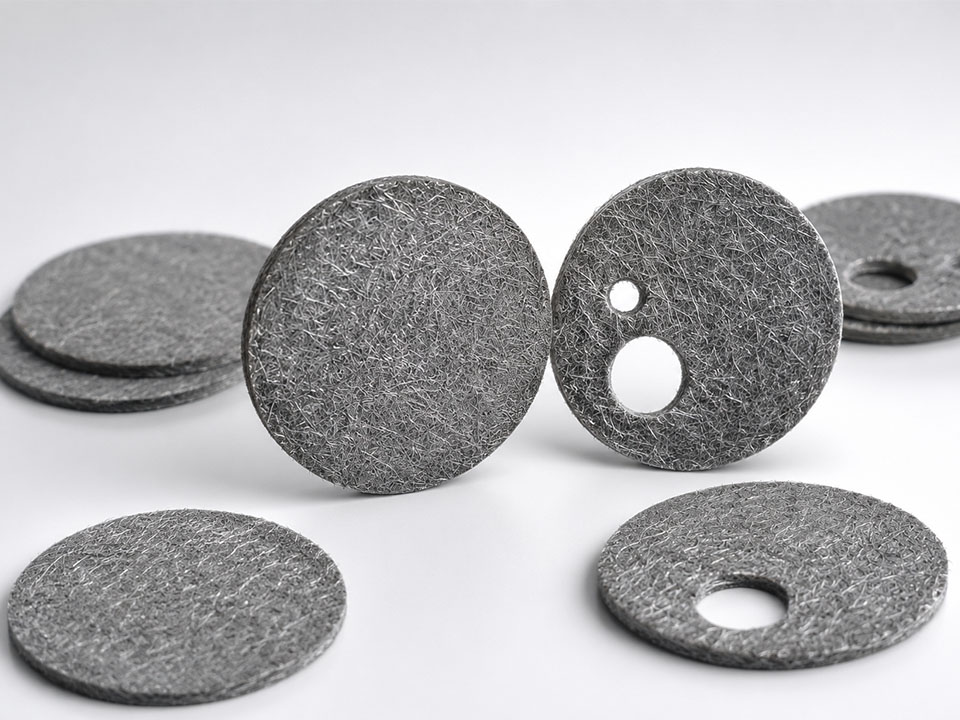
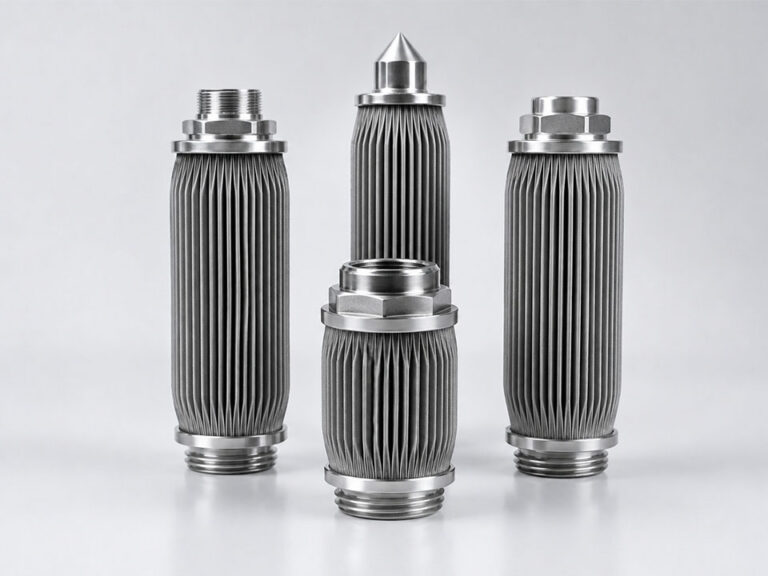
A stainless steel filter cartridge may be manufactured from sintered metal powder, woven wire mesh, multilayer sintered mesh, metal fiber felt, pleated metal media, or a perforated support combined with a finer filtration layer.
Those aren’t minor variations.
A powder-sintered structure behaves differently from square-woven mesh. Metal fiber felt loads differently from a surface screen. Pleated wire media offers a different area and cleaning profile from a plain cylindrical element.
Lumping them all together as “metal cartridges” is like comparing a screen door with a sponge because both have holes.
Why stainless steel is selected
Stainless steel cartridges are commonly considered when the application involves:
Elevated temperature
High differential pressure
Pressure cycling or pulsation
Steam
Abrasive contaminants
Backwashing
Solvent cleaning
Repeated use
Hydraulic or lubricating fluids
Catalyst retention
Gas filtration
Polymer or chemical processing
Common alloys include 304 و 316L.
316L is often preferred in more demanding chemical service because its molybdenum content can improve resistance to some corrosion conditions. But don’t let the alloy label create false comfort.
Stainless steel still corrodes.
Chloride concentration, pH, oxygen level, temperature, weld condition, surface finish, crevices, and cleaning chemistry all matter. A 316L cartridge in hot chloride service can have a very bad day.
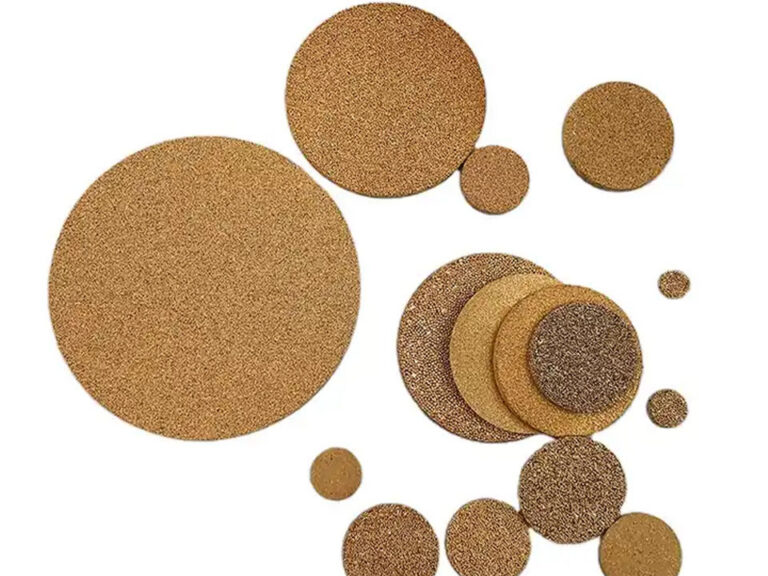
الـ sintered metal filter cartridge range includes powder-sintered, multilayer mesh, fiber-felt, pleated metal, and perforated composite constructions for liquid, gas, steam, and industrial process filtration.
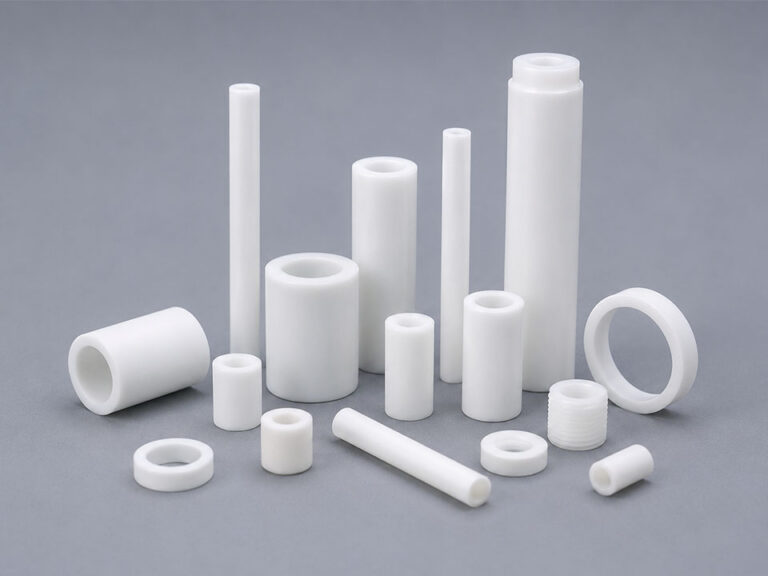
And for applications that need a rigid porous component without the cost or weight of metal, خراطيش الترشيح البلاستيكية الملبدة can be made from PE, PP, PTFE, nylon, and other engineering polymers.
Different niche.
Different economics.
Reusable doesn’t mean free
A stainless steel cartridge may survive dozens of cleaning cycles.
Fine.
How is it cleaned?
Backwash, ultrasonic bath, chemical soak, high-pressure spray, furnace treatment, or a combination? How is cleanliness verified? What does one cleaning cycle cost? What happens to the contaminated cleaning fluid? Does the pore structure change over time?
A reusable element can save money.
Or it can quietly consume labor, solvent, validation time, and production capacity until the original purchase price becomes the least important number on the spreadsheet.
That’s why I prefer total cost per operating hour.
Not unit price.
Cartridge filter types compared
Cartridge filter type
Main filtration mechanism
Strongest advantage
Common blind spot
Typical applications
Usually reusable?
Polypropylene spun filter cartridge
Graded depth filtration
Low cost and good dirt loading
Nominal ratings vary by supplier
Water, RO prefiltration, general process liquids
No
خرطوشة ترشيح ملفوفة بالخيوط
Yarn-based depth filtration
Material and core flexibility
Channeling, fiber migration, inconsistent winding
Oils, coatings, chemicals, water
Usually no
Polypropylene pleated filter cartridge
Surface or shallow-depth filtration
High area and low initial pressure drop
Pleat blinding under heavy solids
Fine clarification, food, process water
Sometimes, with limits
PTFE pleated filter cartridge
Membrane filtration
Chemical resistance and gas-filtration performance
Measured using what challenge particles? At what flow rate? In water or a viscous liquid? Is the cartridge nominally rated, absolutely rated, beta-rated, or just labeled according to an internal factory convention nobody outside the factory has seen?
That little micron number creates a lot of fake confidence.
A filtration specification should include, at minimum:
Target particle size
Required removal efficiency
Nominal or absolute rating
تركيب السائل أو الغاز
Chemical concentration
Operating and maximum temperature
Normal pressure
الضغط التفاضلي الأقصى
معدل التدفق
لزوجة السائل
Solids concentration
Particle-size distribution
Cartridge dimensions
Housing connection
DOE or SOE configuration
Seal material
Cleaning or disposal plan
Food, pharmaceutical, potable-water, or regulatory requirements
Annual quantity
Skip those details and the supplier has to guess.
Some will ask questions.
Some won’t.
The common 10-, 20-, 30-, and 40-inch cartridge lengths don’t guarantee interchangeability either. Outside diameter, inside diameter, compression length, gasket thickness, O-ring location, end-cap form, and sealing interface all affect whether the cartridge actually seats in the housing.
A DOE cartridge has two open ends.
An SOE cartridge may use a 222 or 226 O-ring connection with a fin, spear, flat end, or another closed-end style.
Tiny difference.
Massive bypass.
When fluid sneaks around the cartridge instead of passing through the media, the filter can be made from the finest membrane on earth and still do essentially nothing.
Recent public-health data makes selection and maintenance harder to ignore
A cartridge filter is a small product sitting inside a much larger infrastructure problem.
الـ EPA’s 2023 Seventh Drinking Water Infrastructure Needs Survey estimated that U.S. drinking-water systems would need $625 billion in infrastructure investment over the following 20 years. The estimate was 32% higher than the previous assessment.
Cartridge filters are only one part of that system.
Still, the figure exposes the scale of what’s behind routine words such as maintenance, treatment, replacement, and asset management.
And selection has to begin with the contaminant—not with the cartridge brand.
الـ CDC’s April 10, 2024 guidance on choosing water filters explains that different filters remove different substances and recommends identifying the specific germs or chemicals of concern before choosing treatment. The industrial version of that advice is brutally simple: characterize the feed before buying the media.
Yet filter selection is only half the problem.
Maintenance can undo everything.
الـ CDC’s March 15, 2024 waterborne-germ guidance warns that germs can live and multiply inside filters that aren’t properly maintained or replaced. It also notes that some whole-building filters remove chlorine or other treatment chemicals that would otherwise suppress microbial growth.
That warning shouldn’t be confined to residential filters.
A wet industrial cartridge left in stagnant service can become a biological habitat. A “longer service interval” isn’t automatically an efficiency win if the media starts supporting growth, releasing odor, raising pressure drop, or contaminating the next production run.
Nobody likes talking about the wet cartridge sitting over a shutdown weekend.
They should.
How to choose the right cartridge filter
Start with what failure looks like.
A blocked spray nozzle?
A damaged RO membrane?
Visible haze in the finished product?
Catalyst loss?
Microbial contamination?
Excessive change-outs?
High clean pressure drop?
The failure mode tells you more than a product category page ever will.
Choose spun polypropylene when:
You need economical sediment or general depth filtration, the temperature and chemistry suit polypropylene, the cartridge will normally be discarded after loading, and a validated sterilizing-grade membrane isn’t required.
It’s often a good workhorse.
Don’t pretend it’s something else.
Choose string wound when:
You have a viscous or chemically specific fluid, need a defined yarn-and-core combination, or already operate a process with a proven wound-cartridge specification.
Check the winding quality.
That’s where shortcuts hide.
Choose polypropylene pleated when:
You need increased filtration area, relatively low clean pressure drop, better-defined retention, or fine clarification in a stream that won’t instantly bury the pleat pack in sludge.
Ask for efficiency data.
Not brochure adjectives.
Choose PTFE pleated when:
You’re filtering aggressive chemicals, solvents, sterile gases, process vents, or another high-purity stream where ordinary polypropylene can’t provide the required resistance or membrane behavior.
And confirm wetting.
بجد.
Choose resin bonded when:
The liquid is viscous, sticky, oily, or heavily loaded, and the cartridge needs enough rigidity to resist compression or deformation while storing contamination through its depth.
Run a compatibility check against the resin system.
Not just the fiber.
Choose stainless steel when:
The process involves heat, pressure, steam, abrasive solids, repeated cleaning, backwashing, gas filtration, catalyst retention, or a service-life calculation that genuinely supports a reusable element.
Calculate the cleaning cost.
All of it.
For unfamiliar fluids, regulated production, custom connections, or expensive downstream equipment, a controlled trial is worth more than ten email assurances.
Buyers developing non-standard dimensions, pore structures, connections, or replacement designs can use custom filter cartridge OEM/ODM services based on drawings, samples, operating parameters, and required performance.
الأسئلة الشائعة
What are the main types of cartridge filters?
The main cartridge filter types are polypropylene spun depth cartridges, string wound depth cartridges, polypropylene pleated cartridges, PTFE pleated membrane cartridges, resin-bonded depth cartridges, and stainless steel cartridges; each family uses a different media structure, so cartridges carrying the same stated micron rating can produce different efficiency, flow, dirt capacity, pressure drop, and operating life.
Spun, wound, and resin-bonded designs generally store contamination through the media depth.
Pleated cartridges pack more area inside the same diameter and often load nearer the surface.
Stainless steel elements may use powder, mesh, felt, or pleated structures—so even that one category contains several very different filters.
What is the difference between a spun filter cartridge and a string wound filter cartridge?
A spun filter cartridge is formed from thermally bonded polymer fibers—usually polypropylene—while a string wound filter cartridge is manufactured by wrapping yarn around a perforated support core; spun designs offer relatively simple all-polypropylene construction, whereas wound cartridges provide more freedom to combine yarn and core materials for specific temperatures, chemicals, viscosities, and mechanical loads.
Spun cartridges are everywhere in economical water and RO prefiltration.
Wound cartridges remain useful in oils, coatings, paints, syrups, chemicals, and other process fluids.
The manufacturing quality matters more than the neat white exterior suggests.
Is a pleated filter cartridge better than a depth filter cartridge?
A pleated filter cartridge is generally better when the process requires high effective area, relatively low initial pressure drop, and consistent fine-particle retention, while a depth cartridge is often better when the feed contains a broad particle distribution that must be stored throughout the media rather than concentrated mainly along its outer surface.
Heavy dirt can choke a pleat pack.
A clean, fine-particle stream may waste much of a thick depth element.
So no—the pleated option isn’t automatically “higher grade.” It’s simply built for a different loading pattern.
When should a PTFE pleated filter cartridge be used?
A PTFE pleated filter cartridge should be used when the application requires broad chemical resistance, filtration of aggressive solvents, sterile gas service, tank venting, or high-purity membrane performance that ordinary polypropylene media cannot reliably provide; buyers must also confirm whether the PTFE membrane is hydrophobic, hydrophilic, supported, sterilizable, and suitable for integrity testing.
Hydrophobic PTFE fits many gas and vent applications.
Water-based liquid service is another matter.
Without pre-wetting or a hydrophilic treatment, flow through the membrane may be poor even though the cartridge is chemically compatible.
When is a stainless steel filter cartridge worth the higher price?
A stainless steel filter cartridge is worth the higher initial price when temperature, differential pressure, abrasion, steam exposure, cleaning cycles, backwashing, or long operating life would rapidly damage disposable polymer media; its real value should be calculated from total service cost, including cleaning labor, downtime, waste disposal, validation, replacement frequency, and protection of downstream equipment.
Reusable doesn’t mean maintenance-free.
A metal element still has to be cleaned, inspected, tested, and eventually replaced.
And if the cleaning process is poorly controlled, the second cycle may not perform like the first.
How do I choose the right cartridge filter?
The right cartridge filter is selected by matching its media, pore structure, efficiency rating, dimensions, seals, and mechanical limits to the actual fluid composition, particle-size distribution, flow rate, viscosity, temperature, pressure, differential pressure, hygiene requirements, cleaning method, housing geometry, and expected cartridge-change interval—not by choosing the lowest price attached to a stated micron value.
For application-specific review, compare sintered plastic filter applications across medical, laboratory, industrial, domestic, and material-processing systems.
Then provide worst-case process conditions.
Not just the comfortable normal operating number.
Stop buying cartridges by appearance
The cartridge that looks right may still be completely wrong.
A polypropylene spun element that works well before an RO membrane could soften in hot chemical service. A hydrophobic PTFE membrane that performs beautifully on sterile air may refuse to wet in an aqueous liquid. A stainless steel cartridge may survive 50 cleanings and still lose money because each cleaning ties up labor, solvent, validation equipment, and production time.
That gets expensive.
I frankly believe most cartridge-selection failures begin before the sample is made. The inquiry is vague, the supplier fills in the missing details, procurement compares quotations that aren’t technically equivalent, and engineering discovers the mismatch only after differential pressure shoots up—or particles appear downstream.
So don’t send this:
“Need 5-micron filter. Quote best price.”
Send this instead:
Fluid composition. Chemical concentration. Operating and maximum temperature. Normal and peak flow. Viscosity. Particle-size distribution. Required efficiency. Housing dimensions. End configuration. Seal material. Cleaning plan. Annual quantity.
Boring information?
ربما.
It’s also the information that stops a filter from collapsing, bypassing, blinding early, contaminating the process, or turning an inexpensive cartridge into a very expensive production problem.
For custom development, sample matching, or production-scale sourcing, review LVYN’s filter manufacturing and factory capabilities and submit the real application data for engineering assessment.