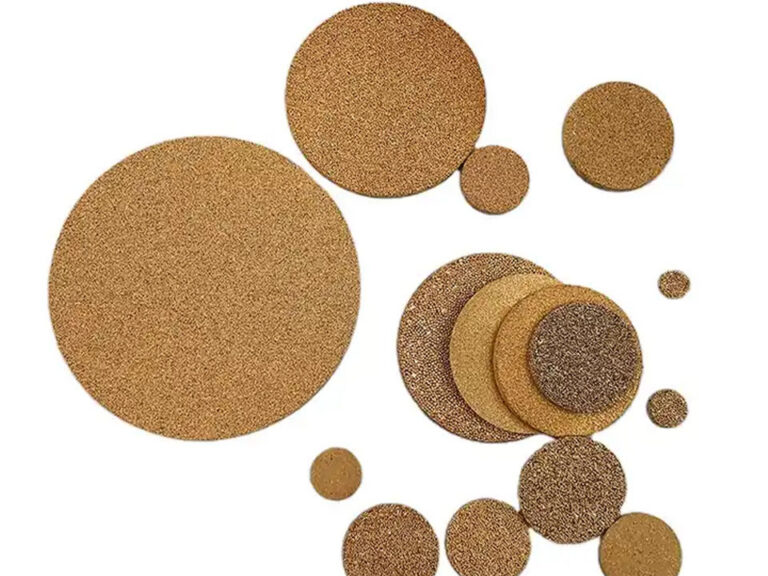
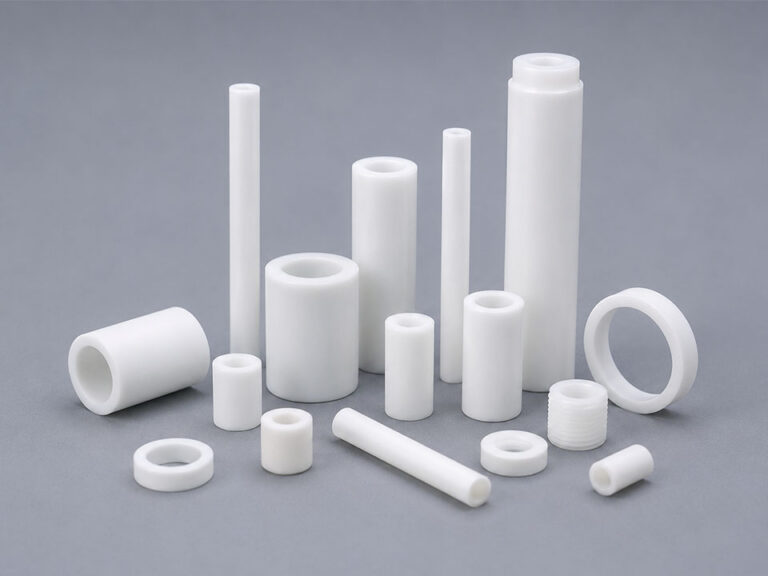
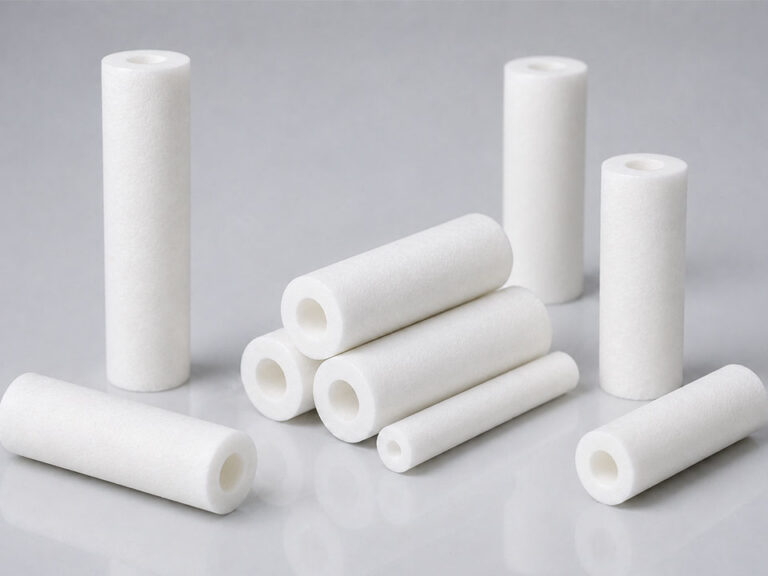
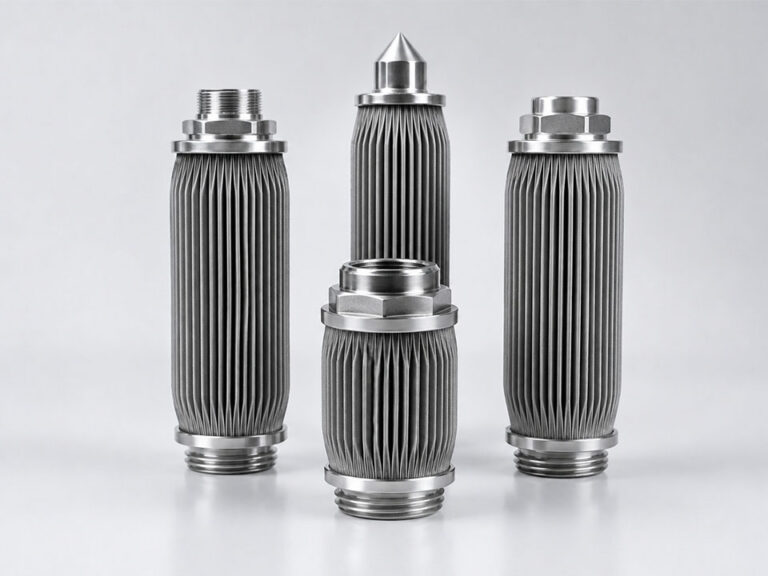
Before you leave, we invite you to talk directly with our managing team to ensure you receive the most accurate technical guidance, pricing support, and customization options for your project. Our experts can quickly evaluate your requirements, recommend suitable sintered plastic filter solutions, and help you reduce sourcing risks while improving efficiency, consistency, and long-term supply stability for your industrial applications.
Need Help Selecting the Right Filter Cartridge?
Our Sales Team
Tell our sales support team your product type, micron rating, size, application, filtered medium, working temperature, pressure, and estimated quantity. We will help you match the right sintered plastic, sintered metal, or sediment filter cartridge.
Sintered plastic sits in an uncomfortable middle ground.
Not quite solid. Not quite foam. Not quite membrane.
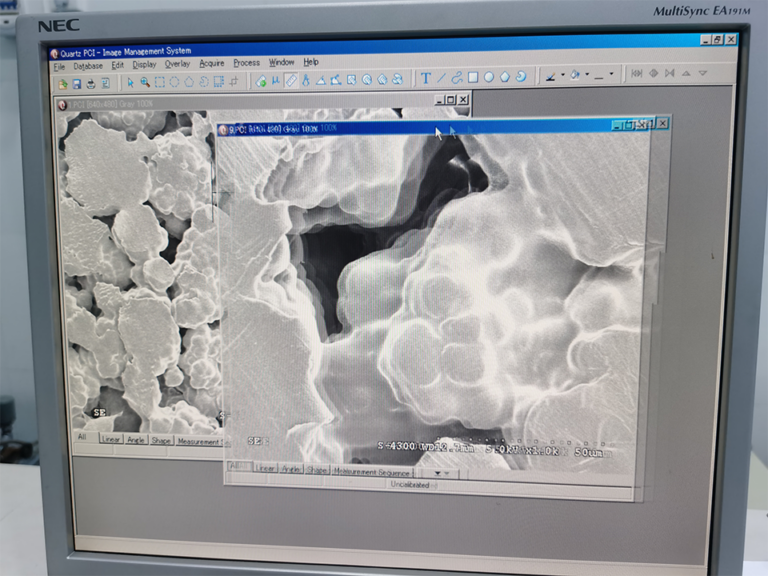
It is a controlled porous polymer structure created by heating plastic powders below their melting point so they fuse at contact points while preserving engineered void networks for fluid flow.
According to engineering references on porous polymers, sintered plastics are semi-rigid open-cell materials with interconnected pores that allow controlled fluid and gas transport (Polystar Technologies, LLC).
That sounds clean on paper.
But in real factories, it behaves more like a negotiation between heat, pressure, and particle geometry than a neat material specification.
And that’s where things start to get interesting.
What is sintered plastic?
Sintered plastic is a porous thermoplastic material formed by thermal diffusion bonding of polymer powder particles below their melting point, producing a rigid structure with interconnected pores used for filtration, venting, diffusion, and flow control (Filson).
That’s the formal definition.
But I’ll be direct:
It is a material where manufacturing defects are intentionally designed into functionality.
If that sounds contradictory, that’s because it is.
And yet it works.
Plastic sintering process explained
The real physics (not the brochure version)
Sintering occurs when polymer particles are heated to a temperature where:
surface chains gain mobility
molecular diffusion begins
particles form “necks” at contact points
full melting does NOT occur
This is critical.
Because full melting would collapse porosity entirely.
Instead, the system is kept in a narrow thermal window where structure becomes continuous but not dense.
A manufacturing analysis of porous plastic filters shows that this controlled heating step creates a monolithic matrix with engineered pore distribution and predictable permeability characteristics (POROYAL).
That last word matters: predictable.
Without predictability, filtration design collapses into guesswork.
How sintered plastic is made (industrial workflow)
Let’s break the process in real manufacturing terms:
1. Polymer powder selection
Common materials:
Polyethylene (PE / UHMWPE)
Polypropylene (PP)
PTFE
PVDF
Nylon (PA)
These are chosen based on:
chemical resistance
melting behavior
surface energy
mechanical stiffness after sintering
2. Particle size engineering
Typical ranges:
10–200 μm
narrow distribution = tighter pore control
wide distribution = higher permeability variability
This step alone defines final filter performance more than most engineers expect.
3. Mold filling and compaction
Powder is vibrated and compressed.
Not to deform it.
But to ensure uniform packing density, because density variation becomes flow variation later.
4. Thermal sintering cycle
The most sensitive step.
heated below melting point
held in controlled dwell phase
particle necking occurs
diffusion bonding stabilizes structure
At this stage, pore networks are literally “born.”
5. Controlled cooling
Cooling is not passive.
It locks:
pore geometry
mechanical strength
shrinkage pattern
If cooling is too fast, internal stress fractures appear.
Industry references describe this as a connected pore system that enables controlled flow of gases and liquids through engineered channels (Porex).
But in real engineering terms, the structure determines:
pressure drop curve
flow linearity
clogging rate
backwash efficiency
mechanical fatigue behavior
So when someone says “sintered plastic filter,” they are not describing a material.
They are describing a flow behavior system.
Materials used in sintered plastic (engineering comparison)
Polyethylene (PE)
low cost
stable sintering window
widely used in water filtration
moderate temperature resistance
Polypropylene (PP)
higher temperature tolerance than PE
slightly stiffer matrix
better chemical compatibility
PTFE
extreme chemical resistance
high temperature stability
expensive
harder to sinter precisely
Nylon (PA)
high mechanical strength
moisture sensitivity
used in structural filtration
A polymer filtration analysis shows these materials typically operate in porosity ranges of ~30%–60% with pore sizes from ~1 μm to 200 μm depending on grade (杭州新特板技术有限公司).
That range is not random.
It reflects industrial compromise between:
flow rate
pressure resistance
particle retention
Real-world applications of sintered plastic filters
Now we move from theory to systems.
Sintered porous plastics are used in:
medical devices (inhalation, nebulizers)
battery venting systems
pneumatic mufflers
water filtration pre-stages
gas diffusion systems
industrial fluid control modules
Industry references show use cases including venting, diffusion, filtration, aeration, and acoustic dampening across industrial and medical sectors (Polystar Technologies, LLC).
That breadth matters.
Because it proves one thing:
This material is not application-specific.
It is function-specific across industries.
Case evidence (real-world industry validation)
Here are three real, documented industry-level findings:
Case 1 — Porous polymer filtration market expansion (2024)
Industry reports indicate that global porous plastic filtration markets are growing significantly due to water treatment demand and pharmaceutical expansion, with multi-billion-dollar scale projections (Polystar Technologies, LLC).
Case 2 — Gas venting systems in electronics & batteries
Porous plastic components are widely used in battery venting and gas diffusion systems due to controlled permeability and chemical resistance (Porvair).
Case 3 — Industrial fluid handling systems
Engineering suppliers report use in chemical processing, aeration systems, and fluidization equipment where stable flow control is required under pressure variation conditions (porous-plastics.co.uk).
No single application dominates.
That is the key signal.
It is infrastructure material, not niche material.
Comparison table: sintered plastic vs competing media
Property
Sintered Plastic
Metal Sintered
Fiber Media
Membrane
Structure type
polymer porous matrix
rigid metallic pores
random fibers
thin selective layer
Pressure resistance
medium-high
very high
medium
low
Chemical resistance
high (PE/PTFE dependent)
high
low-medium
high
Reusability
high
very high
low
low
Cost efficiency
high
medium
low
low
Filtration precision
medium
medium-high
low
very high
No winner exists.
Only trade-offs.
The uncomfortable engineering truth
Here’s what most vendors avoid saying:
Sintered plastic is not chosen because it filters best.
It is chosen because it:
survives pressure cycling
maintains stable flow curves
avoids fiber shedding
allows cleaning and reuse
In real industrial systems, the KPI is not filtration efficiency alone.
It is system stability over time under variable conditions.
That changes how engineers should think about it entirely.
FAQ (AEO optimized)
What is sintered plastic?
Sintered plastic is a porous thermoplastic material formed by heating polymer powder below its melting point so particles fuse while retaining interconnected void structures used for filtration and flow control.
How is sintered plastic made?
It is made through controlled heating of polymer powders in a mold where particles bond at contact points via diffusion without fully melting, forming a rigid porous structure.
What is sintered plastic used for?
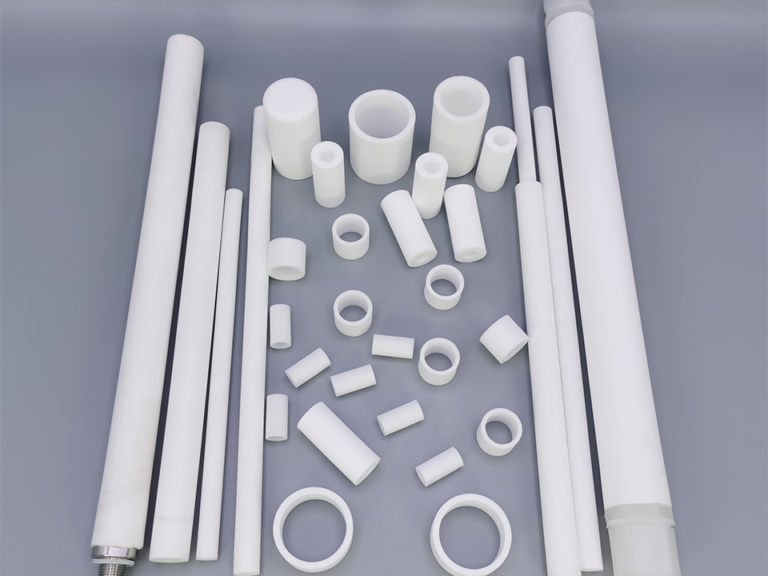
It is used in filtration cartridges, gas venting systems, medical devices, pneumatic silencers, and industrial fluid control systems requiring controlled permeability.
Is sintered plastic strong?
Yes. Its fused particle network provides good mechanical stability and resistance to pressure cycling, making it reusable in many industrial applications.
Why use sintered plastic instead of membranes?
Because it provides higher durability, better pressure resistance, and reusable structure, even though it offers lower filtration precision than membranes.
Procurement Guidance
If you are engineering systems where flow stability matters more than ultra-fine filtration accuracy, sintered plastic is not an option—it is a structural requirement in design thinking.