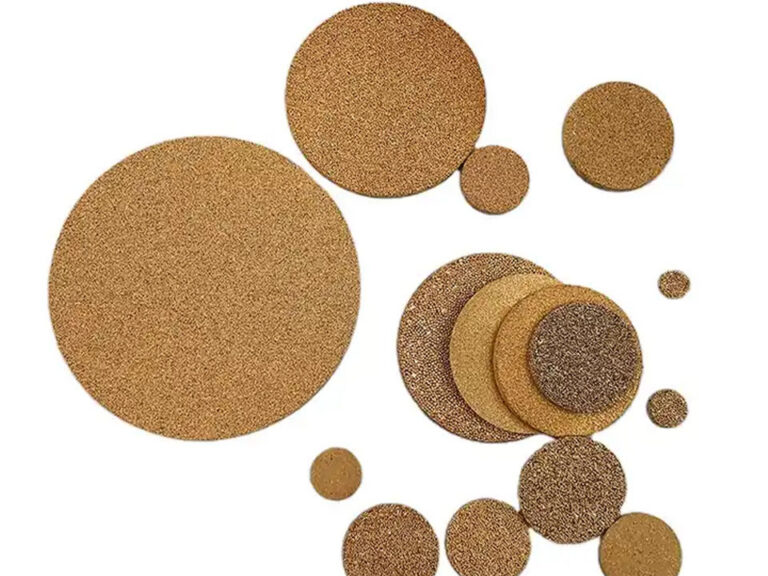
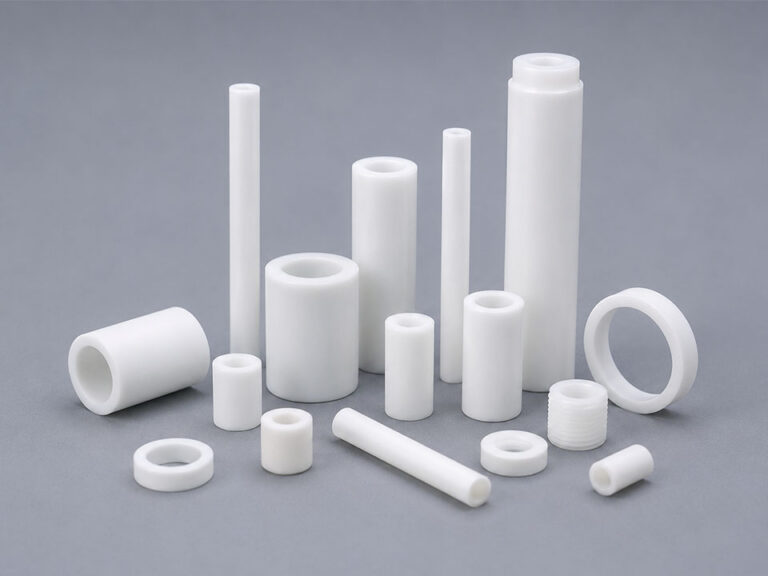
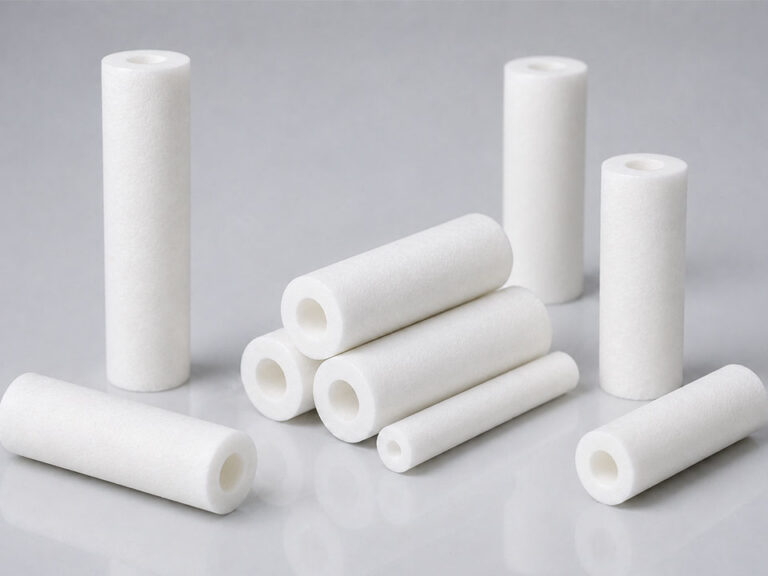
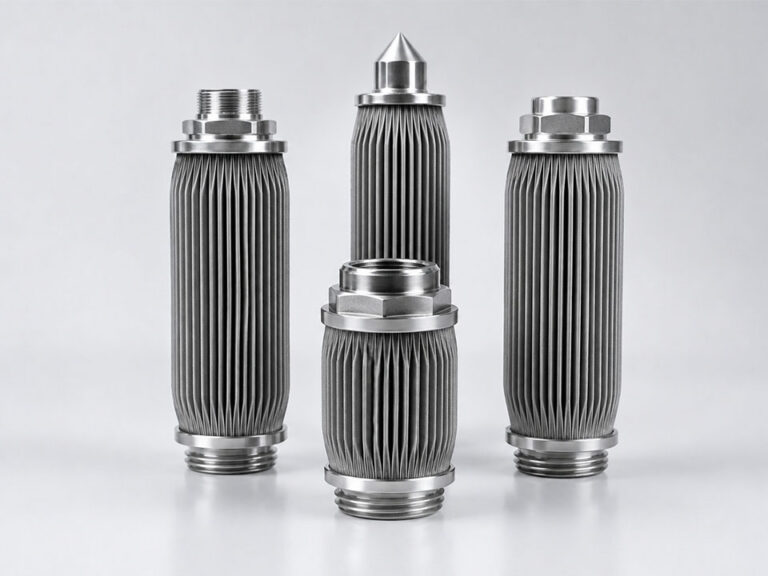
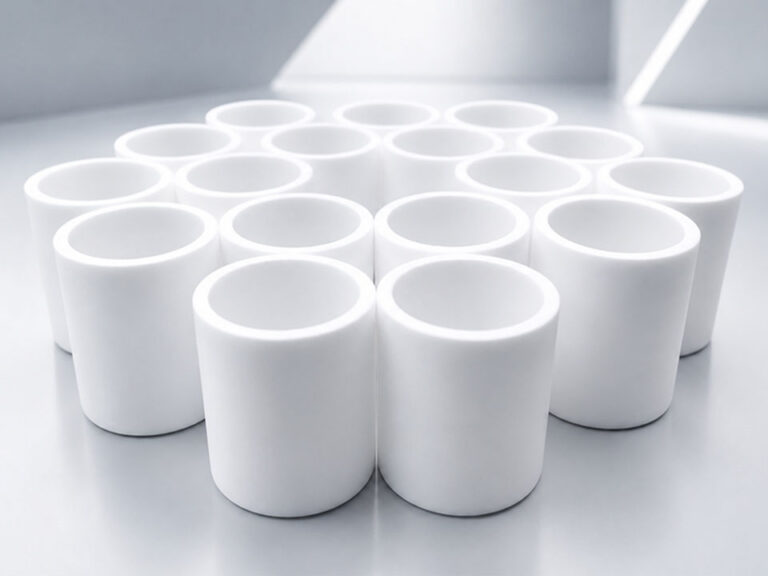
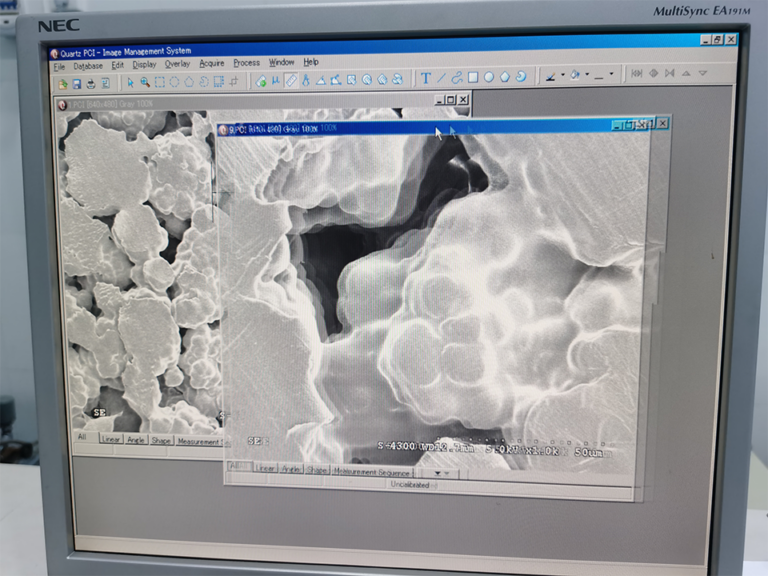
Before you leave, we invite you to talk directly with our managing team to ensure you receive the most accurate technical guidance, pricing support, and customization options for your project. Our experts can quickly evaluate your requirements, recommend suitable sintered plastic filter solutions, and help you reduce sourcing risks while improving efficiency, consistency, and long-term supply stability for your industrial applications.
Need Help Selecting the Right Filter Cartridge?
Our Sales Team
Tell our sales support team your product type, micron rating, size, application, filtered medium, working temperature, pressure, and estimated quantity. We will help you match the right sintered plastic, sintered metal, or sediment filter cartridge.
How to Choose Sintered Filters for Acids, Alkalis & Solvents
A buyer once asked me, “Can your sintered filter handle acid?”
That was the whole question.
Acid what? Sulfuric acid, H₂SO₄? Hydrochloric acid, HCl? Nitric acid, HNO₃? Acetic acid, CH₃COOH? Room temperature or 85°C? Static soak or high-flow recirculation? Clean fluid or dirty pickling liquor full of iron salts and abrasive fines? Same word. Different monster.
Here’s the ugly truth: sintered filter chemical compatibility is where many filtration projects quietly go wrong before the first cartridge is installed. The drawing may look clean, the micron rating may look reasonable, the quote may look cheap, and the supplier may say “no problem”—but once the media starts swelling, cracking, pitting, shedding, embrittling, or contaminating the batch, nobody cares how tidy the proposal looked.
Chemistry wins.
Every time.
I’ve seen purchasing teams obsess over 5 μm versus 10 μm while ignoring the fact that their “solvent resistant sintered filter” was heading into acetone, MEK, toluene, ethanol, or mixed solvent recovery with no serious material review. I’ve also seen stainless steel specified for chloride-heavy acid service because someone thought “316L” meant “basically invincible.”
It doesn’t.
And now the documentation side is getting sharper. In 2024, the U.S. EPA finalized enforceable drinking-water limits for six PFAS compounds, including PFOA and PFOS, and also designated PFOA and PFOS as hazardous substances under CERCLA. PTFE is not PFOA or PFOS—don’t mix that up—but buyers using fluoropolymer-based components now face more questions about supply-chain declarations, processing aids, and contamination control. See the EPA’s PFAS drinking-water regulation and its PFOA/PFOS CERCLA hazardous-substance designation.
So yes, material choice is technical.
But it’s also legal-adjacent, audit-adjacent, and procurement-adjacent. That’s why lazy compatibility charts scare me.
Start With the Fluid, Not the Filter
But most buyers start in the wrong place.
They ask for micron rating, length, OD, ID, end cap, gasket, and MOQ. Fine. Those matter. But if the fluid chemistry is wrong, the rest is decoration. A perfect 20 μm porous tube that dissolves, swells, or loses pore geometry is just a pretty mistake with a tracking number.
Ask the ugly questions first.
What exact chemical is being filtered? What concentration? What temperature? What pH? Is it oxidizing or reducing? Is it a strong acid, weak acid, strong alkali, solvent blend, chlorinated solvent, aromatic solvent, ketone, alcohol, brine, oxidizer, or cleaning fluid? Is the exposure continuous, batch-based, or occasional CIP?
Small detail: “alkali” is not one condition.
Sodium hydroxide, NaOH, and potassium hydroxide, KOH, are not gentle materials just because they’re common. Strong caustic can attack aluminum, damage some polymers, create stress cracking issues, and turn the wrong elastomer into trash. And if the process is hot—say 60°C to 90°C—the compatibility window gets narrower fast.
From my experience, how to choose sintered filters for corrosive chemicals comes down to one uncomfortable sentence: define the worst day of the process, not the average day.
Average days don’t kill filters.
Upsets do.
PTFE: The Chemical Specialist Buyers Overtrust
PTFE is often the first material people mention for aggressive chemical filtration, and honestly, I understand why.
A PTFE sintered filter for chemicals can handle a broad range of acids, solvents, oxidizers, and corrosive liquids better than many commodity plastics and metals. It has low surface energy. It resists wetting. It doesn’t panic around many nasty fluids that make PE, PP, PA, and even stainless steel look underdressed.
Nice material.
Still, I don’t worship it.
PTFE can creep under load. It’s not mechanically tough like metal. It can be more expensive. Bonding and support design matter. In pressurized assemblies, you need to think about wall thickness, compression, end-cap restraint, sealing method, and whether the porous structure will deform under long-term differential pressure.
And then there’s the paperwork.
Because of broader PFAS scrutiny, some buyers now ask harder questions around fluoropolymer materials. Again: PTFE is not automatically a PFAS contamination issue in the way nontechnical people sometimes imply. But in regulated water, pharma, food, semiconductor, and environmental projects, the supplier should be ready with documentation—not vibes.
If the application is strong acid, mixed solvent, oxidizer, or highly corrosive liquid at moderate mechanical load, PTFE deserves the first serious look. If the process is high-pressure, high-temperature, or backpulse-heavy, I start asking whether PTFE needs mechanical support—or whether metal or titanium makes more sense.
Stainless Steel: Strong, Cleanable, and Not Acid-Proof
And then we get stainless steel, the industry’s favorite shortcut.
316L stainless steel sintered filters are strong, cleanable, weldable, and useful in high-temperature or high-pressure service. They’re excellent for steam, hot gas, compressed air, catalyst fines, viscous liquids, and repeated cleaning cycles where porous plastic would be out of its depth.
But stainless steel sintered filter chemical resistance has limits.
Hydrochloric acid? Be careful. Chloride-bearing acidic fluids? Be very careful. Warm chloride environments? That’s where pitting and crevice corrosion start whispering. If the process has HCl, chloride salts, seawater, ferric chloride, sodium hypochlorite, or acidic brine, don’t just write “316L” and feel clever.
I frankly believe stainless steel is overused in corrosive liquid filtration because buyers confuse mechanical confidence with chemical immunity.
Different thing.
For nitric acid, stainless steel may perform well in some conditions because of passivation behavior. For sulfuric acid, performance depends heavily on concentration, temperature, flow, aeration, impurities, and alloy grade. For hydrochloric acid, ordinary stainless is often a bad bet. For caustic alkali, 316L may work in some moderate conditions, but nickel or specialty alloys can become relevant as concentration and temperature rise.
The filter doesn’t care what the brochure said.
It cares what the fluid does.
PE and PP: Budget-Friendly, But Don’t Abuse Them
PE and PP sintered filters are useful. Very useful.
PE sintered porous filters—especially UHMWPE structures—often make sense in low-to-moderate temperature water, air, mild chemical liquid, medical, lab, and venting applications. PP can be a stronger candidate for many chemical liquids, especially where temperature or solvent exposure starts pushing PE toward the edge.
But neither one is a magic plastic brick.
For sintered filters for acids and alkalis, PP often gets attention because it handles many acids, alkalis, and salts better than PE under practical industrial conditions. PE may win on toughness and abrasion behavior in simpler service. But both materials can suffer from swelling, softening, creep, pore deformation, and cleaning damage if the application is too hot, too pressurized, or too chemically aggressive.
Here’s a sourcing trap I’ve seen: a buyer asks for an alkali resistant filter cartridge, receives PP, tests it in mild caustic at room temperature, approves it, and later installs it in hotter NaOH service with dirty solids and pressure pulses.
Then comes the complaint.
“Your cartridge failed.”
Maybe. Or maybe the real process was never tested.
If the fluid is low-temperature acid rinse, mild alkali, or general chemical dosing, PP may be smart. If the service includes hot oxidizers, strong solvents, aggressive acids, or high differential pressure, PP may simply be the wrong animal.
PA Nylon: Mechanically Useful, Chemically Moody
PA nylon porous filter material has decent strength, wear resistance, and industrial usefulness. It can work in pneumatic systems, fuel handling, oil mist, vents, lubrication circuits, and certain mechanical porous components where commodity plastics feel too soft.
But I don’t like PA as a lazy choice for corrosive liquids.
Nylon absorbs moisture. It can lose dimensional discipline. Strong acids can be a problem. Some solvents may attack or swell it. In wet, acidic, or chemically variable environments, PA needs real testing—not a supplier saying, “Nylon is strong.”
Strong against what?
That’s always the question.
If you’re filtering oils, fuels, air, or moderate mechanical service fluids, PA can be practical. If you’re dealing with strong acids, hot alkalis, oxidizers, or solvent blends, I would slow down and ask for immersion data, flow testing, and post-exposure dimensional checks.
Titanium, Nickel, and Bronze: The Expensive Answers That Sometimes Save Money
Titanium is not a vanity material.
It’s what you look at when chloride-rich media, oxidizing chemicals, seawater, or high-value corrosion resistance makes stainless steel risky. Titanium sintered media can be a strong candidate for aggressive chloride environments, certain oxidizing acids, marine systems, and high-cleanliness duties.
Nickel is different. Nickel sintered media may be considered for hot alkalis, caustic service, battery-related processes, electrodes, and specialty chemical environments where stainless steel and plastics both look suspicious. The catch is cost and supply volatility. Reuters reported in January 2024 that Indonesia’s mined nickel production rose 29.2% year over year in the first ten months of 2023, putting pressure on exchange stocks and nickel pricing. Read Reuters on surging exchange stocks pressuring nickel.
Bronze? Useful, but not for every chemical room.
Bronze sintered filters are common in pneumatic mufflers, breathers, fuel filters, lubrication systems, and moderate-duty porous metal parts. For strong acids, strong alkalis, oxidizers, and chloride-heavy corrosive liquids, I usually look elsewhere unless the chemistry is clearly compatible.
Limited in HCl/chloride acids; better in some nitric acid conditions
Moderate to good depending on concentration and temperature
Good for many non-corrosive solvents
Depends heavily on oxidizer chemistry
Excellent
High-pressure, hot, cleanable systems where chemistry allows
PE sintered filter
Limited to mild conditions
Moderate in some mild alkalis
Poor to moderate; solvent-dependent
Weak against many oxidizers
Low to moderate
Low-temperature water, air, mild chemical filtration
PP sintered filter
Good for many acids at moderate temperature
Good for many alkalis
Limited with many organic solvents
Weak with strong oxidizers
Low to moderate
Chemical dosing, acid/alkali rinse, low-pressure corrosive liquids
PA nylon porous filter
Weak with strong acids
Moderate in selected conditions
Variable; solvent-sensitive
Generally weak
Moderate
Oil, fuel, air, pneumatic and mechanical porous parts
Titanium sintered media
Strong in many chloride/oxidizing environments
Variable; application-specific
Good in many solvents
Strong in selected oxidizing media
High
Seawater, chloride-rich fluids, specialty chemical service
Nickel sintered media
Variable
Strong candidate for caustic alkali
Good in selected solvents
Application-specific
High
Hot alkali, electrodes, battery and specialty chemical processes
Bronze sintered filter
Limited
Limited
Moderate in oils/fuels
Weak
Moderate
Pneumatic mufflers, breathers, fuels, lubrication systems
My Practical Selection Rules
Start with the chemical compatibility chart, but don’t end there.
A compatibility chart is a screening tool, not a guarantee. It usually doesn’t know your temperature spike, your cleaning chemistry, your suspended solids, your pressure pulses, your weld seam, your gasket, your audit requirements, or your operator’s habit of “cleaning” filters with whatever drum is already open.
That part matters.
For pharmaceutical water and high-purity systems, FDA’s High Purity Water System inspection guide reminds inspectors to look at sanitization, microbiological control, dead legs, system design, and contamination risks. That’s why a filter for chemical service can’t be judged only by whether the media survives immersion. It also has to survive the cleaning philosophy and the compliance environment.
Here’s my rough field logic:
Process Reality
Material Direction I’d Investigate First
Why
Strong acid, moderate pressure
PTFE, titanium, specialty alloys
Chemical resistance beats cheapness
Hydrochloric acid or chloride-rich acid
PTFE, titanium, selected alloys
Ordinary stainless can pit or corrode
Hot caustic alkali
Nickel, selected stainless alloys, PTFE depending on conditions
Temperature and concentration change everything
Organic solvent filtration
PTFE, stainless steel if chemistry is non-corrosive
Solvent swelling and extraction risk must be checked
Mild acid/alkali rinse, low pressure
PP, sometimes PE
Good cost-performance if temperature stays honest
Oxidizers such as nitric acid or sodium hypochlorite
PTFE, titanium, carefully validated stainless
Oxidizer behavior is highly material-specific
Regulated water/pharma/food service
Validated PTFE, 316L, qualified polymer grades
Documentation and extractables matter
Dirty corrosive slurry
PTFE-supported designs, titanium, 316L only if compatible
Abrasion plus corrosion is the double hit
What I Ask Suppliers Before Trusting the Quote
I ask for the actual media grade.
Then I ask for chemical compatibility evidence under concentration and temperature. Not “good resistance.” Actual conditions. If they have immersion test data, bubble point before and after exposure, permeability shift after soaking, dimensional change, tensile or compression change, extractables information, and recommended cleaning limits, now we’re having a serious conversation.
If they only send a brochure, I get suspicious.
For a solvent resistant sintered filter, I also ask whether the solvent attacks the filter body, gasket, adhesive, weld zone, end cap, housing, O-ring, and support cage. A filter element is not just media. It’s an assembly. Assemblies fail at interfaces.
Tiny parts. Big failures.
For an alkali resistant filter cartridge, I want NaOH or KOH concentration, temperature, exposure duration, and cleaning cycle. A cartridge that survives 5% NaOH at 25°C may not survive 30% NaOH at 80°C. Pretending those are similar is how audits become uncomfortable.
Common Material Mistakes I Would Not Sign Off
Using 316L stainless steel in warm hydrochloric acid because “stainless means corrosion resistant.”
Choosing PE for a warm solvent because it was cheap and available.
Specifying PA nylon in wet acidic service without moisture absorption testing.
Buying PTFE for everything and ignoring mechanical support, compression creep, and end-cap design.
Approving PP after room-temperature chemical soak testing, then installing it in a hotter, dirtier, higher-pressure line.
Ignoring the gasket.
That last one is embarrassing, but it happens. The media survives. The O-ring dies. The buyer still calls it a filter failure.
FAQs
What is sintered filter chemical compatibility?
Sintered filter chemical compatibility is the ability of a porous filter material—such as PTFE, 316L stainless steel, PE, PP, PA, titanium, nickel, or bronze—to resist swelling, cracking, corrosion, softening, shedding, and contamination when exposed to specific acids, alkalis, solvents, oxidizers, temperature, pressure, and cleaning cycles.
In real buying terms, compatibility means the filter keeps its pore structure, flow rate, strength, seal integrity, and cleanliness under actual process conditions. A chart can help, but it can’t replace application testing.
What is the best filter material for corrosive liquids?
The best filter material for corrosive liquids is the material that resists the exact chemical concentration, pH, temperature, pressure, exposure time, solids loading, and cleaning method in the process. PTFE, titanium, nickel, PP, and 316L stainless steel can all be correct depending on the chemical environment.
For strong acids and solvents, I often investigate PTFE first. For chloride-rich or oxidizing environments, titanium may deserve attention. For hot caustic alkali, nickel or selected alloys may be safer. For mild acid/alkali duty, PP can be commercially sensible.
Are PTFE sintered filters good for acids and solvents?
PTFE sintered filters are good for many acids and organic solvents because PTFE has broad chemical resistance, low surface energy, and strong resistance to wetting and chemical attack under many moderate mechanical conditions. However, pressure, temperature, creep, support design, and regulatory documentation still need careful review.
I like PTFE for aggressive liquid chemistry. I don’t like unsupported PTFE in mechanically rough service unless the design has been properly engineered.
Can stainless steel sintered filters handle acids?
Stainless steel sintered filters can handle some acids under controlled conditions, but their performance depends strongly on acid type, concentration, temperature, chloride content, oxygen level, flow condition, alloy grade, surface condition, and cleaning chemistry. 316L stainless steel is not automatically safe for hydrochloric acid or chloride-rich acidic service.
Nitric acid may be more favorable in certain conditions. Hydrochloric acid is often dangerous for ordinary stainless. Sulfuric acid is highly concentration- and temperature-dependent. Don’t guess.
Which sintered filter is best for alkalis?
The best sintered filter for alkalis depends on caustic type, concentration, temperature, and exposure time. PP may work for many moderate alkali applications, PTFE can be suitable for broader chemical resistance, and nickel or selected stainless alloys may be required for hot, concentrated NaOH or KOH service.
An alkali resistant filter cartridge should be tested against the actual NaOH or KOH concentration and cleaning cycle. Mild room-temperature data is not enough for hot caustic production service.
How do I choose sintered filters for corrosive chemicals?
To choose sintered filters for corrosive chemicals, define the chemical name, formula, concentration, pH, temperature, pressure, flow rate, solids loading, cleaning method, exposure duration, regulatory requirements, and acceptable service life before selecting PTFE, stainless steel, PE, PP, PA, titanium, nickel, or bronze media.
My working order is chemistry first, temperature second, pressure third, cleaning fourth, assembly materials fifth, and price last. Procurement may hate that order. Field failures prove it’s usually the safer one.
Procurement Guidance
Need help choosing sintered filters for acids, alkalis, solvents, oxidizers, or corrosive liquids?
Send the chemical name, concentration, pH, temperature, pressure, flow rate, micron rating, solids type, cleaning method, and expected service life. We’ll help compare PTFE, stainless steel, PE, PP, PA, titanium, nickel, and other filter materials before the wrong media turns into swelling, cracking, corrosion, contamination, shutdowns, or failed audits.