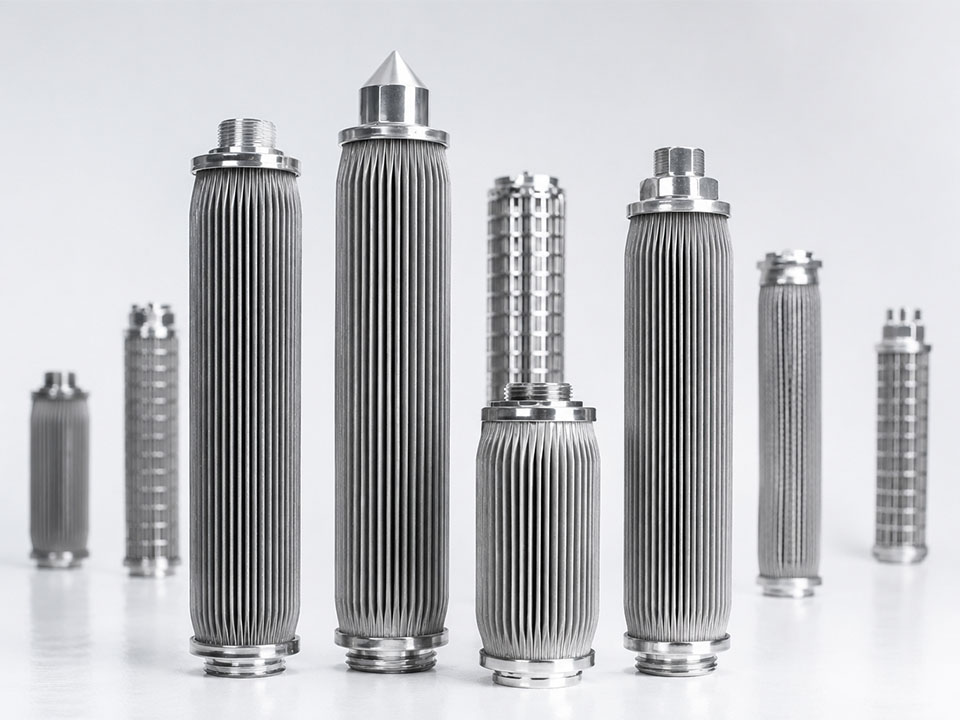
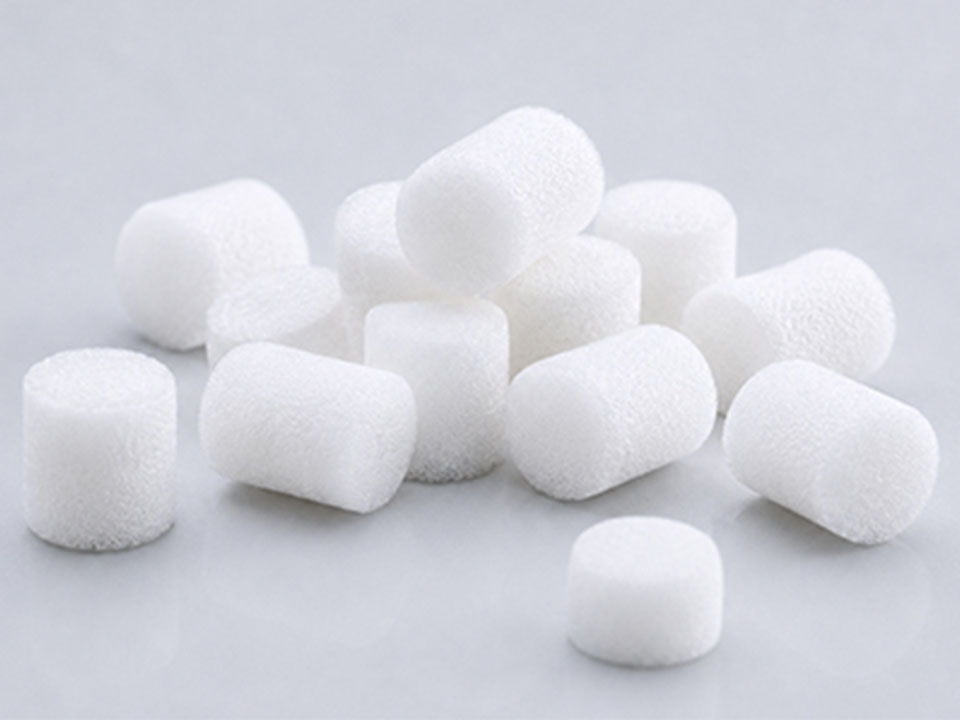
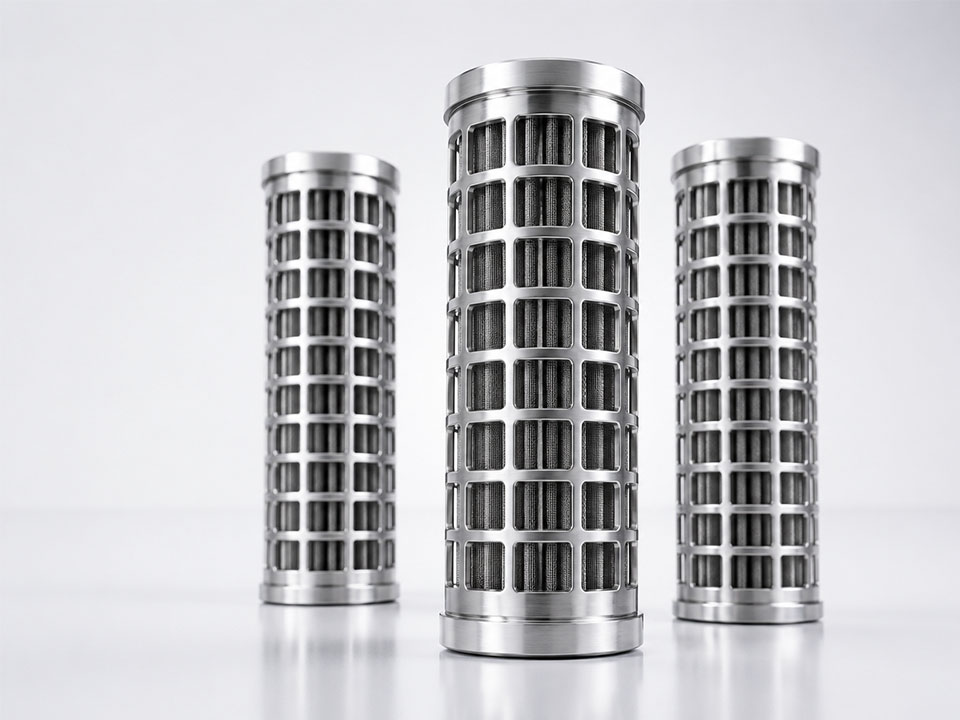
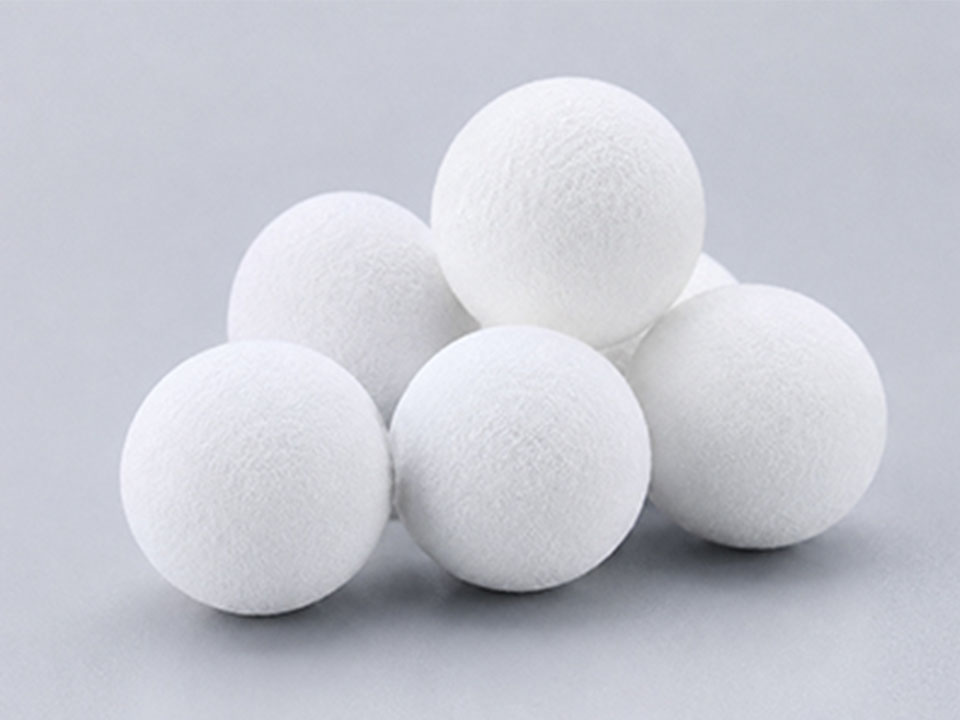
Before you leave, we invite you to talk directly with our managing team to ensure you receive the most accurate technical guidance, pricing support, and customization options for your project. Our experts can quickly evaluate your requirements, recommend suitable sintered plastic filter solutions, and help you reduce sourcing risks while improving efficiency, consistency, and long-term supply stability for your industrial applications.
Need Help Selecting the Right Filter Cartridge?
Our Sales Team
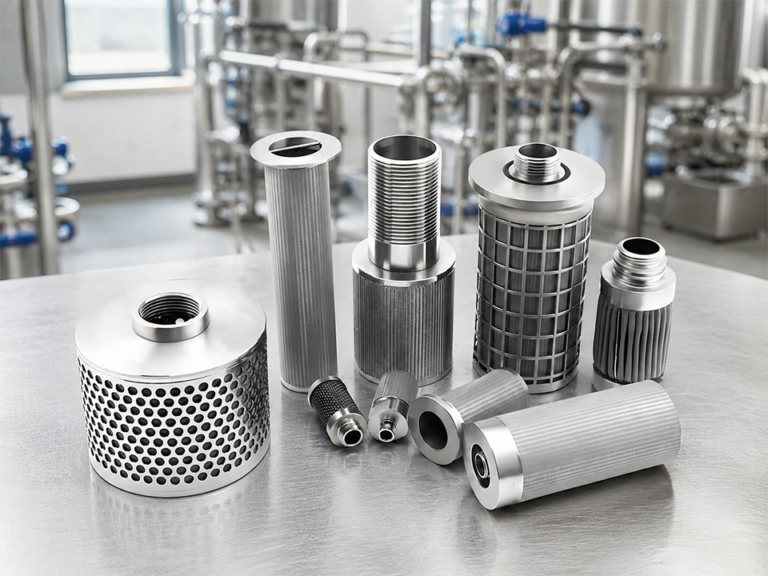
Tell our sales support team your product type, micron rating, size, application, filtered medium, working temperature, pressure, and estimated quantity. We will help you match the right sintered plastic, sintered metal, or sediment filter cartridge.
You usually don’t meet sintered filters in design meetings first. You meet them after something fails. Same compressor line. Same contamination issue. Same maintenance log that keeps getting reopened like a bad joke nobody wants to fix again.
And then someone in operations just says it—“switch it to sintered.”
No ceremony. Just fatigue.
Sintered filters are basically rigid porous structures made by fusing metal or polymer powders below melting point, forming a stable interconnected pore network that doesn’t collapse under pressure spikes or thermal stress (PatSnap Eureka). Simple idea. Brutal performance.
Why does that matter so much?
Because in real plants, instability is what kills equipment—not lack of filtration theory.
But let’s be honest, theory never tells you where they actually end up.
Industrial reality: where sintered filters actually get used
Ever walked past a chemical skid vibrating slightly louder than it should? That’s usually where these things are hiding.
In chemical processing, petrochemical systems, and power generation lines, sintered porous metal filters are used to separate particulate matter from gas and liquid streams, mainly to protect downstream equipment and stabilize process output (Mott Corporation).
From my experience, engineers don’t switch to them for “performance gains.” They switch because polymer cartridges start deforming under pressure cycling, and suddenly you’re dealing with inconsistency you can’t tune out.
However, most of the interesting work happens in mixed-phase flow.
Gas with droplets. Liquid with fines. Slurry that behaves differently every hour depending on temperature and upstream reaction stability.
Sintered metal filters show up in catalyst recovery, vent gas treatment, and solvent purification systems because their rigid pore matrix holds shape even under corrosive and high-temperature conditions (石家庄金泰净化设备有限公司).
And here’s the part nobody writes in brochures:
If your separation media starts deforming, your entire process control model becomes fiction.
Once you cross industrial heat thresholds—steam systems, combustion gas, FCC exhaust—you’re no longer choosing between “good” and “better filters.” You’re choosing between “stable structure” and “system failure risk.”
Sintered metal media can operate in extreme environments and still maintain high particle capture efficiency under high thermal loads and pressure fluctuations (Mott Corporation).
I frankly believe this is the point where most filtration technologies stop competing on efficiency and start competing on survival.
Simple as that. No debate.
Hydraulic and fuel systems (quiet failure prevention layer)
But hydraulics is where things get less visible—and more expensive when they go wrong.
You don’t see sintered filters here because they’re “advanced.” You see them because micron-scale contamination destroys pumps, injectors, and seals faster than anyone likes to admit.
So they sit in:
hydraulic manifolds
lubrication circuits
fuel conditioning loops
They don’t improve performance metrics directly. They prevent cascading mechanical failure.
Different job entirely.
Pharmaceutical and sterile processing (repeatability over everything)
Yet in pharma environments, the argument shifts again.
Here, nobody cares about ruggedness alone. They care about repeatability, validation, and whether a system behaves identically across cleaning cycles.
Sintered metal filters are used in pharmaceutical and chemical applications because they can be cleaned and reused while maintaining stable pore structure and filtration reliability over repeated cycles (恒科).
One batch deviation is enough to ruin compliance status. So consistency matters more than novelty.
Pneumatic systems (the overlooked engineering corner)
And then there’s pneumatics—the part people forget until noise or instability shows up.
Sintered bronze components act as mufflers, flow stabilizers, and gas diffusion elements in compressed air systems, shaping flow behavior rather than just “filtering particles.”
Not glamorous. Extremely effective.
Material comparison table
Type
Strength
Weak point
Where it actually shows up
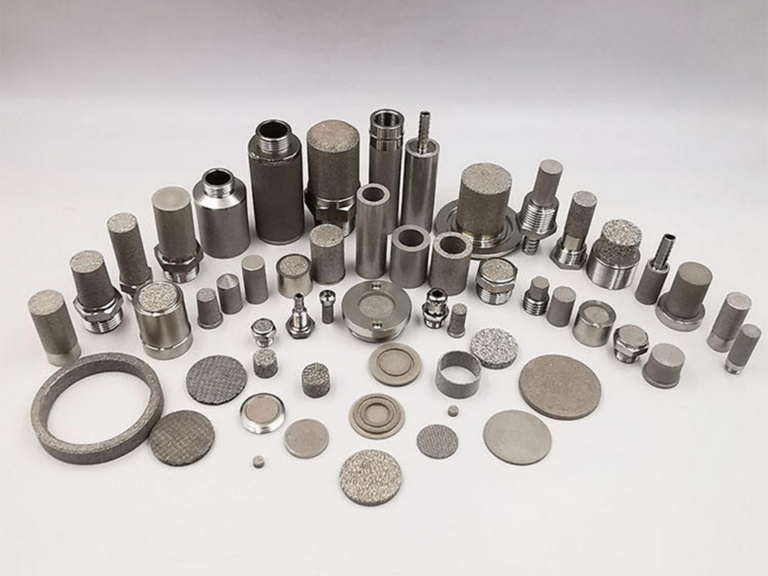
Sintered metal (316L, bronze)
Heat + pressure + corrosion resistance
Higher cost
Chemical plants, refineries, pharma
PE sintered
Chemical compatibility
Low temperature limit
Water treatment, low-load systems
Sintered mesh
High flow efficiency
Lower fine particle capture
Pneumatics, gas handling
Fiber metal media
High-temp fine filtration
Pressure drop sensitivity
Combustion & hot gas systems
The uncomfortable engineering pattern
But here’s something you only notice after enough field work.
Sintered filters are used for gas, liquid, and solid separation in industrial systems where high temperature, high pressure, or corrosive media make conventional filter cartridges unreliable or unstable.
Why are sintered metal filters used in harsh environments?
Because their rigid porous structure maintains shape under thermal stress and pressure cycling. Unlike polymer filters, they don’t deform, collapse, or drift in performance under continuous operation.
Where are sintered filters commonly installed?
They are used in chemical processing plants, oil and gas systems, hydraulic circuits, pharmaceutical production lines, pneumatic equipment, and high-temperature gas filtration systems.
Can sintered filters be reused?
Yes. They are typically cleaned using backflushing, ultrasonic cleaning, or chemical washing, allowing multiple reuse cycles depending on contamination conditions.
Are sintered filters better than cartridge filters?
Not universally. Cartridge filters are cheaper and disposable. Sintered filters are chosen when operating conditions exceed the mechanical, thermal, or chemical limits of disposable media.
Procurement Guidance
If you’re still judging filtration systems only by unit price, you’re not seeing the real cost structure.
Downtime. Contamination. System wear.
That’s usually the moment sintered filters stop being an option—and start becoming the default.