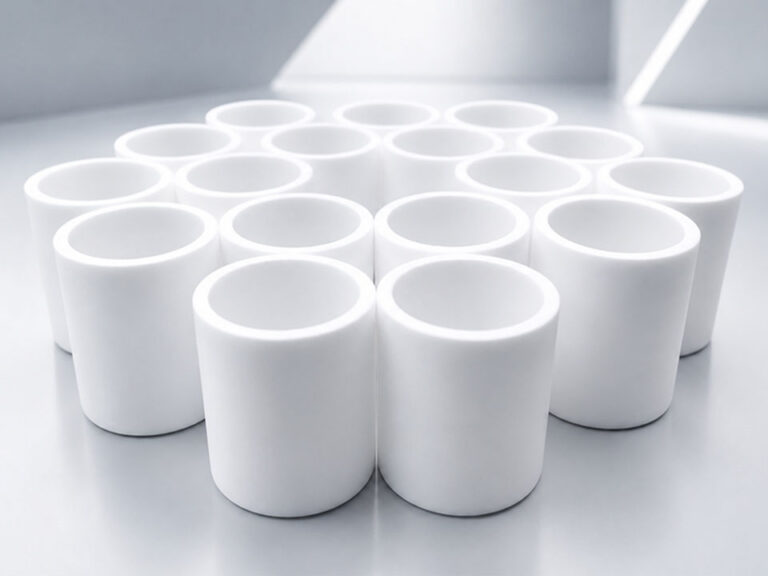
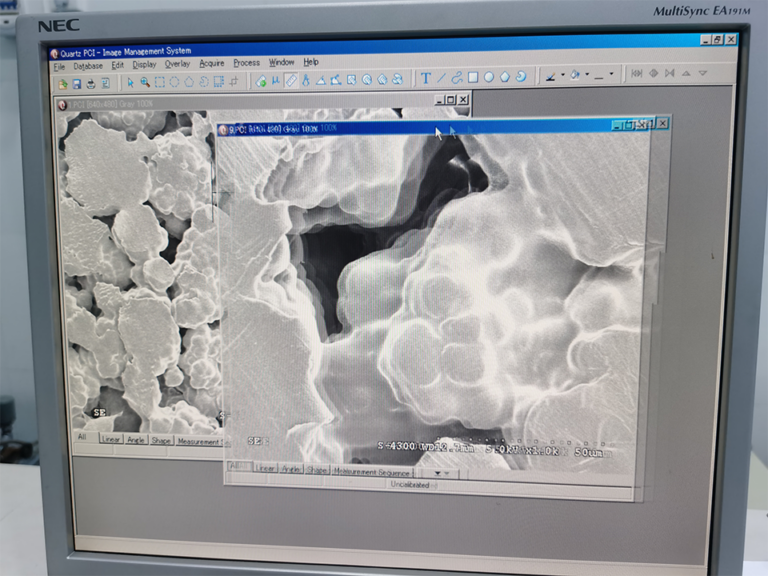
Before you leave, we invite you to talk directly with our managing team to ensure you receive the most accurate technical guidance, pricing support, and customization options for your project. Our experts can quickly evaluate your requirements, recommend suitable sintered plastic filter solutions, and help you reduce sourcing risks while improving efficiency, consistency, and long-term supply stability for your industrial applications.
Need Help Selecting the Right Filter Cartridge?
Our Sales Team
Tell our sales support team your product type, micron rating, size, application, filtered medium, working temperature, pressure, and estimated quantity. We will help you match the right sintered plastic, sintered metal, or sediment filter cartridge.
Sintered Filter Materials: Stainless Steel, PTFE, PE, PP & PA
“Can you quote 10 micron?”
That’s the kind of RFQ that makes a filtration engineer stare at the screen for a second longer than usual. Not because 10 micron is hard. It isn’t. Because the buyer has skipped the whole dangerous part: fluid chemistry, temperature spike, ΔP limit, cleaning method, end-cap design, pore structure, and whether the cartridge will see steam, solvent, brine, catalyst fines, sticky polymer gunk, or plain water.
Big difference.
I frankly believe most early-stage buyers don’t misunderstand Sintered Metal Filter Types because they’re careless; they misunderstand them because the industry keeps selling porous media like it’s a simple SKU, when in reality a sintered filter is a mechanical-chemical compromise hiding inside a neat cylinder, disc, tube, cup, candle, muffler, or pleated element. Sounds less tidy, right?
Here’s the ugly truth: micron rating is not the first decision.
It’s not even close.
A 10 μm 316L stainless steel sintered filter and a 10 μm PE sintered filter can both sit on a quote sheet looking polite and comparable, but once they’re in the line, they behave like two totally different beasts. One can take heat, backpulse abuse, and pressure cycling. The other may be cheaper, lighter, and chemically useful—but don’t ask it to pretend it’s welded metal.
I’ve seen buyers chase a lower unit price, then pay for it in plugged elements, distorted plastic, cracked joints, weird extractables questions, or a maintenance guy saying, “This thing’s dead again.”
That’s not theory.
For pharmaceutical and high-purity water systems, the U.S. FDA’s High Purity Water System inspection guide talks about system design, microbiological control, sanitization, contamination risk, and validation headaches. Filter material choice sits inside that mess. It doesn’t float above it.
And now chemistry has become political paperwork too.
In April 2024, EPA finalized national drinking-water limits for several PFAS compounds and also designated PFOA and PFOS as CERCLA hazardous substances. PTFE is not PFOA. PTFE is not PFOS. Let’s not be sloppy. But when a buyer sees “fluoropolymer” in a regulated supply chain, they may now ask for declarations, processing-aid statements, and supplier documentation before they even ask about pore size. That’s why the EPA’s 2024 PFAS drinking-water rule and PFOA/PFOS Superfund designation matter to filtration people, even when nobody wants to admit it.
So yes, this is a material guide.
But really? It’s a field-failure prevention guide.
Stainless Steel: The Default Choice That Still Bites People
But stainless steel gets too much blind trust.
People write “SS” on drawings like that solves the job. It doesn’t. SS what? 304? 316? 316L? Sintered powder? Sintered mesh? Felt? Pleated laminate? Welded tube? Press-fit end cap? Passivated or just shipped with nice lighting in the product photo?
Details matter.
316L stainless steel sintered filter media is usually where I start when the application has high temperature, steam cleaning, compressed air, hot gas, catalyst recovery, repeated backwashing, or pressure pulses that would make a plastic cartridge sweat. It’s rigid. It’s cleanable. It can be welded into serious assemblies. It doesn’t panic every time the operator opens a valve too fast.
Usually.
However, chloride is where stainless steel starts losing its smug little smile. Add warm chloride, crevices, poor passivation, and a low-grade alloy masquerading as “stainless,” and you can get pitting, staining, and failure that looks suspiciously like someone bought the cheapest quote and hoped chemistry wouldn’t notice.
From my experience, the 316L stainless steel sintered filter is not “premium” because it sounds premium. It’s useful because weld areas, thermal cycling, and structural stability all matter in real industrial service.
When someone asks about stainless steel vs PTFE filter, I keep it blunt: stainless wins the mechanical fight. PTFE wins a lot of chemical fights. If the line is hot, pulsed, steam-cleaned, or physically rough, I lean stainless. If the fluid is chemically nasty but the mechanical load is manageable, PTFE starts looking more rational.
Not always.
But often.
PTFE: Chemically Calm, Mechanically Not So Brave
Yet PTFE has its own fan club, and some members are dangerous.
They see a chemical compatibility chart and think the job is done. No. PTFE sintered filter media can be excellent with many acids, solvents, oxidizers, and corrosive fluids. It has low surface energy. It doesn’t like to wet easily. It resists a lot of chemical nonsense that would make PE, PP, PA, or stainless steel look nervous.
That part is real.
But PTFE isn’t a metal candle wearing white clothes. It can creep. It can deform under load. It can be awkward to bond. It can be expensive. And in regulated projects, it can drag extra documentation questions into the meeting because fluoropolymer-adjacent supply chains are under heavier scrutiny now.
I’m not saying avoid PTFE.
I’m saying don’t worship it.
The best sintered filter material for corrosive chemicals depends on the exact chemical formula, concentration, exposure time, temperature, pressure, and cleaning procedure. PTFE may be right for aggressive acids and mixed solvents. Titanium may be better in seawater or oxidizing chloride service. Nickel may win in some caustic alkali duties. PP may be enough for a low-temperature dosing skid where the chemistry is moderate and the budget is not imaginary.
Here’s the ugly truth: “chemical resistance: good” is not a specification.
It’s a shrug.
PE vs PP: Cheap Plastics, Expensive Mistakes
I like PE more than many metal-first engineers do.
There, said it.
PE sintered filters—especially UHMWPE porous parts—can be tough, affordable, easy to shape, and perfectly sensible in air, water, vents, spargers, pipette-tip barriers, mufflers, medical porous plugs, lab filtration pieces, and light-duty liquid clarification. They’re everywhere. Quietly. Not glamorous, but useful.
Small parts. Big volumes.
But the PE vs PP sintered filter debate gets butchered in sourcing conversations. PE is not just the “cheap one.” PP is not automatically the “better one.” PE generally brings good toughness, impact resistance, and abrasion behavior. PP often gives better temperature tolerance and chemical performance in certain industrial liquids.
And both can fail beautifully if you overpressure them, overheat them, or clean them like they’re stainless steel.
From my experience, PE belongs in moderate-temperature, low-to-medium pressure service where cost, toughness, and easy customization matter. PP starts making more sense when the process gets warmer or chemically sharper but still doesn’t justify PTFE or metal.
Don’t make plastic heroic.
It’s plastic.
I’ve seen PE cartridges selected because the unit price looked friendly, then the buyer acted surprised when warm chemical service distorted the part. That’s not always a manufacturing defect. Sometimes it’s just bad application engineering wearing a purchasing badge.
PA Nylon: Tough, Useful, and Slightly Sneaky
And nylon?
PA nylon porous filter material can be a very practical choice. It has better mechanical toughness than many commodity plastics, decent wear behavior, and enough structural confidence to work in pneumatic vents, fuel-related parts, oil mist systems, lubrication circuits, and certain industrial porous components.
But nylon drinks water.
That tiny sentence ruins lazy specifications.
Moisture absorption can shift dimensions, change mechanical behavior, alter fit, and create annoying performance drift in wet or humid environments. If the part has a tight tolerance stack, calibrated flow requirement, snap-fit geometry, or long immersion exposure, test it under real conditions. Not “room-temperature sample looked fine” testing. Real testing.
PA is not bad. I actually like it.
But when someone ignores moisture uptake and then acts shocked by dimensional movement, I don’t have much sympathy. That’s not mysterious field behavior. That’s nylon being nylon.
Titanium, Nickel, and Bronze: Strange Choices Until the Line Fails
Titanium looks expensive until stainless steel fails twice.
Then suddenly it looks like adult supervision.
Titanium sintered media earns attention in seawater, chloride-rich environments, oxidizing chemical service, biomedical components, aerospace systems, and other places where corrosion resistance is not a nice-to-have. It’s not the material you choose because you want a prettier invoice. It’s the one you choose when shutdown cost makes cheaper media look stupid.
Nickel is a different animal. Nickel sintered media shows up in caustic alkali service, high-temperature chemical duty, electrodes, batteries, specialty gas or liquid processing, and cases where stainless steel is too weak chemically and plastic is not even in the room.
Raw material markets matter here too. Reuters reported in 2024 that surging exchange stocks were putting pressure on nickel prices, with continuing concern about surplus supply. That doesn’t mean nickel sintered media becomes cheap overnight, but it does mean buyers should think about quote validity, long-term contracts, and raw-material clauses. See Reuters on surging exchange stocks pressuring nickel.
Bronze, meanwhile, is the old workshop guy with dirty hands and useful answers.
Not sexy. Reliable.
Bronze filter media still makes sense in pneumatic silencers, breathers, lubrication circuits, fuel systems, and moderate-duty porous metal components. It’s machinable, practical, and honest about what it is. I respect materials that don’t pretend.
Material Comparison Table
Material
Typical Strength
Chemical Resistance
Temperature Behavior
Common Use Cases
My Hard Opinion
316L stainless steel sintered filter
Very high
Good, but weak against some chlorides/acids
Excellent versus plastics
Steam, hot gas, compressed air, catalyst recovery, backwash systems
Best default for abuse, not for every chemical
PTFE sintered filter
Low to medium
Excellent for many aggressive chemicals
Good, but load-sensitive
Strong acids, solvents, corrosive liquids, vents
Chemically elite, mechanically limited
PE sintered filter
Medium
Good in many mild chemicals
Limited heat resistance
Water, air, medical, lab, general porous plastic parts
Great value when temperature stays honest
PP sintered filter
Medium
Good, often stronger than PE in chemical duties
Better than PE in many cases
Chemical dosing, water treatment, industrial liquids
Often the smarter plastic for warm chemical service
PA nylon porous filter material
Medium to high
Moderate; weak with strong acids
Moderate
Pneumatics, fuel, oil, vents, mechanical porous parts
Stronger than it looks, but moisture matters
Titanium sintered media
High
Excellent in many chloride/oxidizing services
High
Seawater, chemical processing, biomedical, aerospace
Expensive until stainless steel fails
Nickel sintered media
High
Strong in caustic and specialty service
High
Alkali, electrodes, batteries, chemical processing
Use only when chemistry pays for it
Bronze filter media
Medium
Moderate
Moderate
Pneumatic silencers, fuel, oil, breathers
Not modern-looking, still practical
How to Choose Sintered Filter Materials Without Lying to Yourself
Start with the fluid.
Not the price. Not the micron rating. Not the product photo with dramatic lighting.
If the media swells, pits, creeps, cracks, sheds, blinds, deforms, or can’t survive cleaning, the micron rating becomes a decorative number. A beautiful 5 μm element that collapses under differential pressure is just expensive scrap with paperwork attached.
Ask the annoying questions first.
What’s the fluid? Exact concentration? pH? Normal temperature and upset temperature? Maximum differential pressure? Flow rate? Solids loading? Particle shape? Is the contaminant hard grit, sticky cake, gelatinous sludge, catalyst fines, carbon black, resin bead, rust, scale, or some half-polymerized mess that blinds pores like wet flour?
Then ask how it gets cleaned.
Backpulse? Ultrasonic? Steam? Acid wash? Caustic wash? Solvent flush? Reverse flow? Or the classic “operator hits it with whatever is nearby” cleaning method?
I’m only half joking.
The American Filtration & Separations Society describes sintered metal filters as useful where strength, high pressure and temperature capability, thermal shock resistance, corrosion resistance, cleanability, all-welded construction, and long service life matter. That’s the right context for Sintered Metal Filter Types—dirty industrial reality, not catalog decoration. See the AF&S overview of sintered metal powder media.
But I’ll say this plainly: metal is not always smarter.
Sometimes PE is the right answer. Sometimes PP is the better compromise. Sometimes PTFE is the only thing that won’t get eaten. Sometimes titanium saves the whole line. Sometimes bronze does its job for five years and nobody writes a LinkedIn post about it because nothing failed.
That’s good filtration.
Quiet filtration.
Selection Table: Where Each Material Usually Belongs
Process Condition
Safer Material Direction
Why
Steam, hot gas, high pressure, backwashing
316L stainless steel, nickel, titanium
Mechanical strength and thermal stability
Strong acid or mixed solvent
PTFE, titanium, specialty nickel alloy
Chemical resistance dominates
Low-temperature water or air
PE, PP
Cost-effective and easy to customize
Warm chemical dosing
PP, PTFE
PP handles many chemical duties; PTFE for harsher service
Seawater or chloride exposure
Titanium, carefully validated 316L
Chloride corrosion risk must be respected
Pneumatic muffler or breather
Bronze, PE, stainless steel
Depends on pressure, temperature, and environment
Tight compliance documentation
316L, PTFE, validated polymer grades
Traceability and certificates matter
The Supplier Test I Actually Trust
Ask for the material certificate.
Then stop talking and see what happens.
A serious supplier should be able to discuss bubble point, permeability curve, pore-size tolerance, max differential pressure, media thickness, weld method, bonding method, end-cap design, cleaning limits, and whether the part is sintered powder, sintered mesh, sintered felt, pleated metal media, or perforated-plate composite mesh.
If the answer is “yes, no problem” before they know the fluid, temperature, pressure, or cleaning method, your risk alarm should start making noise.
Loud noise.
I also want to know batch repeatability. One clean sample means very little. Production lots are where weak powder control, poor sintering discipline, uneven pore distribution, sloppy welding, and cheap substitute material start showing up.
Samples behave.
Factories reveal.
FAQs
What are the main Sintered Metal Filter Types?
Sintered Metal Filter Types are porous metal filter structures made from sintered powder, sintered wire mesh, sintered fiber felt, pleated metal media, or composite support layers for liquid, gas, and solid-liquid separation in high-temperature, high-pressure, corrosive, or cleanable industrial service.
In plain shop-floor language, powder media behaves more like depth filtration. Mesh is easier to clean as surface media. Felt holds more dirt. Pleated metal adds surface area. Perforated-plate composite mesh gives the element a stronger backbone when pressure or handling gets rough.
Is 316L stainless steel better than PTFE for sintered filters?
316L stainless steel is better than PTFE when mechanical strength, pressure resistance, steam cleaning, weldability, thermal shock resistance, and repeated backwashing matter more than broad chemical inertness. PTFE is better when aggressive acids, solvents, oxidizers, or corrosion risks dominate the service conditions.
My rough field rule is simple: 316L takes abuse better; PTFE takes many chemicals better. If the line is hot, pulsed, and mechanically ugly, I lean stainless. If the chemistry is mean and the pressure is controlled, I start asking PTFE questions.
Which is better, PE or PP sintered filter material?
PE is usually better for economical, lower-temperature porous plastic filtration where toughness, impact resistance, and general air or water compatibility are needed, while PP is often better for warmer chemical duties and many industrial liquids that require improved temperature or chemical resistance.
Don’t pick between them by price alone. Ask about heat distortion, creep, support geometry, wall thickness, pore stability, cleaning chemistry, and differential pressure. A cheap PE element in the wrong warm chemical skid can become very expensive by Friday afternoon.
Is PA nylon porous filter material suitable for wet environments?
PA nylon porous filter material can work in wet environments, but moisture absorption may change dimensions, mechanical performance, flow stability, and long-term fit. It should be tested under actual immersion time, humidity, temperature, fluid chemistry, and tolerance requirements before being approved for precision service.
That moisture issue is not trivia. It can decide whether a porous part seals correctly, flows consistently, or slowly becomes the “mystery problem” in a production line nobody wants to own.
What is the best sintered filter material for corrosive chemicals?
The best sintered filter material for corrosive chemicals is the one that survives the exact chemical formula, concentration, pH, temperature, pressure, exposure time, and cleaning method. PTFE, titanium, nickel, PP, and 316L stainless steel can all be correct—or wrong—depending on the service.
I don’t trust “chemical resistance: good” as a final answer. Good against what? At what temperature? For how long? Static soak or flowing service? With chlorides? With oxidizers? With caustic cleaning afterward?
How do I choose sintered filter materials for industrial use?
To choose sintered filter materials for industrial use, define the fluid chemistry, pH, temperature range, pressure, flow rate, solids loading, micron rating, cleaning method, compliance requirements, and expected service life before comparing stainless steel, PTFE, PE, PP, PA, titanium, nickel, or bronze.
My order is chemistry, temperature, pressure, cleaning, structure, documentation, then price. Procurement often wants to reverse that list. That’s how a filter becomes the smallest component with the biggest failure bill.
Procurement Guidance
Need help choosing between 316L stainless steel, PTFE, PE, PP, PA, titanium, nickel, or bronze sintered filter media?
Send the fluid name, concentration, pH, temperature, pressure, flow rate, micron rating, cleaning method, and target service life. We’ll help compare material risk, pore structure, and custom cartridge options before you lock the wrong spec into production.