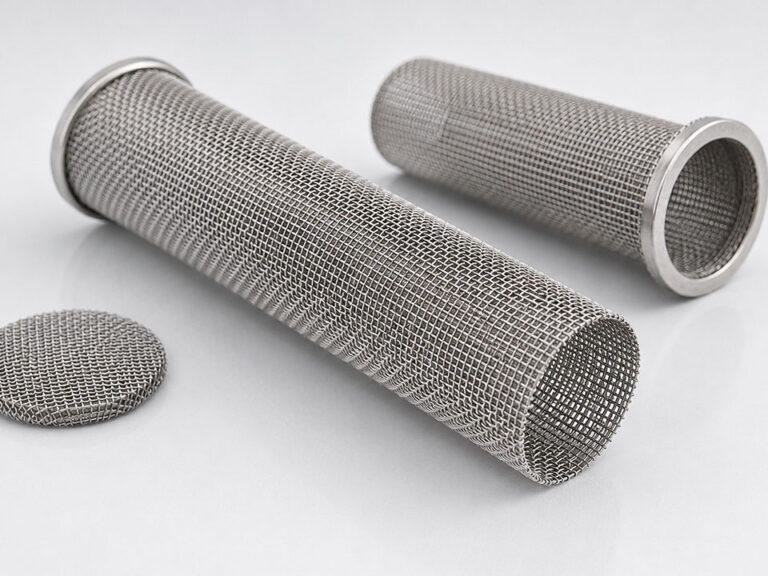
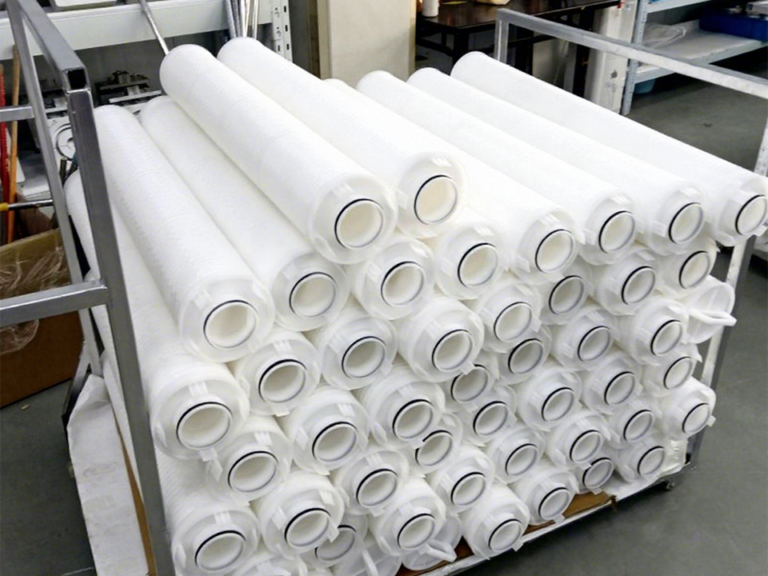
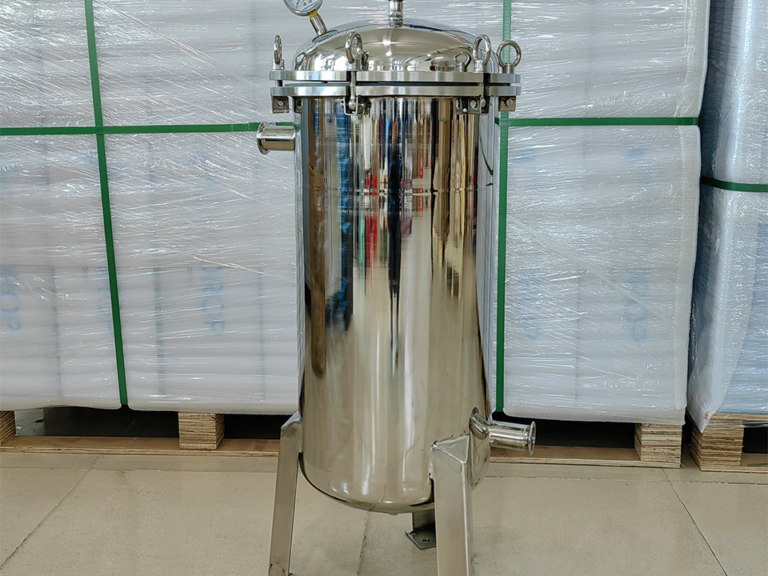
Before you leave, we invite you to talk directly with our managing team to ensure you receive the most accurate technical guidance, pricing support, and customization options for your project. Our experts can quickly evaluate your requirements, recommend suitable sintered plastic filter solutions, and help you reduce sourcing risks while improving efficiency, consistency, and long-term supply stability for your industrial applications.
Need Help Selecting the Right Filter Cartridge?
Our Sales Team
Tell our sales support team your product type, micron rating, size, application, filtered medium, working temperature, pressure, and estimated quantity. We will help you match the right sintered plastic, sintered metal, or sediment filter cartridge.
Backwashing Sintered Filters: Frequency, Pressure and Cycle Limits
Most plants backwash too late.
Or too often.
Both cost money, which is why I don’t trust the cheerful maintenance rule that says “just backwash every shift” unless someone can show the differential-pressure trend, the flow recovery curve, the solids loading pattern, and the actual cycle history of the filter element. Otherwise, what are we doing—maintenance or superstition?
I’ve seen sintered filters survive thousands of backwash cycles.
I’ve also seen one destroyed in a week.
Same word: backwash. Very different execution. One system used controlled reverse flow, stable ΔP triggers, clean backwash fluid, and a sane cycle sequence. The other used shock pressure, dirty plant air, no logging, and a maintenance team that treated the porous element like a pipe fitting with holes in it.
Bad idea.
Sintered filter backwash is not just “reverse the flow.” It is a controlled cleaning event meant to dislodge surface cake, release shallow pore loading, and restore pressure drop before fouling migrates too deep into the pore structure. If you wait too long, solids compact. If you backwash too hard, you stress welds, seals, end caps, and media support. If you backwash too often, you waste filtrate, gas, compressed air, operator attention, and sometimes production time.
A fixed-time backwash schedule can be useful in stable service, but it becomes dangerous when feed contamination swings. A 24/7 plant rarely sees perfectly constant dirt load. Catalyst fines change. Rust bursts from upstream piping. Polymer skins break loose. Water quality shifts after rain. Compressor oil carryover appears because someone ignored the separator. Suddenly your “every 8 hours” rule is either too slow or too wasteful.
Pressure tells the truth.
Differential pressure, specifically.
The most reliable backwash trigger is usually a measured rise in sintered filter differential pressure from clean baseline. Not absolute inlet pressure. Not operator mood. Not the sound of the pump. ΔP across the filter.
Mott’s process-industry discussion of porous metal filtration describes a commercial refinery pilot using a 10 GPM automated filter, continuously cycled between filtration and backwash, with more than 2,500 cycles performed during a two-month trial: Mott sintered metal filter systems for process industries. That matters because it shows the serious way to approach backwashing: test the media, cycle it, watch performance, and verify recovery—not guess from a clean catalog curve.
A calendar can help.
A ΔP trend decides.
How often should sintered filters be backwashed?
There is no universal interval.
That answer annoys buyers, but it’s honest. Backwash frequency depends on particle load, pore rating, media thickness, surface area, flow rate, viscosity, cake permeability, allowable pressure drop, backwash fluid, and how much production loss the plant can tolerate. A gas-solid filter in catalyst service may need a different cycle pattern than a water filtration element. A fine 2 µm sintered stainless tube will not behave like a 40 µm porous bronze breather. Obviously.
But people still ask for one number.
Fine. Here’s a practical starting point:
Backwash when ΔP rises 20–50% above clean baseline, or when flow loss begins to affect process control, whichever comes first.
That’s not law. It’s a starting trigger.
For highly stable fluids, time-based backwash may work once you prove the ΔP pattern. For dirty or variable feeds, use differential pressure. For sensitive continuous systems, combine both: a maximum runtime limit plus a ΔP trigger. In plain words: backwash early if pressure rises; backwash anyway if the system has run too long without one.
EPA’s membrane filtration guidance—different technology, yes, but useful operational context—notes that membrane systems may be backwashed more frequently than conventional filters, often at roughly 15–60 minute intervals, and that backwash can reduce system productivity by 5–10% because filtrate is used during the backwash event: EPA membrane filtration guidance manual. Sintered filters are not membranes, but the lesson travels well: backwashing has a production cost, so don’t schedule it lazily.
Too little backwash hides fouling.
Too much backwash steals capacity.
Pick your poison—or measure better.
Clean ΔP, trigger ΔP, terminal ΔP
You need three pressure numbers.
Not one.
Clean ΔP is the pressure drop across a new or fully cleaned filter at defined flow, temperature, and fluid viscosity. Trigger ΔP is the point where backwash starts. Terminal ΔP is the maximum allowed differential pressure before the system risks flow starvation, excessive energy use, filter deformation, bypass leakage, or process instability.
Most plants know terminal ΔP because alarms are loud.
Fewer plants know clean ΔP.
That’s backwards.
If you don’t know clean ΔP, you can’t tell whether the element recovered after backwash. You’re blind. A filter that used to run at 0.2 bar clean ΔP but now “recovers” only to 0.6 bar is not clean. It is carrying embedded fouling. That hidden fouling increases energy demand, shortens cycle time, and slowly turns backwash into theater.
The U.S. Department of Energy’s pump-system resources emphasize that pump-system optimization can deliver dramatic energy and cost savings: DOE pump systems resources. Translate that to filtration: unnecessary pressure drop is not just a filter issue. It is a pump bill, a compressor bill, and sometimes a production constraint.
Pressure drop is rent.
You pay it every hour.
Backwash pressure: enough force, not brute force
Backwash pressure should be high enough to dislodge the cake and reverse shallow pore loading, but not so high that it shocks the element, damages seals, cracks weak welds, lifts media supports, or drives particles deeper into the wrong places.
That last part surprises people.
More pressure is not always better.
Backwash pressure for sintered filters depends on element construction, alloy or polymer, wall thickness, pore grade, end-cap design, housing geometry, reverse-flow path, and whether the filter is designed for gas pulse, liquid backwash, or combined blowback and wash. A rigid 316L sintered metal element may tolerate serious differential pressure; a small sintered plastic component or bonded assembly may not.
A porous-metal gas-solids paper notes that sintered porous metal elements can be built to withstand differential pressures over 3,000 PSI and are used as permanent media with welded construction: gas-solids separation using sintered porous metal technology. Impressive. But don’t misunderstand it. Structural differential-pressure capability is not permission to hammer every filter with violent backpulse.
Strength is not strategy.
Start with supplier limits. Confirm maximum forward ΔP, reverse ΔP, pulse pressure, temperature derating, seal limits, and cycle recommendations. Then test with your fluid.
If a supplier cannot provide backwash guidance, I get nervous.
Does backwashing damage sintered filters?
Yes, it can.
Usually not when done correctly, but absolutely when done like a plant-air stunt.
Backwashing can damage sintered filters through pressure shock, rapid thermal change, dirty backwash fluid, reverse-flow overload, fatigue at welds, gasket movement, end-cap loosening, media cracking, or support collapse. Metal elements tolerate more abuse than many polymer elements, but even metal has limits. Repeated pulse cycles are mechanical events. Pretending otherwise is how “permanent media” becomes scrap.
Here’s the nuance: backwashing is also what keeps the filter alive.
Without it, fouling compacts. Differential pressure rises. Operators increase pump output. Particles embed deeper. Eventually the element cannot recover. So the question is not “does backwashing damage filters?” The better question is: what backwash pressure, frequency, duration, and fluid quality give the best recovery with the least mechanical stress?
That’s an engineering question.
Not a calendar entry.
Cycle limits: count cycles, don’t just count days
A backwash cycle has a life history.
Plants love hour meters. They forget cycle counters. I think that’s a mistake. A filter that sees 20 backwash cycles per day is not aging the same way as one that sees 2 cycles per day, even if both have been installed for six months.
Cycle count matters for:
Weld fatigue.
Seal wear.
Valve wear.
Backpulse solenoid reliability.
Support-core stress.
Media cleaning effectiveness.
Operator troubleshooting.
Hidden fouling trend.
A commercial refinery pilot with more than 2,500 filtration/backwash cycles is useful because it frames backwash as something testable, not mythical. If your plant is backwashing 48 times per day, that is 17,520 cycles per year. If the supplier has never discussed cycle life, ask why.
Seriously.
Ask.
Differential-pressure trigger logic
I like simple trigger logic.
Complex systems fail in boring ways.
A practical setup for backwashing sintered filters in 24/7 plants might look like this:
Backwash at ΔP trigger.
Backwash at maximum runtime limit.
Alarm if post-backwash ΔP recovery is poor.
Alarm if cycle frequency increases sharply.
Alarm if terminal ΔP is reached too fast.
This is where the plant learns what is really happening. If cycle interval shrinks from 8 hours to 2 hours, the feed changed. Or the filter is embedding solids. Or backwash quality dropped. Or the valves are not opening fully. Or the housing distribution is bad. Don’t just increase backwash pressure and hope.
That’s how plants hide fouling until shutdown.
A better rule:
If post-backwash clean ΔP rises step-by-step over multiple cycles, schedule deeper cleaning or inspection.
That means the backwash is no longer fully restoring the media. Surface cake may be leaving, but internal pore loading remains.
The filter is telling you something.
Listen earlier.
Table: setting frequency, pressure, and cycle limits
Control item
Practical starting point
What to watch
Bad setting symptom
My blunt opinion
Clean ΔP baseline
Record after new install or validated cleaning
Flow, temperature, viscosity
No way to judge recovery
Mandatory, not optional
Backwash trigger ΔP
20–50% above clean ΔP as a starting range
Cycle interval and flow loss
Trigger too late or too early
Adjust after trend data
Terminal ΔP
Based on pump, compressor, housing, seals, and process limit
Alarm history and flow stability
Flow starvation or bypass risk
Never use as routine trigger
Backwash pressure
Supplier-rated reverse pressure, verified in testing
Recovery vs mechanical stress
Poor recovery or damage
More pressure is not always better
Backwash duration
Long enough for discharge to clear
Waste volume and recovery curve
Wasted filtrate/gas
Time it, don’t guess
Maximum runtime
Backup timer for stable service
Feed-quality changes
Hidden fouling between cycles
Use with ΔP, not instead of it
Cycle count
Track daily, monthly, annual cycles
Increasing cycle frequency
Media aging or feed upset
Add a counter
Post-backwash ΔP
Compare to clean baseline
Stepwise rise over time
Embedded fouling
Best early warning signal
A 24/7 plant example
A plant runs a sintered stainless filter at 150 L/min.
Clean ΔP is 0.25 bar.
The operator originally set backwash at 1.5 bar because someone called that “safe.” It was safe mechanically, maybe. Operationally, it was stupid. By the time the system hit 1.5 bar, solids had already compacted into the cake, and every backwash recovered only to 0.55–0.70 bar. The crew thought the filter was aging. It wasn’t aging first. It was being cleaned too late.
We changed the trigger to 0.45 bar, added a maximum runtime, and logged post-backwash recovery.
Cycle frequency increased at first.
Downtime dropped.
Flow stabilized.
Then the real culprit showed up: upstream particulate bursts after pump starts. The filter was never the main problem. It was the witness.
That happens more than people admit.
Backwash fluid quality: the dirty secret
Backwashing with dirty fluid is sabotage.
Quiet sabotage.
If you use plant water full of rust, compressed air full of oil mist, or recycled filtrate carrying fines, you may remove one layer of contamination while injecting another. The discharge may look dramatic. The flow recovery may still be poor. Then someone says the filter has reached end of life.
Maybe.
Or maybe you backwashed it with garbage.
Use clean compatible liquid, clean gas, or validated filtrate. Add separators, coalescers, or polishing filters if needed. Dry gas should be dry. Air should be oil-free and filtered. Nitrogen is better in some chemical or oxidation-sensitive systems. Backwash liquid should not react with the filter media or process residue.
Simple.
Often ignored.
When backwash is not enough
Backwash removes removable cake.
It does not magically dissolve scale, polymerized oil, baked-on organics, oxide films, biofilm, sticky gels, or fines embedded deep in pore throats. If post-backwash ΔP keeps rising, don’t keep abusing the element. Move to ultrasonic cleaning, chemical cleaning, solvent soak, steam cleaning, or controlled off-line cleaning depending on media and contaminant.
If backwash recovery falls below your internal threshold—say the filter no longer returns within 10–25% of clean baseline—pull the element before it becomes unrecoverable. Exact number depends on process risk. Don’t treat my range like scripture.
Use your data.
The expensive mistake: using terminal ΔP as the backwash trigger
This one drives me mad.
Terminal ΔP is not a normal backwash trigger. It is the edge of the operating window. If you routinely run to terminal pressure before cleaning, you are letting the filter reach the worst part of its fouling curve every cycle.
That increases energy use.
Compresses cake.
Reduces flow stability.
Can push particles into the pore network.
Shortens service life.
Makes backwash look weaker than it is.
Terminal ΔP should be an alarm or hard limit, not the ordinary cleaning signal. Routine backwash should usually start earlier, based on the recovery behavior that gives the lowest total cost: energy, backwash waste, downtime, media life, and labor.
Maintenance people know this instinctively.
Accounting learns it after the shutdown.
FAQ
What is sintered filter backwash?
Sintered filter backwash is a controlled reverse-flow cleaning process that pushes clean liquid, gas, or a backpulse through the porous filter media to dislodge filter cake, release shallow pore loading, reduce differential pressure, and restore flow before fouling becomes deeply embedded.
It is not just “blowing it backward.” Correct backwash needs defined pressure, duration, trigger point, fluid quality, and recovery measurement.
How often should sintered filters be backwashed?
Sintered filters should be backwashed when differential pressure rises above a validated trigger point, commonly starting around 20–50% above clean baseline, or when a maximum runtime limit is reached in stable service, depending on flow loss, dirt loading, fluid viscosity, and process risk.
Time-based schedules work only after you understand the ΔP trend. Dirty or variable feeds need pressure-based control.
What differential pressure should trigger backwashing?
Backwashing should usually be triggered by a measured differential-pressure rise above clean baseline, not by terminal pressure, with an initial trigger often set around 20–50% above clean ΔP and then adjusted using post-backwash recovery and cycle-interval data.
The best trigger is the one that restores flow without wasting cycles or letting fouling embed too deeply.
What backwash pressure should be used for sintered filters?
Backwash pressure for sintered filters should follow the supplier’s rated reverse-pressure limit and be validated by testing, using enough force to remove cake and restore pressure drop without shocking the media, damaging welds, moving seals, cracking supports, or driving contamination deeper.
Do not assume stronger pressure means better cleaning. Recovery curve matters more than macho air blasts.
Does backwashing damage sintered filters?
Backwashing can damage sintered filters when pressure, cycle frequency, thermal shock, dirty backwash fluid, reverse-flow direction, or pulse intensity exceed the element’s design limits, but properly controlled backwash usually extends filter life by preventing deep fouling and excessive differential pressure.
Damage risk depends on material, construction, welds, end caps, seals, support structure, and how violently the backwash system is operated.
How many backwash cycles can a sintered filter handle?
A sintered filter can handle many backwash cycles when correctly designed and operated, but the safe cycle count depends on media material, weld design, reverse pressure, temperature, pulse intensity, seal construction, corrosion exposure, and whether post-backwash pressure recovery remains stable.
Track cycle count. A plant running 40 cycles per day is not in the same wear condition as one running 4 cycles per day.
Why does pressure drop rise after backwashing?
Pressure drop rises after backwashing when the process leaves embedded fines, sticky residue, scale, oil, biofilm, or compacted pore loading inside the media, meaning the surface cake is removed but internal resistance remains and the filter no longer returns to clean baseline.
A rising post-backwash ΔP trend is an early warning. Don’t ignore it.
Is time-based or pressure-based backwashing better?
Pressure-based backwashing is usually better for variable process conditions because it responds to real filter loading, while time-based backwashing works only when feed contamination, flow rate, viscosity, and dirt load remain stable enough to make calendar intervals reliable.
Many 24/7 plants should use both: differential pressure as the main trigger and maximum runtime as backup protection.
What happens if sintered filters are backwashed too often?
Backwashing sintered filters too often can waste filtrate, compressed gas, operator time, valve life, and production capacity, while also increasing mechanical cycling of the element, seals, welds, and backpulse hardware without meaningful improvement in pressure-drop recovery.
Frequent backwash is not automatically good maintenance. It may be hiding bad sizing, dirty feed, or poor trigger settings.
Procurement Guidance
Send us your clean ΔP, current ΔP trend, flow rate, viscosity, solids load, pore rating, filter material, backwash fluid, reverse-pressure limit, and cycle history. We’ll help you set sintered filter backwash frequency, pressure, and cycle limits based on real process behavior—not calendar folklore.