Before you leave, we invite you to talk directly with our managing team to ensure you receive the most accurate technical guidance, pricing support, and customization options for your project. Our experts can quickly evaluate your requirements, recommend suitable sintered plastic filter solutions, and help you reduce sourcing risks while improving efficiency, consistency, and long-term supply stability for your industrial applications.
Need Help Selecting the Right Filter Cartridge?
Our Sales Team
Tell our sales support team your product type, micron rating, size, application, filtered medium, working temperature, pressure, and estimated quantity. We will help you match the right sintered plastic, sintered metal, or sediment filter cartridge.
Types of Sintered Metal Filters: Powder, Mesh, Felt & Pleated
I’ve seen this mistake too many times: a buyer sends an RFQ for “10 micron stainless steel filter,” waits for five suppliers to quote five very different constructions, then wonders why the prices are nowhere near each other.
That’s not sourcing. That’s guessing.
A sintered metal filter isn’t one product wearing different names. Powder, multilayer mesh, fiber felt, pleated media, candle elements, tubes, discs, and plates are different animals. They don’t load the same way. They don’t clean the same way. Some love backwash. Some pretend to love backwash until the third cleaning cycle, then the differential pressure climbs and stays there like a bad debt.
And yes, I’m biased here. I frankly believe many filtration failures begin before the sample is even made—inside a lazy specification sheet.
“Micron rating?” Fine. Necessary. But not enough.
The real questions are dirt loading, cake release, pore plugging, weld integrity, bypass risk, media support, flow direction, and how the operator is actually going to clean the thing at 2 a.m. when the line is down and production is shouting. That’s the part glossy catalog pages usually skip.
This is why I treat sintered metal filter cartridges like process components, not consumables. The upfront price matters, sure. But pressure drop, regeneration life, and failed batches matter more.
Here’s the ugly truth: the wrong sintered construction usually doesn’t fail in a cinematic way. No explosion. No dramatic crack. It just slowly becomes annoying. DP creeps up. Flow rate drops. Backwash recovery gets worse. Maintenance starts cleaning more often. Then someone says, “Maybe the supplier quality is unstable.”
Maybe.
Or maybe the filter type was wrong from the start.
The U.S. Department of Energy’s Industrial Decarbonization Roadmap Fact Sheet says industry accounts for roughly one third of U.S. energy-related CO₂ emissions. That sounds like a policy statistic until you’re looking at a pump curve and realizing your undersized filter has turned pressure drop into permanent energy waste.
Small loss. Every hour.
EPA’s 2024 steam-electric technical material also shows how serious filtration selection gets when regulated wastewater enters the conversation. In its 2024 Technical Development Document, EPA referenced 30 pilot-scale membrane filtration studies and 12 full-scale foreign installations for flue gas desulfurization wastewater treatment. Notice what they evaluated: systems, pretreatment, operating data, full-scale evidence. Not just a shiny “filter element” claim.
And the chemical industry isn’t exactly swimming in spare margin. Reuters reported that Evonik planned up to 2,000 job cuts by 2026 and targeted €400 million in annual savings, according to Evonik says economic recovery unlikely in 2024. When chemical plants are cutting that hard, a filter that shortens cleaning intervals or wastes pump energy isn’t a minor purchasing issue.
It’s margin leakage.
What “sintered metal filter types” actually means
But let’s strip away the brochure language first.
When engineers search for Sintered Metal Filter Types, they’re usually trying to answer one of these questions, even if they don’t phrase it cleanly: Which media construction fits the contaminant? Which shape fits the housing? Which format survives cleaning? Which one won’t choke the line after two batches?
That’s the real intent.
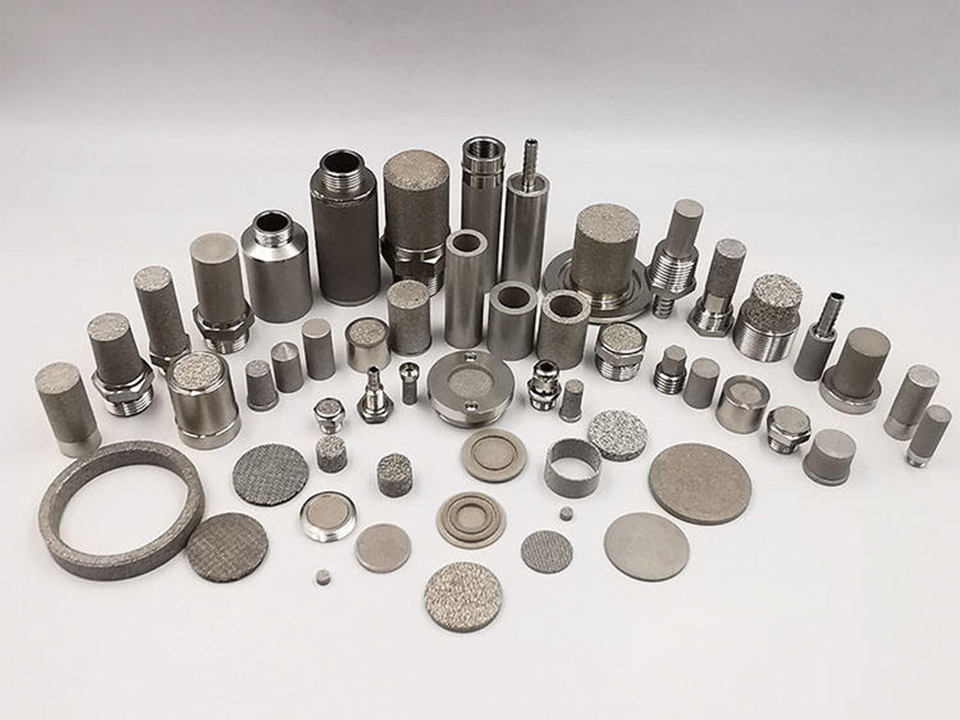
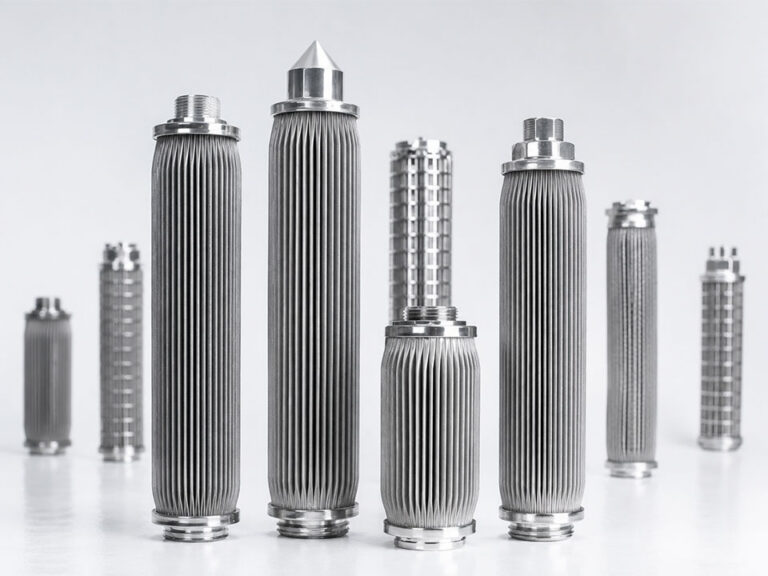
A sintered powder filter element gives a rigid porous matrix. A sintered mesh filter cartridge gives layered wire support and, often, better surface-cleaning behavior. A sintered metal fiber felt filter gives porosity and dirt-holding capacity. A pleated metal filter cartridge gives more area in the same envelope—but also more folds where sticky junk can hide.
Same material family. Different behavior.
Outsiders treat “stainless steel sintered filter” like one bucket. Plant engineers know better. 316L powder tube, multilayer 5-layer mesh candle, pleated metal fiber felt cartridge, and sintered disc are not interchangeable, even if a salesperson tries to make them sound that way.
The media decides the filtration behavior. The geometry decides how that behavior fits the system. The cleaning method decides whether the filter stays economical after installation.
Miss one of those, and you’re basically gambling with stainless steel.
Powder sintered metal filters: strong, compact, sometimes stubborn
I like powder filters in the right place.
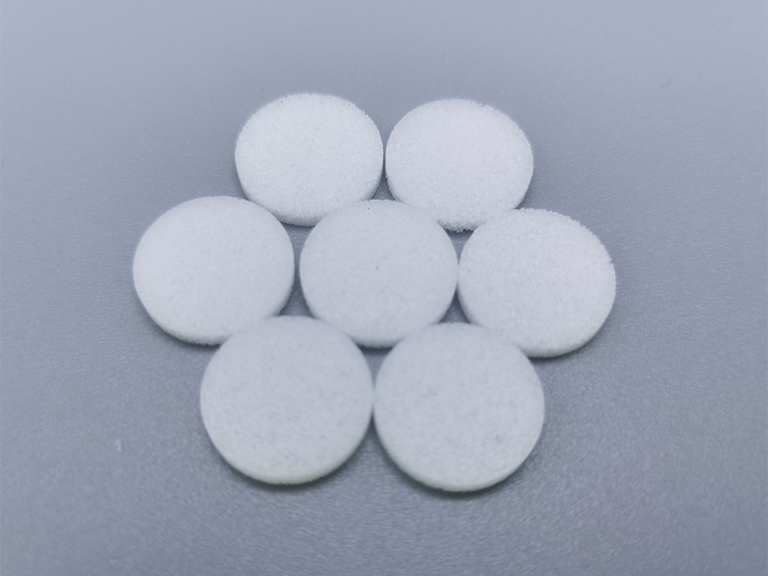
They’re made by compacting metal powder—316L stainless steel, bronze, titanium, nickel alloy, Hastelloy, Inconel, depending on chemistry—and sintering it into a porous metal body. The result is a tough depth-type structure with interconnected pores. Very useful. Also very easy to oversell.
Powder media has this solid, almost reassuring feel. Rigid wall. Stable shape. Custom pore structure. Good for small tubes, discs, cups, vents, spargers, restrictors, silencers, and compact process parts where a woven mesh structure doesn’t make mechanical sense.
But powder can trap fines deep inside the pore network. That’s the catch. If the contaminant is sticky, deformable, waxy, gelatinous, or full of soft organics, don’t be shocked when cleaning recovery drops. The filter may still look fine from the outside. Internally? Loaded.
Porvair lists powder filter discs from 0.5 mm to over 203 mm diameter, with densities from 35% to 75% and pore sizes from 0.003 to 200 micrometers on its metal filter discs page. That range explains why powder filters show up everywhere—from lab parts to industrial process assemblies.
Use powder when you need a rigid porous component.
Don’t use powder just because “sintered” sounds premium.
Sintered mesh filter cartridges: the backwash-friendly workhorse
Yet mesh is where I usually start when somebody says, “We need reusable, backwashable, stainless, and stable.”
Usually. Not always.
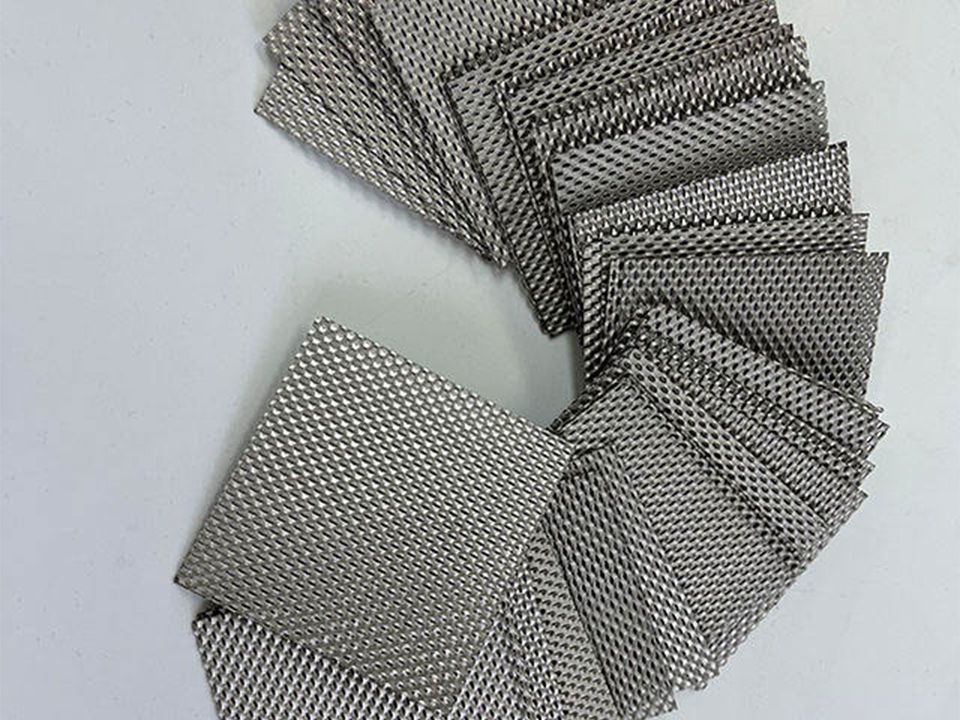
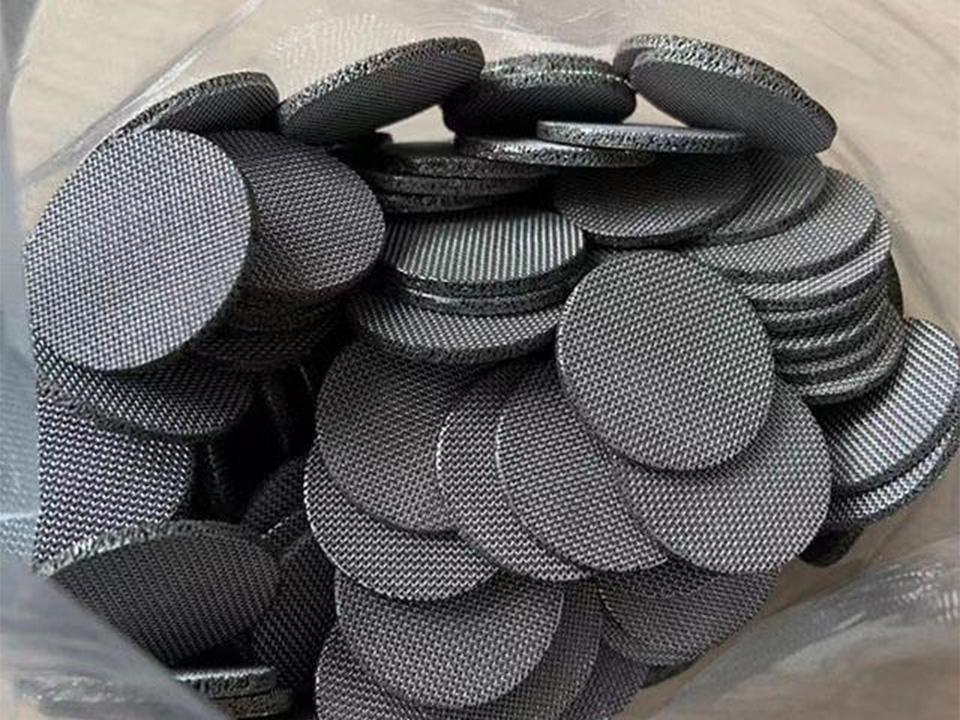
A sintered mesh filter cartridge is built from woven wire mesh layers bonded together into a laminate. A common structure might include a protection layer, filtration layer, drainage layer, support layer, and reinforcement layer. That layered build is why mesh can handle pressure, flow reversal, and repeated cleaning better than many people expect.
Here’s the shop-floor version: mesh gives you a more controlled filtration surface. Solids tend to cake where you can remove them, instead of burying themselves deep inside a thick porous body. That’s why mesh often works well for catalyst recovery, chemical liquids, backwash systems, hydraulic protection, and some polymer support applications.
Pall’s backwash filter literature says its sintered Rigimesh stainless medium offers low pressure drop, more holes per unit area, and better dirt-holding capacity than woven metal filters in that product context; see Pall Backwash Filter Systems.
But don’t worship mesh either.
If your solids smear, blind, or deform into the openings, mesh can plug fast. If operators attack it with the wrong cleaning pressure, wrong ultrasonic cycle, or stupid handling—yes, stupid handling happens—the media layer may be damaged while the cartridge still “looks okay.”
That’s dangerous. Looks lie.
Sintered metal fiber felt filters: high capacity, but not magic
From my experience, fiber felt gets recommended whenever someone wants longer life and lower pressure drop. Sometimes that’s exactly right. Sometimes it’s just lazy engineering with better vocabulary.
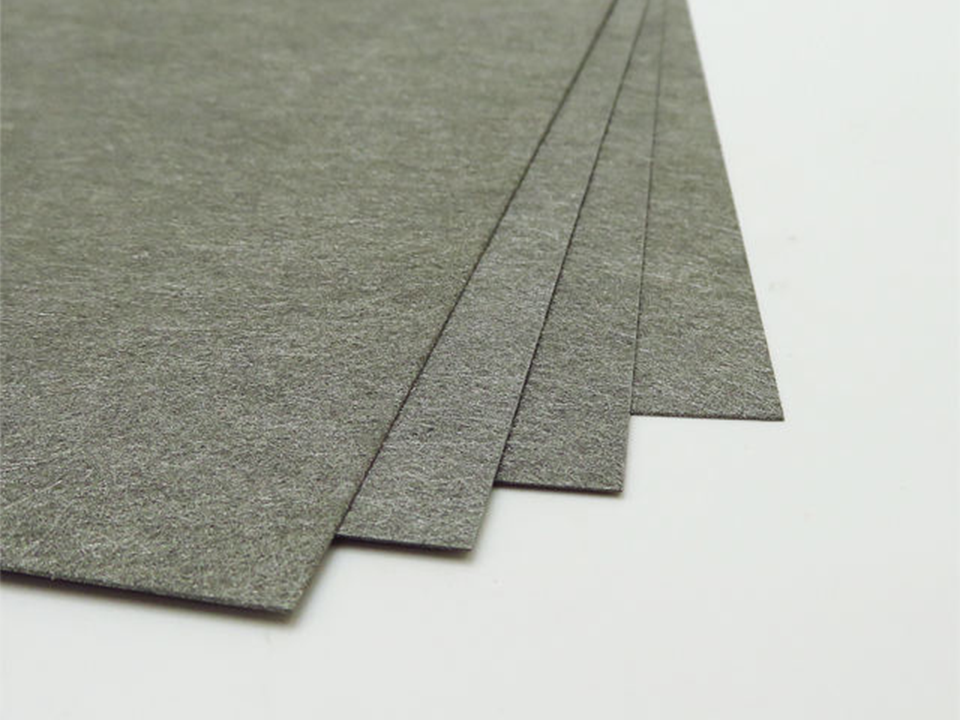
Sintered metal fiber felt is made from fine metal fibers randomly laid and sinter-bonded into a porous nonwoven structure. The open void volume gives high permeability. The depth and fiber network give strong dirt-holding capacity. It’s the kind of media that can keep a line running longer when the contaminant load is heavy and the particle profile fits the structure.
Porvair says its Sinterflo F sintered metal fibre is made from randomly laid metal fibres, sinter-bonded into a uniform high-porosity medium, with low pressure drop, high permeability, and excellent dirt-holding capacity. It can also be pleated, which increases available filtration area.
Sounds great.
But here’s where I get cranky: high dirt-holding capacity doesn’t automatically mean sharp cut-off. If you need tight particle classification, absolute retention behavior, or aggressive backwash recovery, fiber felt needs careful testing. It may be excellent. It may also be the wrong kind of excellent.
For high-loading gas or liquid service, fiber felt can be a serious option. For sticky gels or ultra-fine deformable contaminants? Test it before you brag about it.
Pleated metal filter cartridges: more area, more traps
Pleated cartridges are seductive.
More area in the same diameter. Lower face velocity. Lower clean DP. Longer run time. Smaller housing. Better-looking datasheet. What’s not to like?
Well—pleats.
Pleat valleys are not just “extra surface.” They’re geometry. They can hold cake, trap gels, collect sticky material, and become cleaning dead zones if the flow and contaminant are wrong. In clean fluids with predictable solids, pleated metal filter cartridges can be fantastic. In nasty resin, gummy organics, degraded polymer, or waxy fines, they can become a folded stainless headache.
Porvair notes that its Rempak candle filters for polymer melt can be made in cylindrical and pleated formats, using sintered metal fibre or woven wire mesh, and can include internal volume reducers to avoid stagnant flow regions. See Rempak Candle Filters.
That stagnant-flow detail is not decoration. In hot polymer service—PET, PEEK, nylon, resin, adhesive melt—dead zones can create gels, degradation, burnt material, and quality drift. A pleated cartridge that looks efficient on paper can be a mess if residence time and flow distribution are ignored.
So yes, use pleated metal when space is tight and area is needed.
But don’t pretend folds clean themselves.
Candle filter elements: geometry with consequences
A candle filter element is a long cylindrical element installed inside a pressure vessel. It might use powder, mesh, fiber felt, wedge wire, perforated support, or composite media. “Candle” describes the shape more than the media.
That matters.
I’ve heard people ask for “candle filters” as if the word alone solves the process. It doesn’t. A candle filter can be brilliant in catalyst recovery, polymer melt filtration, slurry clarification, hot gas service, and automated cake discharge systems. Or it can be oversized, under-supported, badly sealed, and miserable to clean.
Candle filters are about area, vessel integration, flow path, cake handling, and cleaning sequence. Outside-in or inside-out? Gas blowback or liquid backwash? Wet cake or dry cake? Horizontal or vertical vessel? Bottom discharge or manual removal? These details decide whether the filter is a workhorse or an expensive stainless sculpture.
Same shape. Different war.
For polymer melt, I’d obsess over flow distribution, gel capture, residence time, and collapse strength. For catalyst recovery, cake release and filtrate clarity matter more. For hot gas, pulse cleaning and thermal shock start shouting.
The word “candle” is only the beginning.
Tube filters: boring, useful, underrated
Tube filters don’t get enough respect.
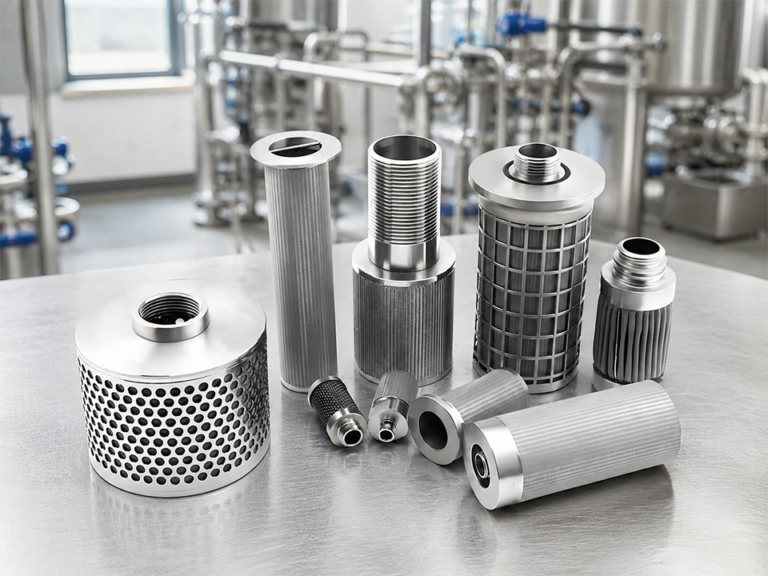
They’re simple cylindrical porous metal elements: open-ended, closed-ended, welded to fittings, threaded, flanged, or built into custom assemblies. They can be powder, mesh, or composite structures. They’re used in venting, sparging, gas filtration, steam, liquids, instrument protection, and high-temperature process lines.
Not glamorous. Often correct.
A sintered tube filter is usually easy for maintenance teams to understand. Remove. Clean. Replace. Inspect sealing surfaces. Move on. That matters in real factories where the best design is sometimes the one operators won’t hate.
But tube filters are often undersized. That’s the common crime. Somebody picks the diameter and length because it fits an existing housing, not because the open area is enough for the flow and dirt load. Then DP rises, cleaning frequency doubles, and everyone blames the media.
No. Do the sizing.
Disc filters: small part, big consequences
Disc filters look harmless.
Flat. Round. Simple. Sometimes tiny. Often used as last-chance filters, vents, restrictors, support discs, instrument guards, sample-line filters, diffuser plates, or polymer screen-pack components.
But a sintered filter disc can make or break a precision assembly. Too restrictive, and you starve the downstream device. Too open, and you pass fines. Wrong alloy, and corrosion starts. Wrong sealing surface, and bypass happens around the edge—not through the media.
That last one is embarrassing. Also common.
Disc filters are good when space is tight, flow is moderate, and the filtration plane needs to be compact and stable. Powder discs are common because they’re rigid and easy to make into defined shapes. Mesh discs can work when surface filtration or support behavior matters.
Just don’t ask a tiny disc to behave like a full cartridge.
Area is still area.
Plate and leaf disc filters: specialized, not fancy for fun
Plate filters live in a more specialized corner.
They show up when equipment geometry demands flat media: polymer lines, melt filtration systems, screen changers, leaf disc stacks, high-viscosity processing, or engineered flow paths where a standard cartridge would be awkward or impossible.
Porvair states that its leaf disc and solid plate filters are designed for hot melt polymer filtration, including PET packaging film and PEEK chip and film, with smoother flow and gel retention.
That’s not a casual water-filter application. That’s process-quality territory.
I wouldn’t push plate filters into ordinary clarification unless there’s a machine reason for it. But in hot melt polymer, resin, or high-value film production, plate geometry can be exactly the point. Flow path, gel retention, pressure stability, and clean changeover matter more than looking “standard.”
Sometimes the weird-looking format is the correct one.
Sintered metal filter types comparison table
Filter Type
Main Construction
Best Strength
Weak Point
Typical Use
Cleanability
Sintered powder filter element
Sintered metal powder with interconnected pores
Rigid depth structure, compact shapes, fine pore options
Deep particle trapping can reduce cleaning recovery
Instruments, vents, small assemblies, polymer stacks
Low to medium
Plate / leaf disc filter
Flat engineered plate or leaf format
Flow control in specialized equipment
Higher engineering cost
PET, PEEK, hot melt polymer filtration
Medium
How I’d actually choose one
Forget the catalog order.
I’d start with the dirt. Is it hard crystalline solids? Catalyst fines? Rust? Carbon black? Polymer gel? Fiber? Scale? Wax? Soft biological gunk? You can’t choose filter construction until you know how the contaminant behaves under pressure.
Hard particles may cake nicely. Soft particles smear. Fibers bridge. Gels blind. Catalyst fines sneak into pores. Carbon black turns everything into a dirty negotiation.
Then I’d look at DP.
Clean differential pressure is only the first number. The real question is how fast DP climbs and how much recovery you get after cleaning. A filter that starts at low DP but never recovers after backwash may cost more than a “less efficient-looking” construction that cleans repeatedly.
Next, cleaning method.
Backwash. Blowback. Ultrasonic. Solvent soak. NaOH. HNO₃. Citric acid. Steam. Burn-off. Manual rinse. CIP loop. Each one changes the filter choice. Mesh often likes release. Powder may hold fines inside depth pores. Fiber felt may carry more dirt but needs realistic regeneration testing. Pleated media gives area—but also hidden corners.
And finally, installation space.
Can you fit more length? More diameter? More elements? A candle bundle? A pleated cartridge? A disc stack? A plate? Or are you trapped inside an old housing designed by someone who retired twelve years ago?
That happens.
My blunt rules, with no brochure smile
Use powder if you need rigid porous metal, compact geometry, shaped parts, or fine pore options.
Use mesh if you care about backwash, surface loading, cake release, and mechanical reinforcement.
Use fiber felt if you need permeability and dirt-holding capacity more than razor-sharp cut-off.
Use pleated cartridges if you’re fighting limited housing space and the contaminant won’t bury itself in the pleats.
Use candle elements if you need vessel-based filtration, high area, automated cleaning, or cake handling.
Use tube filters if you want a strong, familiar, maintainable format that operators won’t curse every shift.
Use discs if the assembly needs a small, flat, precise filtration barrier.
Use plates or leaf discs when the machine—not the supplier brochure—demands flat media.
And please, don’t approve a sintered metal filter drawing without checking flow direction, weld seam position, support layer orientation, sealing face, gasket compatibility, collapse pressure, alloy grade, and cleaning method.
That’s where the expensive mistakes hide.
FAQ
What are the main types of sintered metal filters?
The main types of sintered metal filters are powder filters, multilayer mesh filters, metal fiber felt filters, pleated cartridges, candle elements, tube filters, disc filters, and plate filters, each defined by media construction, geometry, filtration behavior, cleanability, and suitability for pressure, temperature, flow rate, and contaminant loading.
Powder filters are usually rigid depth structures. Mesh filters often behave more like cleanable surface media. Fiber felt is used when dirt capacity and permeability matter. Pleated cartridges increase area. Candle, tube, disc, and plate formats describe how the filter fits into the equipment.
Which sintered metal filter type has the lowest pressure drop?
A sintered metal fiber felt filter or pleated metal filter cartridge often gives lower pressure drop because high porosity or increased surface area reduces face velocity, but actual pressure drop depends on pore size, media thickness, fluid viscosity, flow rate, contaminant loading, and whether the element is clean or partially blocked.
Don’t compare pressure drop using only catalog claims. Ask for clean DP at your flow rate, operating temperature, viscosity, and micron target. Water data doesn’t mean much if your real fluid is resin, oil, polymer melt, or chemical slurry.
Are sintered powder filters better than sintered mesh filters?
Sintered powder filters are better for rigid porous shapes, compact parts, fine pore structures, and depth filtration, while sintered mesh filters are usually better for backwashable surface filtration, mechanical support, and applications where particle cake release is important. Neither type is universally better; the process decides.
I’d pick powder for discs, spargers, restrictors, vents, and compact custom porous parts. I’d look harder at mesh for reusable cartridges, backwash systems, catalyst recovery, and liquid filtration where cake release matters.
When should I choose a pleated metal filter cartridge?
A pleated metal filter cartridge should be chosen when the system needs more filtration area inside limited installation space, lower face velocity, longer service interval, or higher dirt capacity without changing the housing size. It works best when the contaminant can be cleaned from pleat channels effectively.
Pleating is not automatically better. If the solids are gummy, sticky, waxy, or likely to wedge into the pleat valleys, test before committing. Extra area doesn’t help much if half of it becomes a dirt trap.
What is a candle filter element?
A candle filter element is a long cylindrical filter installed inside a pressure vessel, usually used for high-area liquid, slurry, gas, polymer, catalyst, or chemical filtration where backwash, blowback, cake discharge, or vessel-based cleaning is required. The candle shape can use powder, mesh, felt, or composite media.
Candle filters are chosen for area, modular replacement, cleaning automation, and pressure-vessel integration. But flow direction, cake discharge, sealing design, and media support decide whether the element performs well or becomes a maintenance headache.
How do I choose sintered metal filters for high-temperature systems?
To choose sintered metal filters for high-temperature systems, match alloy, pore structure, mechanical strength, oxidation resistance, gasket material, welding method, and cleaning process to the actual operating temperature, pressure cycling, fluid chemistry, and shutdown conditions, not just the advertised maximum temperature on a datasheet.
316L stainless steel, titanium, Hastelloy, Inconel, Monel, and nickel alloys behave differently in chlorides, caustics, acids, oxygen, steam, and thermal cycling. The alloy choice can be just as important as the micron rating.
Procurement Guidance
If you’re comparing powder, mesh, felt, pleated, candle, tube, disc, or plate formats, don’t send a generic “please quote 10 micron stainless filter” RFQ. That wastes time.
Send the fluid, temperature, pressure, flow rate, viscosity, micron target, contaminant type, housing drawing, cleaning method, and expected service life. We can help screen the right sintered metal filter cartridge construction before you pay for the wrong sample.