Before you leave, we invite you to talk directly with our managing team to ensure you receive the most accurate technical guidance, pricing support, and customization options for your project. Our experts can quickly evaluate your requirements, recommend suitable sintered plastic filter solutions, and help you reduce sourcing risks while improving efficiency, consistency, and long-term supply stability for your industrial applications.
Need Help Selecting the Right Filter Cartridge?
Our Sales Team
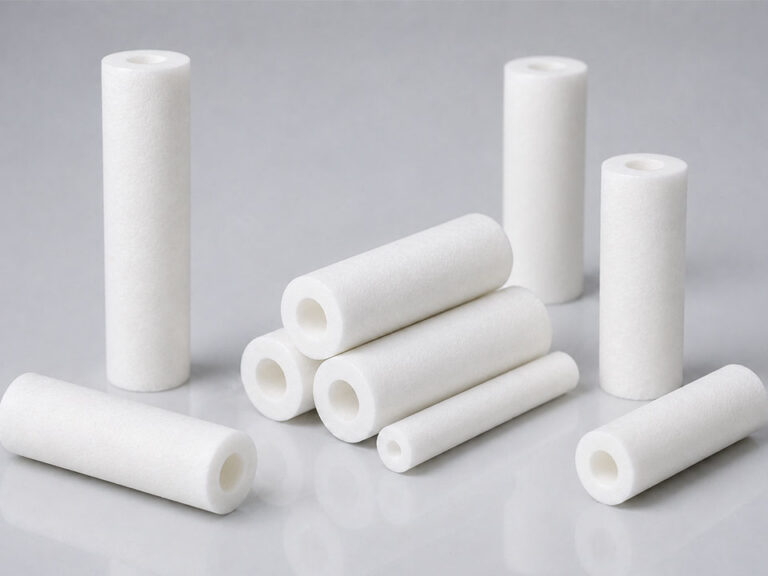
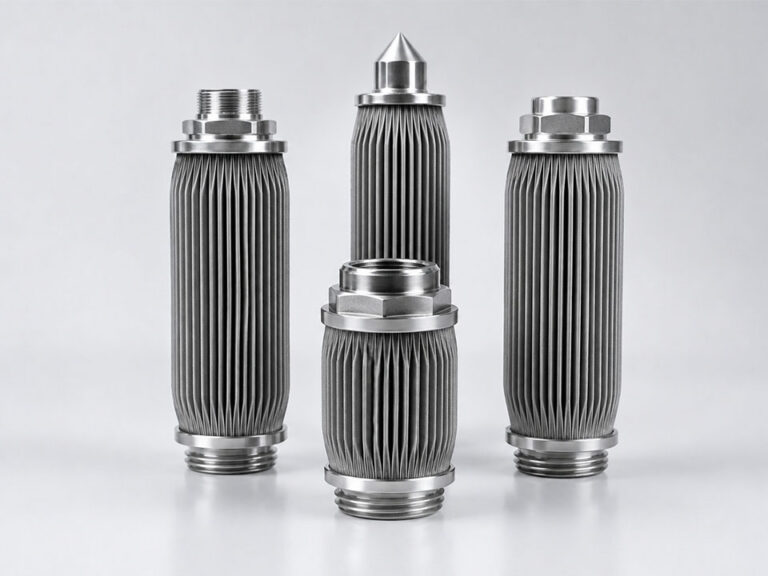
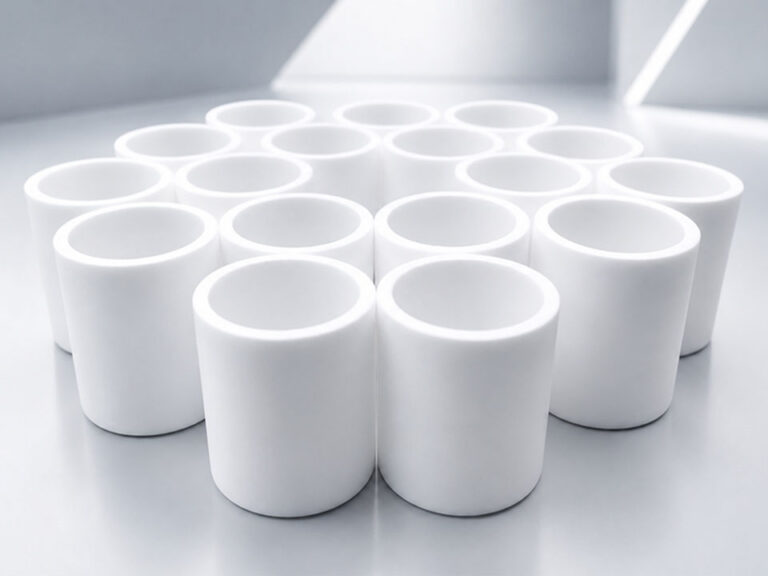
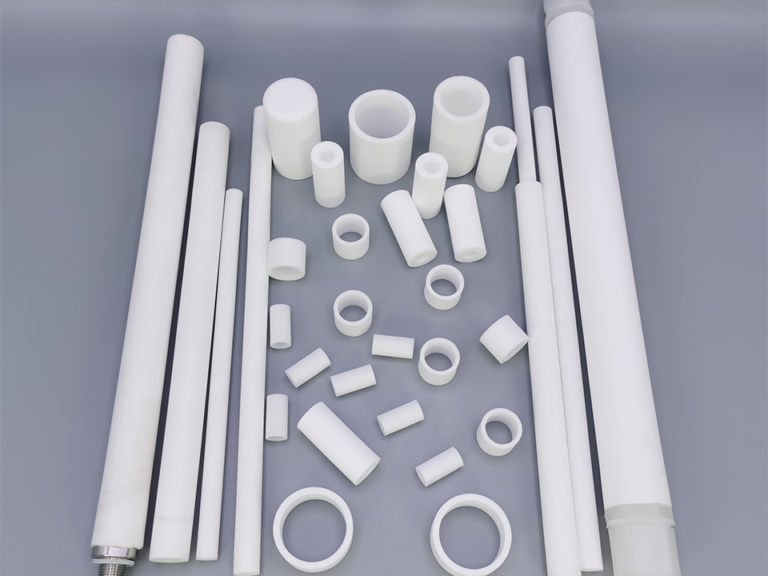
Tell our sales support team your product type, micron rating, size, application, filtered medium, working temperature, pressure, and estimated quantity. We will help you match the right sintered plastic, sintered metal, or sediment filter cartridge.
Pore Size, Micron Rating and Filtration Rating Explained
A 10-micron filter may not stop 10-micron particles.
That sentence bothers people, which is exactly why it needs to be said before anyone writes an RFQ, approves a supplier drawing, or tells the production manager that the new cartridge is “the same rating” as the old one. Same number. Different truth.
I’ve seen this mistake more times than I like admitting.
A buyer asks for “5 µm.” Supplier A sends a nominal melt-blown cartridge. Supplier B quotes an absolute-rated pleated membrane. Supplier C offers a sintered stainless element classified by bubble-point testing. Everyone says “5 micron.” Nobody is actually saying the same thing.
Messy business.
Filter micron rating sounds like a clean dimension. It isn’t. A micrometer is clean: 1 µm equals one-millionth of a meter. The trouble starts when that unit gets used as a performance promise, because now we’re talking about test method, particle shape, removal efficiency, pore-size distribution, fluid velocity, pressure drop, dirt loading, and—let’s be honest—supplier sales language that sometimes gets a little too relaxed.
A filter rating is not simply the size of a hole. It’s usually a claim about retention performance under some kind of test condition. Sometimes that condition is well documented. Sometimes it’s hidden in a supplier’s internal standard. Sometimes the sales sheet says “10 µm” and everyone just prays the lab knows what happened.
I don’t like prayer in engineering.
A filter can be rated by nominal efficiency, absolute efficiency, beta ratio, bubble point, mean-flow pore size, bead challenge, particle-count testing, air permeability correlation, or some factory classification that should never have escaped the QC office. These are not interchangeable.
Write that on the wall.
A 10 µm nominal rating may mean the filter removes 85% or 90% of particles at or above 10 µm. Another supplier may mean 95%. Another may not define it at all. An absolute 10 µm rating may imply much stronger retention—depending on the test method and efficiency threshold. A pore-size result from bubble-point testing may describe the largest through-pore, not the full retention behavior of a dirty process fluid.
Same number.
Different claim.
Pore size vs micron rating
Pore size is about the filter medium’s structure. Micron rating is about particle retention behavior.
Close cousins. Not twins.
A pore is an opening or passage in the filter medium. In sintered filters, that “opening” is rarely a neat circular hole. It’s a twisted path through bonded powder, fiber, mesh, or polymer particles. There are pore throats, cavities, blind pockets, connected channels, and ugly little constrictions inside the media that you don’t see from the surface.
A micron rating, meanwhile, is the supplier’s statement about what particle size the filter is expected to retain.
Expected.
That word matters.
ASTM F316 covers test methods for determining pore-size properties of membrane filters with maximum pore sizes from 0.1 to 15.0 µm, including bubble-point and mean-flow pore concepts: ASTM F316 pore-size test method. Useful method. Specific scope. Not a universal translator for every sintered metal tube, PP depth cartridge, melt-blown sediment filter, and pleated membrane on the planet.
From my experience, this is where engineers get lazy.
They ask for “pore size 5 micron” when they really need “filtration rating 5 µm absolute at defined efficiency under defined test conditions.” Those are not the same specification. One is a sketch. The other is closer to an engineering requirement.
Nominal filter rating: useful, but slippery
Nominal rating is the loose one.
Not useless.
Loose.
A nominal filter rating usually means the filter removes a stated percentage of particles at or above a given micron size under test conditions. The irritating part is that the percentage may vary by supplier. One company’s 10 µm nominal can be 85% efficient. Another’s may be 90%. Another’s may be “trust us.” That last one is my favorite horror story.
Nominal filters are common in sediment filtration, prefiltration, bulk particle removal, cooling water, general industrial water, and low-risk equipment protection. They’re often cheaper. They can hold dirt well. They may improve retention as a cake forms.
But they are not sharp cutoffs.
A 5 µm nominal sediment cartridge can pass some 5 µm particles. It may also pass smaller particles easily. It may unload during flow surges. It may channel. It may look wonderful in clean-water pressure-drop data and ugly in real process sludge.
I’m not anti-nominal.
I’m anti-pretending.
Use nominal when partial capture is acceptable. Don’t use nominal language when downstream equipment, sterile service, hydraulic cleanliness, catalyst recovery, medical devices, or customer validation requires a hard retention story.
Absolute filter rating: stronger, not magical
Absolute sounds safer.
Usually, it is.
An absolute filter rating is meant to describe high-efficiency retention at a stated particle size. In many industrial filtration discussions, this is tied to beta ratio or challenge testing. In hydraulic filtration, ISO 16889 describes a multi-pass filtration performance test with continuous contaminant injection for hydraulic filter elements and determines contaminant capacity, particulate removal, and differential pressure characteristics: ISO 16889 hydraulic filter performance test.
That’s better than catalog poetry.
Still, “absolute” is not a free pass. Ask what efficiency threshold is being used. Ask what contaminant. Ask what fluid. Ask whether the test applies to finished cartridges or flat media samples. Ask whether the rating survives flow pulsing, viscosity changes, and particle loading.
A filter can be absolute-rated in one test context and still be wrong for your process.
For sterile processing, the FDA defines a sterilizing-grade filter as one that, when appropriately validated, removes all microorganisms from a fluid stream and produces sterile effluent: FDA sterile filtration guidance. Notice the phrase “appropriately validated.” That is the part people skip when they reduce the conversation to “0.22 micron.”
Bad shortcut.
The 0.2 µm myth
0.2 micron sounds like a wall.
It isn’t always.
In pharmaceutical and laboratory filtration, 0.2 µm or 0.22 µm sterilizing-grade membranes are familiar. But the number alone does not validate a process. You still need organism challenge, integrity testing, compatibility, adsorption review, extractables/leachables, pressure limits, flow conditions, and process-specific validation.
Tiny rating.
Big paperwork.
And outside pharma, the same logic applies. A 1 µm filter may not solve a 1 µm contamination problem if particles are soft gels, elongated fibers, deformable biological material, agglomerates, or electrostatically sticky dust. A 50 µm sintered bronze breather may be perfect for pneumatic silencing and terrible for fine powder capture. A 100 µm screen may catch visible chunks and let haze-forming fines sail through like they paid rent.
Micron numbers are coordinates.
Not strategy.
How filter pore size is determined
There isn’t one method.
That’s why supplier comparisons get ugly.
Bubble-point testing estimates the largest connected pore by wetting the filter and measuring the pressure needed to displace liquid from the pore pathway. Mean-flow pore testing gives a more representative pore-size signal. Bead challenge testing pushes known-size particles through the filter. Multi-pass testing measures removal efficiency over contamination loading. Microscopy shows surface structure but may miss internal throats. Mercury intrusion porosimetry can map pore-size distribution, though it doesn’t always predict real particle capture.
Pick the wrong method and you get fake confidence.
A sintered metal filter may have its limiting throat inside the media, not on the visible surface. A PP melt-blown cartridge captures particles through depth loading, fiber entanglement, bridging, cake formation, and tortuous flow—not one clean pore opening. A membrane behaves differently from a sintered powder tube. A mesh screen behaves differently from both.
That’s why I dislike RFQs that say only “pore size range 1–100 µm.”
Fine. What basis?
If the supplier says “factory standard,” ask again.
If they still say “factory standard,” price the risk into the deal.
Filtration rating is probability wearing a hard hat
This is the part nobody likes.
Filtration rating is often a probability claim dressed up like a dimension. Real retention depends on particle shape, hardness, deformability, concentration, flow velocity, pressure pulses, fluid viscosity, media structure, dirt loading, bypass sealing, and whether the filter was installed by someone having a bad morning.
Round glass beads behave one way.
Fibers behave another.
Soft gels cheat.
Rust flakes bridge.
Bacteria don’t behave like ISO test dust.
Oil sludge is its own little monster.
So when a supplier says “absolute 5 µm,” don’t clap yet. Ask what particle challenge was used. Ask what beta ratio. Ask what efficiency. Ask clean or loaded. Ask liquid or gas. Ask whether the rating applies to media only or the finished cartridge with seals, welds, end caps, pleats, support cores, and all the boring failure points.
Boring questions save money.
Comparison table: nominal vs absolute vs pore size
Term
What it usually means
What it does not guarantee
Best use
Buyer warning
Pore size
Physical or inferred opening size in the filter medium
Actual retention of all particles at that size
Media characterization, membrane testing, sintered media comparison
Ask how it was measured
Micron rating
Particle size associated with filter retention claim
High-efficiency retention at a stated particle size
Perfect retention in every process
Critical filtration, equipment protection, validation-sensitive use
Test method and beta ratio matter
Beta ratio
Upstream-to-downstream particle count ratio at size x
Performance outside test conditions
Hydraulic and lube filtration efficiency
β200 and β1000 are not the same
Bubble point
Pressure-based estimate of largest through-pore
Complete particle-retention curve
Membrane and some porous media QC
Wetting liquid and method matter
Pore-size range
Distribution of pore openings
Sharp cutoff
Sintered and depth media description
Broad ranges can hide weak retention
How I’d write the RFQ instead
Don’t write this:
“Need 10 micron filter.”
That’s not a spec. That’s a wish with a unit attached.
Write something closer to:
“Filter shall provide absolute retention at 10 µm, minimum β10(c) ≥ 200, tested according to ISO 16889 or documented equivalent method, at specified flow and fluid conditions.”
Or this:
“Filter shall be nominal 10 µm for sediment prefiltration, minimum 90% removal efficiency for defined test dust, with clean pressure drop below X bar at Y L/min using water at 20°C.”
Or, for custom work:
“Supplier shall provide pore-size characterization method, bubble-point data where applicable, mean-flow pore data where applicable, retention test method, clean ΔP curve, material certificate, drawing, and batch traceability.”
Much better.
Still not perfect.
But now the supplier has fewer places to hide.
If you’re buying custom sintered filter elements, add OD, ID, length, media thickness, connection type, alloy or polymer grade, working temperature, working pressure, cleaning method, and fluid compatibility. A micron number without geometry and operating conditions is like ordering a pump by saying, “medium size, strong enough.”
Why supplier claims don’t match
Supplier A says 5 µm.
Supplier B says 5 µm.
Supplier C says 3–5 µm.
Procurement thinks they’re comparable. Engineering knows they may not be.
One supplier may be using nominal rating. Another may be using absolute rating. Another may be using bubble-point maximum pore size. Another may be using air-flow correlation. Another may be describing powder particle size before sintering rather than finished media retention. Yes, I’ve seen it.
The worst mistake is comparing nominal to absolute like they’re equal.
A 5 µm nominal filter may pass more problem particles than a 10 µm absolute filter, depending on efficiency definition. That sounds backwards only if you’re treating micron size as the whole story.
It isn’t.
Compare rating type. Efficiency. Beta ratio. Test method. Fluid. Flow rate. Pressure drop. Temperature. Particle challenge. Finished assembly versus media sample. Batch repeatability.
That is the real comparison.
The rest is catalog theater.
Micron rating and pressure drop: the trade nobody escapes
Finer usually costs pressure drop.
Not every time. But often enough that pretending otherwise is bad engineering.
A 1 µm sintered stainless filter will usually restrict flow more than a 20 µm version with similar geometry and media thickness. A finer PP melt-blown sediment cartridge may blind fast in dirty water. A tighter membrane may require more surface area or lower flow. A narrow pore-size range can protect downstream equipment but punish the pump.
I’ve watched buyers demand “as fine as possible” because they think finer means better.
No.
Finer means finer.
Better depends on target particle, flow rate, allowable pressure drop, dirt load, service interval, cleaning method, validation requirements, and cost of failure. Over-filtering can shorten cartridge life, increase energy use, trigger bypass, starve downstream equipment, and make operators hate the design.
Sometimes 25 µm is smarter than 5 µm.
There. I said it.
Common pore size ranges by filter type
Filter type
Common micron / pore-size range
Typical rating style
Common use
Practical note
Sintered metal filter
0.5–100 µm, sometimes wider
Often absolute or media-characterized
Gas, steam, catalyst, high-temp, corrosive service
Strong, cleanable, but pressure drop rises with fine grades
What to ask before approving a filter micron rating
Ask like a skeptical buyer.
Is the rating nominal or absolute?
What is the removal efficiency?
What is the beta ratio, if used?
Which test method?
Which particle challenge?
Which fluid?
What temperature?
What flow rate?
What clean pressure drop?
Does the test apply to media or finished cartridge?
Is the pore-size range measured or inferred?
Can the supplier provide batch traceability?
Does the rating change after cleaning, sterilization, autoclaving, welding, sintering, pleating, or bonding?
Too many questions?
No. Just enough.
Because the minute a filter fails, everyone suddenly wants those answers.
FAQ
What is filter micron rating?
Filter micron rating is the particle-size value, expressed in micrometers, that describes what size particles a filter is expected to retain under defined test conditions, but the meaning depends on whether the rating is nominal, absolute, beta-ratio based, or derived from a pore-size test.
A micron is a real unit. The rating claim is the part you need to question. Always ask for the test method, retention efficiency, and whether the claim applies to the finished filter.
What is the difference between pore size and micron rating?
Pore size is the physical or inferred size of openings inside a filter medium, while micron rating is the claimed particle retention size under specified test conditions, meaning pore size describes media structure and micron rating describes filtration performance.
They are related, but not identical. A pore-size range does not automatically tell you particle retention efficiency in a real process.
What is nominal filter rating?
Nominal filter rating is a filtration claim showing that a filter removes a stated percentage of particles at or above a given micron size under certain test conditions, but it does not guarantee near-total particle retention.
Nominal ratings are common in sediment and prefiltration. They are useful when partial removal is acceptable, but weak when downstream protection must be tightly controlled.
What is absolute filter rating?
Absolute filter rating is a higher-confidence filtration claim indicating that a filter removes nearly all particles at or above a specified micron size under defined test conditions, often linked to beta ratio, challenge testing, or validated retention performance.
Absolute does not mean magic. You still need to know the test method, efficiency level, fluid condition, and whether the claim applies to the finished cartridge.
What is absolute vs nominal micron rating?
Absolute vs nominal micron rating compares high-efficiency particle retention against partial particle retention, where absolute rating usually reflects a much stronger cutoff claim and nominal rating reflects a lower, supplier-defined percentage removal at the stated particle size.
A 10 µm absolute filter may outperform a 5 µm nominal filter depending on the efficiency definition. That is why rating type matters.
How is filter pore size determined?
Filter pore size is determined using methods such as bubble-point testing, mean-flow pore testing, microscopy, bead challenge testing, mercury intrusion porosimetry, or supplier-specific media characterization, depending on filter type, material, pore range, and required accuracy.
For membranes, ASTM F316-style bubble-point methods are common. For depth filters and sintered media, particle retention and permeability data may be just as important.
What is a good micron rating for sediment filters?
A good micron rating for sediment filters depends on feed-water dirt load, downstream equipment tolerance, flow rate, pressure-drop limit, and service-life target, but common sediment cartridge ratings include 1 µm, 5 µm, 10 µm, 20 µm, and 50 µm.
Finer is not automatically better. Too fine can clog early and starve flow if the cartridge area or housing size is wrong.
What micron rating removes bacteria?
A micron rating around 0.2 µm or 0.22 µm is commonly associated with sterilizing-grade membrane filtration in validated pharmaceutical and laboratory contexts, but bacterial removal depends on filter validation, organism challenge, integrity testing, fluid compatibility, and process controls.
Do not apply sterile-filtration assumptions casually to industrial cartridges. The rating alone does not validate the process.
Why do two filters with the same micron rating perform differently?
Two filters with the same micron rating perform differently because suppliers may use different rating types, test methods, particle challenges, media structures, pore distributions, efficiency thresholds, flow rates, pressure-drop limits, and finished-cartridge designs.
A micron number without rating basis is not enough for engineering comparison. Ask for efficiency, beta ratio, or test method.
Procurement Guidance
Send us your target particle size, required removal efficiency, fluid type, flow rate, allowable pressure drop, operating temperature, material preference, and whether you need nominal or absolute filtration. We’ll help you define the right filter micron rating, pore-size range, and filtration rating before the RFQ turns into a supplier guessing game.