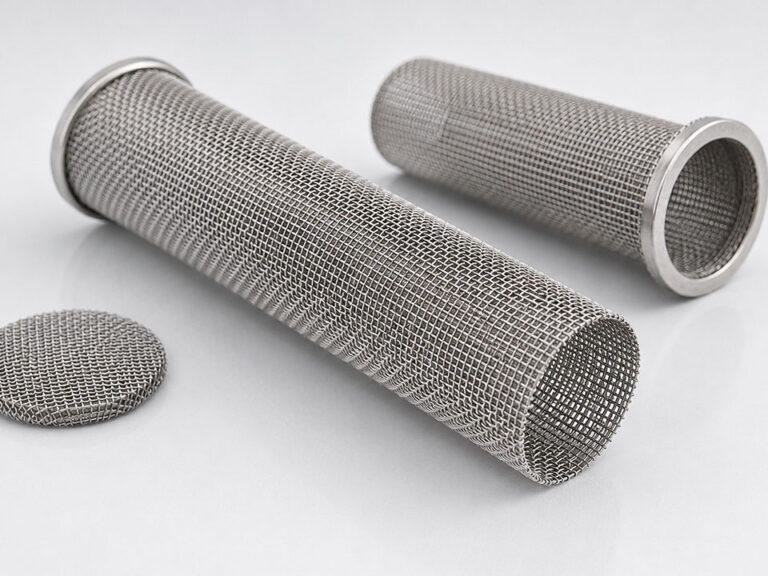
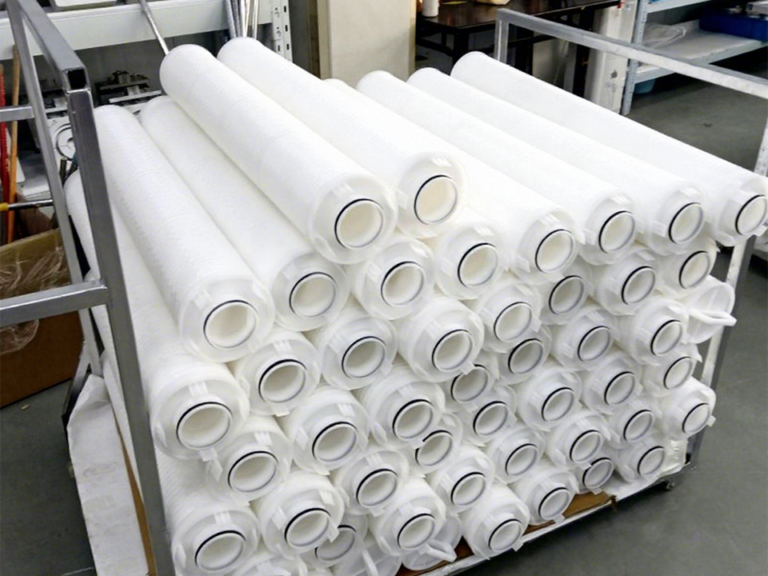
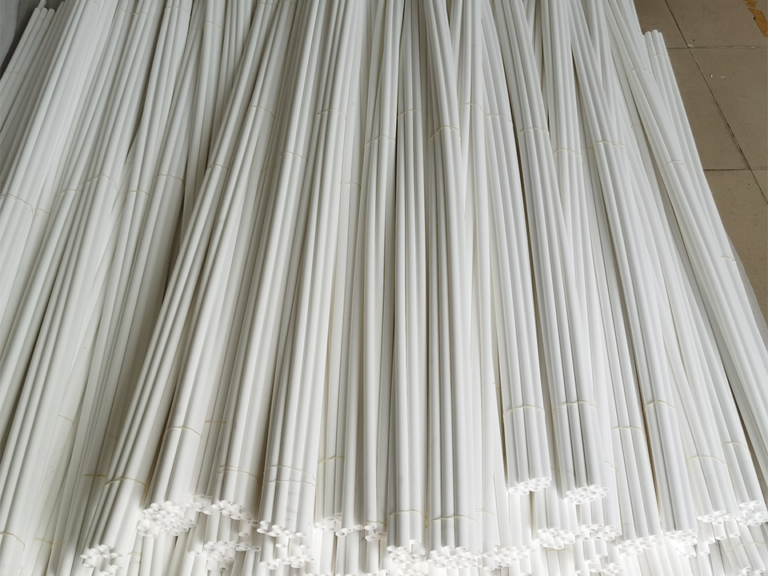
Before you leave, we invite you to talk directly with our managing team to ensure you receive the most accurate technical guidance, pricing support, and customization options for your project. Our experts can quickly evaluate your requirements, recommend suitable sintered plastic filter solutions, and help you reduce sourcing risks while improving efficiency, consistency, and long-term supply stability for your industrial applications.
Need Help Selecting the Right Filter Cartridge?
Our Sales Team
Tell our sales support team your product type, micron rating, size, application, filtered medium, working temperature, pressure, and estimated quantity. We will help you match the right sintered plastic, sintered metal, or sediment filter cartridge.
How to Clean Sintered Metal Filters: Backwash, Ultrasonic & Chemical
A filter came back from a food plant once looking perfect.
Perfectly useless.
The outside was shiny, the operator had already flushed it twice, and someone in purchasing was asking why the “reusable” stainless element needed replacement after only eight weeks—but when we put it on a flow bench, the pressure drop told the real story: the pore network was packed, not dirty. See the problem?
That’s the trap with sintered metal filter cleaning. People clean the surface. The failure lives inside.
And here’s the ugly truth: a sintered metal filter is not a screen. It’s a three-dimensional metal labyrinth, made from bonded powder, fiber, mesh, or layered media. Once particles wedge deep inside that structure, “washing” becomes a polite word for denial.
I frankly believe a lot of maintenance teams destroy filters while trying to save them. Too much backwash pressure. Wrong acid. Dirty compressed air. Ultrasonic tanks used like punishment baths. The usual crimes.
If you’re still selecting filter media, don’t treat cleanability as an afterthought. Match alloy, pore size, structure, and regeneration method before buying; otherwise, your cleaning SOP becomes a funeral document. Start with our internal guide to sintered metal filter cartridge selection before you lock in micron rating and material.
First, stop asking “how do I clean it?”
Ask what plugged it.
That sounds obvious. It isn’t. Most failed cleaning jobs begin with one lazy assumption: “It’s just particles.” Maybe. But maybe it’s oxide sludge, polymer skin, compressor oil, hard scale, carbonized organics, biofilm, catalyst fines, or a lovely little cocktail of all six.
The shop-floor version? Backwash the loose cake. Shake out the fines. Chemically attack the stuff that has chemistry. Then prove the flow came back.
Not by eyeballing it.
By measuring it.
Backwash: good first move, terrible religion
Backwash is usually where I start.
Not because it’s magical. Because it’s cheap, fast, and honest—if you read the results properly. In sintered filter backwash cleaning, clean liquid or gas is pushed in reverse through the element, forcing captured solids back toward the dirty side. When the contaminant is mostly surface cake or shallow pore loading, it works nicely.
Sometimes beautifully.
But if your operator runs a weak reverse rinse, sees slightly cloudy discharge, and declares the cartridge “clean,” that’s not maintenance. That’s theater with a drain hose.
Backwash should be pulsed, controlled, and recorded. Use compatible clean fluid. Keep reverse pressure below the element and housing rating. Give the solids somewhere to go. And for the love of uptime, don’t backwash with mystery plant air full of compressor oil, rust, and pipe scale.
I’ve seen that. Twice.
Once was enough.
For process conditions where backwash frequency changes by duty cycle, contamination load, and line pressure, compare your use case with industrial sintered filter applications. A catalyst guard filter and a municipal water polishing element do not live the same life. Don’t clean them like they do.
My practical backwash sequence
Start with a gentle forward rinse. Knock off the loose junk first. Then reverse-flow the element using clean, compatible fluid. Pulse it—don’t just open a valve and hope the gods of differential pressure smile on you.
Watch the discharge.
Cloudy discharge means you’re removing something. Clear discharge with high remaining pressure drop means the blockage is deeper, bonded, oily, scaled, or compacted. That’s when the backwash party is over.
Measure flow after cleaning. I’d log temperature, pressure, flow rate, cleaning time, and visual notes. If the restored flow sits under roughly 70–80% of original baseline after a proper cycle, don’t pat yourself on the back. Move to ultrasonic or chemical cleaning.
Or replace it.
Yes, I said it.
Ultrasonic cleaning: tiny violence in a tank
Ultrasonic cleaning sintered metal filter elements can be excellent. It can also expose every cheap weld, weak seam, and bargain-bin end connection in the assembly.
Tiny violence.
The basic idea is cavitation. Ultrasonic waves create bubbles in the cleaning liquid, those bubbles collapse, and the resulting micro-agitation helps dislodge fine particles from surfaces and accessible pore channels. The EPA’s aqueous cleaning guide describes ultrasonic cleaning as using cavitation in liquid to improve cleaning action: EPA cleaner technologies guide.
Sounds clean. Sounds gentle.
It isn’t always.
For stainless steel sintered filter cleaning, I usually think in the 40 kHz range for general cleaning. Lower frequencies—25 kHz, 28 kHz—hit harder. Useful for tough debris. Riskier for delicate assemblies. Warm neutral or mildly alkaline detergent often does more good than plain cold water. But “hotter and longer” is not a strategy; it’s how people cook residues deeper into the media or stress the part.
Here’s the sequence I trust more than most supplier brochures:
Pre-rinse from both sides.
Soak in a compatible detergent or solvent.
Ultrasonic clean for 10–30 minutes.
Reverse rinse until discharge runs clean.
Dry with clean filtered air or nitrogen.
Flow-test against baseline.
Notice the last step.
That’s where the lies die.
And if the filter has bonded seams, unknown metallurgy, soft solder, resin, elastomer seals, or a mystery end cap? Run a short trial. Ultrasonic tanks are not confession booths. They don’t forgive bad design.
Chemical cleaning: useful, ugly, and often abused
Chemical cleaning sintered metal filter elements should start with contaminant chemistry.
Not with whatever drum is already open.
Oil and grease? Think compatible solvents or alkaline degreasers. Mineral scale? Mild acid systems may work. Iron oxide on stainless? Citric acid or nitric acid may be considered under controlled procedures. Polymerized organics? Maybe solvent soaking. Maybe thermal treatment by a qualified vendor. Maybe the trash bin.
But don’t casually pickle sintered media.
Flat stainless sheet is not porous stainless media. A liquid that behaves acceptably on a flat coupon can sit inside pores, cling to the internal surface area, attack weld heat-affected zones, or leach into the next process batch. That’s why rinse validation matters. pH. Conductivity. Residue checks if the process is sensitive.
Nitric acid deserves special suspicion. OSHA lists nitric acid with a permissible exposure limit of 2 ppm as an 8-hour TWA: OSHA nitric acid chemical data. The New Jersey Department of Health hazard sheet also states NIOSH’s recommended airborne exposure limit is 2 ppm averaged over a 10-hour workshift and 4 ppm as a short-term limit: NJ Health nitric acid hazard sheet.
So no, it’s not “just acid.”
It’s an oxidizer, a fume issue, a PPE issue, a wastewater issue, and sometimes a management issue.
For stainless passivation context, the British Stainless Steel Association notes that ASTM A967 includes both nitric and citric acid treatments, and that citric acid has environmental advantages around NOx fume emission and waste acid disposal. It also notes 4–10% citric acid solution strengths specified for passivation treatments: BSSA on stainless steel passivation.
That doesn’t mean citric acid cleans every plugged sintered filter. It doesn’t.
But from my experience, it’s often a more civilized starting point for stainless systems than reaching straight for nitric acid like it’s 1987.
Stainless steel vs bronze: stop pretending they’re cousins
Stainless steel sintered filter cleaning gives you more room to work.
Usually.
316L stainless can tolerate many detergents, mild acids, steam cleaning, solvent cleaning, and repeated backwash cycles when the design is solid. Bronze? Different animal. Sintered bronze filter cleaning needs a softer hand because copper-rich alloys don’t love every acid, oxidizer, ammonia-containing cleaner, or high-pH bath.
And bronze tells on you.
Green stains. Dark films. Weird metallic smell. Color shift after cleaning. Those aren’t “cosmetic.” They can be corrosion signals.
If you inherited a bronze breather or pneumatic silencer and nobody knows the alloy, act conservative. Use mild solvent, neutral detergent, warm water, gentle backwash, and shorter ultrasonic exposure. Avoid nitric acid unless compatibility is verified. Avoid ammonia-based cleaners unless you enjoy explaining copper attack to your boss.
For RFQ-stage decisions, pair this cleaning discussion with sintered filter material selection. I don’t care how cheap the element is. If your plant can’t clean it safely, it isn’t cheap.
Comparison table: backwash vs ultrasonic vs chemical cleaning
A restored filter should prove itself on flow, not shine. If the original clean element passed 100 L/min at a known pressure drop, and after cleaning it passes 54 L/min, that element is not “basically fine.” It’s limping. Put it into a high-value line and you’re gambling with downtime.
Here’s my no-drama recovery ladder:
Backwash first.
Then ultrasonic.
Then chemical cleaning, but only if the contaminant and alloy are understood.
Then retest.
If flow recovery still looks weak, stop making the filter suffer. Replace it or send it for professional evaluation.
For dirty feed streams where the sintered element is catching too much bulk sediment, add cheaper sacrificial protection upstream. Our sediment filter cartridge alternatives page is worth reviewing if your expensive metal element is being used like a trash basket.
It happens.
A lot.
The mistakes I see again and again
But the biggest mistake? Cleaning too late.
Once differential pressure climbs sharply, particles may already be compressed into the pore structure. Cleaning at a 20–30% pressure rise is maintenance. Cleaning after the line is choking is archaeology.
Another mistake: no baseline data. Without original flow rate, pressure drop, temperature, and test fluid, nobody knows whether “cleaned” means 95% recovery or 43% recovery with a shiny surface.
Then there’s acid guessing.
Someone hears “stainless steel” and reaches for aggressive chemistry. Fine, maybe the 316L survives. What about the weld? The fitting? The end cap? The downstream process residue limit? The operator breathing near the tank?
And don’t get me started on drying.
Dirty compressed air can reload the filter with oil mist, rust, scale, and whatever horror show lives in the plant air header. Use filtered clean air or nitrogen. Not shop air from a line that sounds like it has bronchitis.
Media type: powder, fiber, mesh, pleated, laminate
Cleaning response changes by structure
Micron rating
Fine pores plug deeper and clean slower
Original clean flow rate
Gives a real recovery target
Differential pressure before cleaning
Shows fouling severity
Cleaning chemical, concentration, pH, temperature
Prevents mystery corrosion
Ultrasonic frequency and time
Controls repeatability
Rinse-water pH or conductivity
Confirms chemical removal
Post-cleaning flow rate
Proves whether cleaning worked
Visual inspection notes
Catches cracks, dents, corrosion, discoloration
Number of cleaning cycles
Predicts replacement timing
FAQ
What is sintered metal filter cleaning?
Sintered metal filter cleaning is the controlled removal of trapped particles, oils, oxides, scale, or process residue from porous metal filter media using backwash, ultrasonic energy, compatible chemical cleaning, or qualified thermal treatment while protecting pore structure and flow performance.
That’s the definition. The real job is proving recovery. A filter that looks clean but still shows high differential pressure is not clean enough for process service.
How do you clean sintered metal filters safely?
You clean sintered metal filters safely by confirming alloy type, contaminant chemistry, micron rating, baseline flow, and pressure limit before choosing backwash, ultrasonic cleaning, or chemical soaking under controlled temperature, pH, exposure time, and rinse conditions.
Don’t mix methods blindly. Stainless steel gives more options. Bronze gives fewer. Unknown alloy? Treat it like it’s fragile until proven otherwise.
When should I use sintered filter backwash cleaning?
Sintered filter backwash cleaning should be used when the blockage is mainly loose surface cake or shallow pore loading that can be pushed out by controlled reverse flow using clean, compatible liquid or gas without exceeding rated pressure limits.
It’s the first tool I’d try. But if the flow barely comes back, don’t keep blasting. You may be compacting debris deeper into the media.
Is ultrasonic cleaning safe for sintered metal filters?
Ultrasonic cleaning is safe for many sintered metal filters when the element is mechanically sound, the cleaning liquid is compatible, and frequency, temperature, and cleaning time are controlled to avoid weld stress, fitting damage, or alloy attack.
Use it as a precision tool, not a punishment tank. Short trial cycles beat heroic 90-minute guesses.
What chemicals are used for chemical cleaning sintered metal filters?
Chemical cleaning sintered metal filters may use neutral detergents, alkaline cleaners, solvents such as IPA, mild acids such as citric acid, or controlled nitric acid treatments depending on contaminant type, stainless grade, bronze compatibility, and required rinse validation.
The wrong chemical can ruin the part. Worse, it can leave residue inside the pores and contaminate the next batch.
Can stainless steel sintered filters be cleaned with acid?
Stainless steel sintered filters can be cleaned with acid when the acid type, concentration, exposure time, temperature, and rinse process are compatible with the stainless grade, welds, fittings, seals, and downstream cleanliness requirements.
Citric acid is often easier to manage than nitric acid. Nitric can work, yes, but it brings fumes, oxidizer risk, PPE, ventilation, and wastewater obligations.
How do I clean sintered bronze filters?
Sintered bronze filters should be cleaned with mild solvent, neutral detergent, warm water, gentle reverse flow, and conservative ultrasonic cleaning while avoiding aggressive acids, ammonia-based cleaners, and strong oxidizers unless alloy compatibility has been confirmed.
Bronze isn’t a cheaper stainless steel. It’s a copper alloy with pores. Treat it accordingly.
How do I know if a sintered metal filter cannot be restored?
A sintered metal filter cannot be reliably restored when validated backwash, ultrasonic cleaning, and compatible chemical cleaning fail to recover acceptable flow, or when inspection shows corrosion, cracked seams, collapsed media, damaged welds, or permanent pore plugging.
My rule is blunt: if proper cleaning can’t recover roughly 70–80% of baseline flow, stop pretending. Replace it or send it out for professional evaluation.
Procurement Guidance
Send us your filter material, micron rating, dimensions, contaminant type, working temperature, working pressure, and current differential-pressure data. We’ll help you decide whether backwash, ultrasonic cleaning, chemical cleaning, or replacement makes the best economic sense.
Because cleaning a sintered metal filter isn’t about being gentle.